Clump Management
Lift and divide congested clumps every 3–4 years in late winter, replanting only the most vigorous outer fans to maintain flowering strength and prevent the center from dying out.

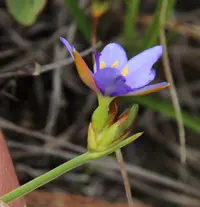
Blue-eyed grass is a small, clumping perennial that looks like a fine-leaved iris, not a true grass. It forms narrow, upright fans of foliage with delicate, star-shaped blue to violet flowers. Aristea abyssinica is native to eastern Africa, where it typically grows in open grasslands and rocky slopes. This origin gives it a preference for bright light and well-drained soils. The plant is generally moderate in difficulty, as it dislikes waterlogged roots and needs consistent light to flower well. Gardeners who learn how to care for Blue-Eyed Grass often value it for edging, rock gardens, and naturalistic plantings.

Care Difficulty
Moderate Care

Light Preference
Full Sun

Water Requirements
Regular Water

Temperature Preference
Warm Climate

Hardiness Zone
9–11

Soil Texture
Sandy, Loamy, Organic-rich

Soil pH
Acidic (5.5–6.5), Slightly acidic (6.5–7.0)

Soil Drainage
Moist but well-drained

Fertilization
Minimal (feed rarely)
Scan your plant to receive care tips personalized for your specific plant
Available on iOS and Android
This sun-loving iris relative thrives in bright, open conditions with some protection from harsh extremes.
This rhizomatous perennial prefers evenly moist but never saturated soil.
This species prefers mild, frost-free conditions with moderate summer warmth.
This species prefers moderate, stable humidity but usually adapts to typical indoor air.
Aristea abyssinica grows best in loose, sharply drained, slightly acidic to neutral soil.
This species can be grown successfully in containers outdoors if drainage and root depth are managed carefully.
Aristea abyssinica benefits from light, controlled feeding during its active growing season.
Aristea abyssinica needs only light maintenance pruning to stay tidy and flowering well.
This species is usually grown in the ground, so focus on dividing and transplanting crowded clumps rather than frequent repotting.
This plant is most commonly propagated by division, with seed used when increasing numbers more broadly.
Aristea abyssinica has moderate frost tolerance but benefits from simple winter precautions in colder regions.

Plant Health Check
Not sure what's wrong with your plant? Check your plant's health inside the app.
This species is native to high-altitude grasslands and rocky slopes of eastern Africa, often growing above 2,000 m where it tolerates intense UV radiation and large day–night temperature swings.
Its slender stems carry small blue to violet flowers that open for a short time during the day, with individual blooms often lasting only a single day while the inflorescence continues producing new flowers over time.
Although it looks like a tuft of narrow grass leaves, this plant belongs to the iris family (Iridaceae) and shares the family’s typical features such as three-petaled flowers and underground storage structures.
Lack of flowers usually comes from insufficient light, depleted soil nutrients, or overcrowded clumps. Divide congested plants every few years, remove excessive shade from nearby plants, and top-dress with a balanced, low-dose fertilizer in spring.
Keep your plants happy and healthy with plant identification, disease detection, and easy care guidance.