common bistort Care (Bistorta officinalis)

Also known as: adderwort, dragonwort, easter giant, easter ledger, gentle dock, osterick, oysterloit, passion dock, pink pokers, pudding grass, red legs, snakeweed, twice writhen, water ledges, European bistort, bistort, Meadow Bistort
common bistort

About common bistort

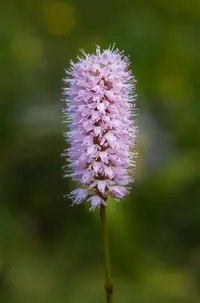
Common bistort, Bistorta officinalis, is a hardy herbaceous perennial grown mainly for its dense spikes of pink bottlebrush-like flowers and neat clumps of green leaves. It forms low, spreading foliage with upright flowering stems, creating a soft, meadow-style look in mixed borders and naturalistic plantings.

This species is native to damp meadows and stream edges across Europe and parts of Asia, so it naturally prefers moist soil and cool to mild conditions. It is generally easy to grow in temperate gardens, adapting well to average garden soils if they do not dry out for long periods.

For gardeners learning how to care for common bistort, its forgiving nature, vigor, and resistance to most pests make it suitable for beginners and low-maintenance planting schemes.

Main Plant Requirements

Care Difficulty

Easy Care

Light Preference

Partial Sun

Water Requirements

Keep Soil Moist

Temperature Preference

Cold Hardy

Hardiness Zone

4–8

Soil Texture

Loamy, Silty, Organic-rich

Soil pH

Acidic (5.5–6.5), Slightly acidic (6.5–7.0)

Soil Drainage

Moist but well-drained

Fertilization

Minimal (feed rarely)

Get Personalized Care Plan

Scan your plant to receive care tips personalized for your specific plant

Available on iOS and Android

How to Care for the common bistort

This moisture-loving perennial performs best with cool conditions and consistent, moderate light.

  • Provide 4–6 hours of sun daily, ideally morning sun with light afternoon shade, especially in hotter regions to prevent leaf scorch.
  • Plant common bistort in a site with open shade or dappled light under taller perennials or shrubs if midday sun is intense.
  • Monitor foliage: pale, floppy stems suggest too much shade, while crisped, brown leaf edges indicate sun stress and possibly dry soil.

This species prefers evenly moist conditions and does not tolerate prolonged dryness.

  • Maintain soil that feels consistently moist 2–5 cm down, especially in spring and early summer when growth and flowering are strongest.
  • Use rich, humus-heavy soil that drains but never bakes hard; standing water for more than a few hours can cause root rot in Bistorta officinalis.
  • Watch the foliage: wilting and dull, folding leaves signal dryness, while yellowing, soft stems or a sour soil smell suggest overwatering or poor drainage.

This hardy perennial tolerates a wide temperature range but grows best in cool to mild conditions.

  • Aim for active growing-season temperatures around 55–75°F (13–24°C), which support steady foliage and flower production.
  • Mature plants withstand winter cold down to about -20°F (-29°C) when planted in the ground with normal soil insulation and mulch.
  • In hot summers above 85°F (29°C), growth may slow; provide extra moisture and partial shade to limit stress and prevent leaf scorch.

This species is flexible about air moisture and does well in typical outdoor humidity.

  • Performs best at 40–70% humidity but tolerates short dry spells if soil stays evenly moist.
  • Low humidity shows as browning leaf tips and slower growth, especially in hot, windy sites.
  • In very dry or exposed spots, plant near other perennials, mulch the soil, or use nearby water features to slightly raise local humidity.

This moisture-loving perennial prefers deep, fertile, consistently damp soil.

  • Use a loamy, organic-rich soil that retains moisture yet does not stay waterlogged, such as garden loam mixed with compost.
  • Aim for slightly acidic to neutral pH, roughly 6.0–7.0, which supports nutrient availability and steady growth.
  • In heavier clay, improve structure and aeration by incorporating compost and coarse sand or fine grit through the top 20–30 cm.
  • Avoid compacted or fast-drying sandy soil where Bistorta officinalis will wilt quickly and flower less.

This plant can be grown in containers, but the pot must support its moisture needs and spreading habit.

  • Choose a wide, deep container to allow rhizomes to spread and to buffer against rapid drying in summer heat.
  • Use a heavy, stable pot material such as ceramic to prevent the leafy clumps from tipping in wind.
  • Stand the container in a shallow tray of water only during hot spells so the mix stays moist without saturating the root zone.

This moisture-loving perennial benefits from modest feeding to support foliage and flower production in nutrient-poor soils.

  • Apply a light layer of garden compost or well-rotted manure in early spring around clumps of common bistort, keeping material off the crowns.
  • Use a balanced slow-release fertilizer (for example 10-10-10) once in spring at label rate for perennials.
  • In richer soils or where growth is vigorous, skip granular fertilizer and rely only on organic mulch.
  • Avoid feeding in late fall or winter to prevent soft, frost-prone growth and nutrient runoff.

Thoughtful pruning keeps Bistorta officinalis flowering well and prevents self-seeding from becoming excessive.

  • In late fall or very early spring, cut back old, dead flower stems and withered foliage to just above ground level using clean hand pruners.
  • During the growing season, deadhead spent flower spikes to encourage a tidier appearance and sometimes a light rebloom.
  • Thin out crowded or weak stems at the base to improve air movement and reduce foliar disease risk.
  • Wear gloves and make smooth, angled cuts to avoid tearing stems and to limit entry points for pathogens.

This perennial is most often grown in the ground and only occasionally maintained long term in containers.

  • Transplant clumps in early spring or early fall when temperatures are mild and soil is moist but not waterlogged.
  • Move or divide plants every 3–5 years if growth becomes congested, flowering declines, or the center of the clump thins out.
  • For containers, shift to a slightly larger pot when roots circle the sides or water runs quickly through with little absorption.
  • Water thoroughly before and after moving, keep roots shaded, and trim back top growth slightly to reduce transplant stress.

Bistorta officinalis is most commonly multiplied by division, with seed used mainly for larger naturalistic plantings.

  • Divide mature clumps in early spring or early fall, lifting the root mass and cutting it into sections with several buds each.
  • Replant divisions at the same depth into moist, fertile soil and water well until new growth establishes.
  • Sow fresh seed outdoors in fall or in pots left outside to allow natural cold stratification, which improves germination.
  • Keep seedling and division sites evenly moist, not waterlogged, and free of competing weeds during establishment.

This hardy perennial tolerates freezing winters in most temperate regions and needs minimal special attention.

  • After hard frost, allow foliage to die back naturally, then cut it to ground level to reduce disease carryover.
  • Apply a 5–8 cm layer of organic mulch over the root zone in colder climates to buffer freeze–thaw cycles.
  • For container plants in very cold areas, move pots against a sheltered wall or into an unheated garage to protect roots from extreme freezing.

Care Tips

Support Tall Stems

In windy or exposed sites, insert low, unobtrusive ring supports or short stakes in early spring so flower spikes grow up through them and stay upright without flopping after rain.

Control Rhizome Spread

Every 3–4 years, lift and divide the clump in early spring or fall, replanting only the healthiest outer sections to prevent overcrowding and unwanted spread into nearby planting areas.

Deadhead For Reblooms

Cut spent flower spikes back to just above the foliage as they fade to encourage a lighter second flush of blooms and reduce self-seeding where seedlings would be a nuisance.

Mulch For Cool Roots

Apply a 5–7 cm layer of composted bark or leaf mold around, but not touching, the crowns each spring to keep roots cool, suppress weeds, and maintain more even soil moisture when growing common bistort.

Monitor For Rust

Inspect foliage regularly for small orange-brown pustules on leaves, promptly remove and discard affected leaves, and thin dense clumps to improve air movement if rust disease begins to appear.

Common Pests and Diseases

Leaf spot

This disease causes irregular brown or purplish spots on leaves that may merge, leading to larger dead patches and early leaf drop.

Solution

Remove and destroy affected leaves, avoid overhead watering, and improve air circulation around clumps; in severe recurring cases, a copper-based or chlorothalonil fungicide labeled for ornamental perennials can be applied according to label directions.

Powdery mildew

This disease produces a white, powdery coating on upper leaf surfaces, often during warm days and cool, humid nights, which can cause leaf yellowing and distortion.

Solution

Increase spacing and airflow, water at soil level, remove heavily infected foliage, and if needed use a sulfur or potassium bicarbonate fungicide approved for ornamentals, applying at the first signs of infection.

Aphids

These insects cluster on young stems and leaf undersides, sucking sap and causing curling, distortion, and sticky honeydew that may attract sooty mold.

Solution

Spray colonies off with a strong stream of water, encourage natural predators such as lady beetles, and if populations stay high use insecticidal soap or a light horticultural oil, ensuring thorough coverage of stems and leaf undersides.

Slugs and snails

These pests chew irregular holes in leaves, often leaving ragged edges and slime trails, especially in damp, shaded plantings.

Solution

Hand-pick at dusk or after rain, reduce hiding spots such as dense mulch or debris, use copper barriers or iron phosphate slug pellets around clumps, and keep the soil surface slightly drier near the crown while still meeting the plant’s moisture needs.

Interesting Facts

Meadow moisture specialist

This species is strongly associated with damp, nutrient-poor meadows and pastures in much of Europe, often indicating traditionally managed, low-intensity grassland that has not been heavily fertilized.

Ant-assisted seed dispersal

Its seeds bear small, nutrient-rich appendages called elaiosomes that attract ants, which carry the seeds away from the parent plant and help disperse them in a process known as myrmecochory.

Important caterpillar foodplant

In parts of its range, the foliage serves as a key larval food source for several butterflies and moths, including species of the genus Boloria, linking this plant directly to local insect diversity.

Botan icon

Did you know?

In some European mountain and subalpine regions, dense stands of this species can form visually striking pink carpets in late spring and early summer, making it a characteristic feature of traditional hay meadows that are now considered high-value conservation habitats.

FAQs about common bistort

This species spreads steadily by short rhizomes and self-seeding, forming dense clumps over time but usually not overwhelming large borders. In small beds, remove unwanted seedlings and divide clumps every few years to control spread.

Grow Healthy Plants with Botan Care

Keep your plants happy and healthy with plant identification, disease detection, and easy care guidance.

Botan plant care app — identify plants on mobile

Explore More Plants