Pale Capeblue Care (Aristea spiralis)

Pale Capeblue

About Pale Capeblue

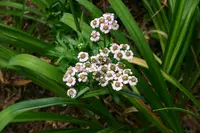
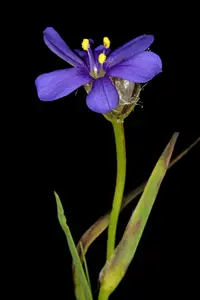
Pale capeblue, Aristea spiralis, is a small, clump-forming perennial from South Africa’s winter-rainfall regions. It belongs to the iris family and grows from short rhizomes. Plants produce narrow, upright, spiraling leaves that give a distinctive architectural look even when not in flower. In season, it carries delicate, pale blue star-shaped blooms on slender stems. This species prefers bright light, mild temperatures, and well-drained, sandy or gritty soil, reflecting its origin in open, rocky habitats. With good drainage and protection from hard frost, it is moderately challenging but manageable for patient growers who want to learn how to care for Pale Capeblue.

Main Plant Requirements

Care Difficulty

Hard Care

Light Preference

Partial Sun

Water Requirements

Keep Soil Moist

Temperature Preference

Tropical / Frost Sensitive

Hardiness Zone

10–11

Soil Texture

Sandy, Loamy, Organic-rich

Soil pH

Acidic (5.5–6.5)

Soil Drainage

Moist but well-drained

Fertilization

Light (every 4–6 weeks)

Get Personalized Care Plan

Scan your plant to receive care tips personalized for your specific plant

Available on iOS and Android

How to Care for the Pale Capeblue

This species prefers bright, direct sun for strong growth and flowering.

  • Provide 6–8 hours of direct sun daily, ideally with full morning sun and lighter afternoon exposure in hot climates for Pale Capeblue in open beds or rock gardens.
  • Tolerates light partial shade (3–4 hours sun), but plants may elongate and flower less if shaded for most of the day.
  • In regions with very intense summer sun, use slight afternoon shade or neighboring plants as a screen to reduce leaf scorch and moisture loss.

This plant likes steady moisture but does not tolerate waterlogged soil.

  • Water when the top 2–4 cm of soil feels dry, then soak the root zone deeply so moisture reaches 10–15 cm, especially in sandy soils.
  • During active growth and flowering, increase watering frequency, but in cooler seasons reduce watering so the soil stays just lightly moist, never saturated.
  • Watch for yellowing, soft leaves as a sign of overwatering, and dry, curling leaf tips or stalled growth as indicators that Aristea spiralis is staying too dry.

This species thrives in mild, frost-free conditions with moderate seasonal shifts.

  • Optimal growth occurs around 65–77°F (18–25°C), with best performance where nights are slightly cooler than days, similar to Mediterranean-type climates.
  • It tolerates short dips to about 32°F (0°C), but repeated or hard frosts below 28°F (-2°C) can damage foliage and crowns, so protection or mulching is recommended in colder regions.
  • In hot areas, it can handle highs up to about 90°F (32°C) if soil moisture is stable and the site has some airflow to reduce heat stress.

This species prefers moderate humidity but tolerates typical indoor air if roots are not overwatered.

  • Aim for 40–60% humidity; slightly higher levels support lusher foliage and steadier flowering in Pale Capeblue.
  • Leaf tips browning, edges crisping, and stalled growth in warm conditions can indicate air that is too dry.
  • Increase humidity by grouping plants, placing the pot near (not on) a pebble tray, or using a small room humidifier.

Provide a sharply draining, slightly gritty mix to keep the roots aerated and reduce rot risk.

  • Use a sandy or gritty loam with moderate organic matter to balance moisture retention and fast drainage.
  • Combine roughly 50% commercial potting mix with 30% coarse sand and 20% perlite or fine gravel for structure.
  • Keep pH near neutral to slightly acidic, around 6.0–7.0, which supports nutrient uptake for Aristea spiralis.
  • Avoid heavy clay, compacted substrates, or mixes that stay wet longer than 2–3 days after thorough watering.

This species is suitable for container growing when drainage and root space are carefully managed.

  • Choose a tall, relatively narrow pot to accommodate its fibrous roots while limiting excess wet substrate at the base.
  • Use a mineral-heavy mix in outdoor containers so wind or rain is less likely to tip the pot.
  • Select unglazed clay pots where possible to increase evaporation and reduce the chance of waterlogged roots after rain or deep watering.

Aristea spiralis benefits from light, controlled feeding in active growth but does not need heavy fertilization for good performance.

  • Apply a balanced liquid fertilizer (around 10-10-10) at 1/2 strength every 4–6 weeks during spring and summer for caring for Pale Capeblue.
  • Use a slow-release, low-dose granular fertilizer in early spring if growth appears weak or flowering declines.
  • Avoid rich compost or heavy feeding, which can cause soft, floppy leaves and reduce flower quality.
  • Stop feeding in fall and winter to allow natural rest and prevent stressed, weak new growth.

Pruning Aristea spiralis is light and mostly focused on cleanliness and maintaining a tidy clump.

  • Best time is after flowering in late spring or summer, once spent flower stalks have faded.
  • Cut off dead, damaged, or yellowing leaves at the base with clean, sharp scissors or hand pruners.
  • Remove old flower stems to encourage fresh foliage and a neater, more upright appearance.
  • Thin out congested fans occasionally to improve air movement and reduce disease risk.

Aristea spiralis forms clumps that dislike frequent disturbance, so repotting or transplanting is done only when clearly needed.

  • Check for roots circling the pot, pushing through drainage holes, or noticeably slowed growth as signs it needs more space.
  • Plan repotting or transplanting for early spring, just before strong new growth, every 3–4 years at most.
  • Move into a slightly larger container or garden spot with free-draining, gritty soil to avoid waterlogging and root rot.
  • Handle the root ball gently, keep divisions moist, and shade the plant for a few days afterward to limit transplant shock.

Propagation of Aristea spiralis is usually done by division or seed in controlled conditions.

  • Divide mature clumps in early spring, lifting the plant and separating fans with several healthy roots each.
  • Replant divisions into sharply drained, sandy mix, keeping crowns at the same depth and watering lightly until established.
  • Sow fresh seed in spring on the surface of well-draining mix, barely covering and keeping at 65–75°F with bright light.
  • Maintain even but light moisture and good air circulation to prevent damping-off in young seedlings.

Aristea spiralis has limited frost tolerance and benefits from simple winter protection in colder regions.

  • In mild climates (above about 25°F), leave plants in the ground and add a 5–8 cm mulch layer around the root zone.
  • In colder areas, grow in containers and move indoors to a bright, cool, frost-free space before hard frosts.
  • Keep winter soil just slightly moist, avoiding both complete dryness and waterlogged conditions that damage roots.

Care Tips

Refresh potting mix

Repot every 2–3 years into fresh, very coarse mix and gently loosen the outer 1–2 cm of roots to prevent the dense fibrous root mass from becoming waterlogged or oxygen-starved.

Rotate for symmetry

Turn the pot 90° every 2–3 weeks so the leaf fans develop evenly and do not lean persistently toward the light source, which keeps the plant visually balanced and reduces risk of toppling.

Use low trays

If grown in a container, use a wide, heavy cachepot or tray instead of a tall narrow cover pot to stabilize the narrow leaf fans and reduce the chance of the plant tipping over as it matures.

Post-bloom cleanup

After flowering, cut spent scapes (flower stalks) at the base with clean scissors to redirect energy into root and leaf growth and to reduce the risk of fungal issues around decaying tissue.

Seasonal light shift

In regions with strong seasonal sun, move the plant slightly farther from south- or west-facing windows in summer and closer in winter to keep light levels high without leaf scorch when growing Pale Capeblue.

Common Pests and Diseases

Aphids

These insects feed on young leaves and flower stalks, causing distortion, sticky honeydew, and sometimes sooty mold growth on Aristea spiralis clumps.

Solution

Rinse infested foliage and flower stems with a firm stream of water, then spot-treat remaining colonies with insecticidal soap or a light horticultural oil, repeating weekly until new growth is clean. Encourage natural predators like lady beetles outdoors and avoid high-nitrogen fertilizer that promotes very soft, aphid-prone shoots.

Leaf spot

This disease causes small water-soaked or brown spots on the narrow leaves, which can merge into larger lesions and lead to premature yellowing and dieback in dense plantings.

Solution

Remove and discard affected leaves and any fallen debris, and water at soil level rather than overhead to keep foliage dry. Improve air circulation, avoid crowding clumps, and if the problem persists in wet seasons, use a labeled copper or chlorothalonil fungicide according to directions.

Spider mites

These pests thrive in hot, dry conditions and cause fine stippling, a dull gray-green appearance on leaves, and fine webbing along the leaf fans.

Solution

Increase humidity around the plant, then wash the foliage thoroughly, including leaf bases, with lukewarm water to remove mites and webs. Follow up with insecticidal soap or a light horticultural oil sprayed on both leaf surfaces every 7–10 days until new growth appears clean.

Crown rot

This disease develops in poorly drained or waterlogged soil, leading to soft, brown tissue at the base of the fans and a general collapse of leaves from the center of the clump.

Solution

Remove and discard affected fans and improve drainage by loosening soil or raising the planting area, then water only when the top layer has dried slightly. Avoid mulch directly against the crown and, in badly affected outdoor plantings, consider replanting divisions into a more free-draining, gritty mix to reduce future infections.

Interesting Facts

Endemic Cape species

This species is native to a very limited area in the Western Cape of South Africa, where it grows on seasonally moist, rocky sandstone slopes in fynbos shrubland. Its natural range is restricted, which contributes to its rarity in cultivation compared to other ornamental iridaceous plants.

Distinctive spiral foliage

The narrow, grass-like leaves often curve and twist into loose spirals as they mature, giving the plant its name spiralis. This spiraling habit is especially noticeable in bright light and makes the foliage as ornamental as the flowers.

Short-lived blue blooms

The plant produces delicate, pale to medium blue flowers on slender stems, typically opening for only a short time during the day and fading quickly. Flowering occurs mainly in the cooler, wetter season in its native habitat, aligning with available moisture and milder temperatures.

Botan icon

Did you know?

Aristea spiralis was historically confused with a few closely related Aristea species in the Western Cape, and careful study of its leaf shape, inflorescence structure, and habitat was needed to clarify its identity and separate it taxonomically from its relatives.

FAQs about Pale Capeblue

Lack of flowers usually comes from insufficient light, nutrient-poor or overly rich soil, or plants that are still too young. Ensure a cool, short winter rest, avoid heavy nitrogen fertiliser, and do not disturb clumps too often.

Grow Healthy Plants with Botan Care

Keep your plants happy and healthy with plant identification, disease detection, and easy care guidance.

Botan plant care app — identify plants on mobile

Explore More Plants