Burn-site restoration
Use this species in fire-adapted restoration or prairie-style plantings where controlled burns or annual scalping are possible, as periodic removal of old thatch maintains vigorous new culms and reduces woody competition.

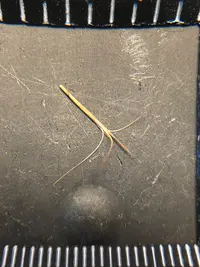
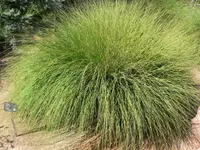
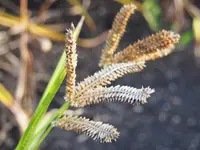
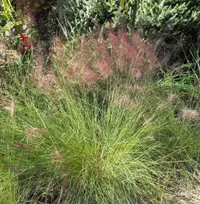
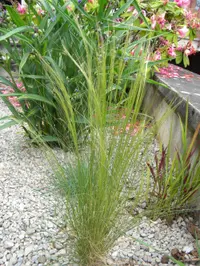
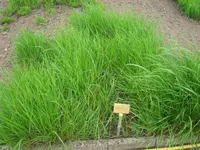
Beyrich threeawn, Aristida beyrichiana, is a perennial bunchgrass native to the dry, sandy pine ecosystems of the southeastern United States. It forms upright, narrow clumps with fine, wiry leaves and tall, delicate seed heads. The plant is adapted to full sun, drought, and nutrient-poor soils, which makes it tough but also less suited to rich, wet garden beds. Its growth responds well to periodic disturbance, such as fire or cutting, and it tends to stay sparse rather than forming a dense lawn. Gardeners who want to care for Beyrich threeawn should understand that it performs best in open, well-drained sites with minimal watering and maintenance.

Care Difficulty
Easy Care

Light Preference
Full Sun

Water Requirements
Low Water

Temperature Preference
Warm Climate

Hardiness Zone
8–11

Soil Texture
Sandy, Loamy, Rocky

Soil pH
Acidic (5.5–6.5), Slightly acidic (6.5–7.0)

Soil Drainage
Well-drained

Fertilization
Minimal (feed rarely)
Scan your plant to receive care tips personalized for your specific plant
Available on iOS and Android
This warm-season bunchgrass prefers strong, direct light similar to its native pine savanna habitats.
This drought-adapted grass prefers infrequent, deep watering once established.
This species is a warm-season grass adapted to hot, dry conditions and mild winters.
This species is highly drought-adapted and usually does not need special humidity control.
This warm-season bunchgrass thrives in lean, fast-draining, sandy soil.
This species can be grown in containers if the setup mimics its naturally dry, fast-draining habitat.
Native and adapted to nutrient-poor soils, Beyrich threeawn usually needs no fertilizer in landscape settings.
Pruning Aristida beyrichiana is minimal and mainly aimed at maintaining a tidy clump and renewing foliage.
This warm-season bunchgrass is usually grown in-ground, so focus on careful transplanting rather than frequent repotting.
Aristida beyrichiana is most often propagated by seed, with division used occasionally to move established clumps.
This grass is cold hardy in much of its native range and generally needs little specific winter care.

Plant Health Check
Not sure what's wrong with your plant? Check your plant's health inside the app.
This species is a dominant wiregrass in longleaf pine sandhills and flatwoods of the southeastern United States, especially in Florida, where it helps define the structure and fire behavior of these ecosystems.
Beyrich threeawn often flowers more abundantly following prescribed burns, using post-fire conditions such as increased light and nutrients to complete its life cycle and regenerate from seed.
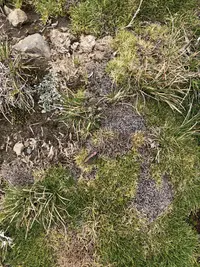
The grass typically occupies very well-drained, nutrient-poor, sandy soils and is characteristic of xeric sandhill sites with open canopies, where many less-adapted grasses cannot persist.

Populations of Beyrich threeawn have been used as indicator species in conservation and restoration work, helping ecologists assess the integrity and recovery of longleaf pine sandhill habitats because this grass is closely tied to relatively undisturbed native groundcover communities.
Growth is moderate rather than fast. In suitable sandy, low-fertility sites it usually reaches near-mature size in 2–3 seasons. Excess water or rich soil slows development and can make clumps weaker and more short-lived.
Keep your plants happy and healthy with plant identification, disease detection, and easy care guidance.