Stable Water Depth
Maintain a consistent shallow water level of 5–20 cm above the crown using a fixed planting shelf or bricks, rather than letting containers sit directly on a pond bottom where fluctuating depths can stress the plant.

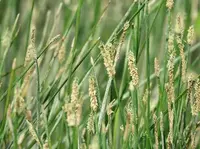
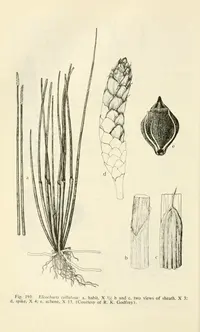
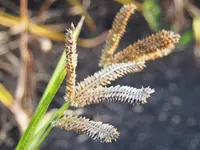
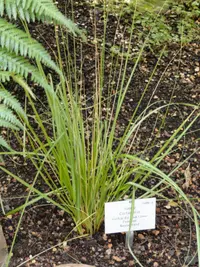
Knotted spikerush, Eleocharis interstincta, is a semi-aquatic sedge commonly found along ponds, ditches, marsh edges, and slow-moving waterways in warm regions. It forms dense clumps of upright, leafless green stems that can create thick stands in shallow water or saturated soil.
The plant spreads by rhizomes, so it can colonize suitable wet areas steadily, which is helpful for erosion control and habitat planting. Stems often show slight joints or “knots,” giving the species its common name.
It generally prefers full sun, constant moisture, and nutrient-rich, muddy or sandy substrates. In managed plantings, knowing how to care for knotted spikerush focuses on maintaining stable water levels and avoiding complete drying of the root zone.

Care Difficulty
Moderate Care

Light Preference
Full Sun

Water Requirements
Aquatic

Temperature Preference
Tropical / Frost Sensitive

Hardiness Zone
9–12

Soil Texture
Sandy, Loamy, Organic-rich

Soil pH
Acidic (5.5–6.5), Slightly acidic (6.5–7.0)

Soil Drainage
Waterlogged tolerant

Fertilization
Minimal (feed rarely)
Scan your plant to receive care tips personalized for your specific plant
Available on iOS and Android
This emergent wetland sedge prefers bright, open conditions with long daylight exposure.
This aquatic species thrives in consistently saturated conditions rather than cycling between wet and dry.
This warm-temperate to subtropical sedge grows best in mild to warm, frost-free conditions.
This semi-aquatic species needs constantly moist air and water conditions rather than typical room humidity levels.
This species prefers saturated, organic, mud-like substrates rather than conventional potting soil.
This species can be grown in containers if they are managed as water gardens or bog pots rather than standard planters.
This wetland species has modest nutrient needs, but light feeding supports denser growth in containers or controlled ponds when growing knotted spikerush.
Pruning Eleocharis interstincta is mainly cosmetic and helps maintain a tidy, upright clump in managed plantings.
Transplanting or dividing Eleocharis interstincta helps control spread and refresh overcrowded clumps in ponds, bogs, or containers.
Eleocharis interstincta is most reliably propagated by division, which maintains the characteristics of the parent stand.
In mild to warm climates this species usually overwinters in place, with top growth often thinning or browning while roots persist.

Plant Health Check
Not sure what's wrong with your plant? Check your plant's health inside the app.
This species is one of the few sedges that can grow fully submerged in freshwater, forming long, flexible stems that tolerate low-oxygen waterlogged conditions.
In parts of its range, especially in Florida and the Caribbean, it is documented as a natural food source for West Indian manatees that graze on its submerged shoots.
The plant is naturally distributed from the southeastern United States through Central America and much of tropical South America, where it occupies shallow lakes, marshes, canals, and slow-moving river margins.

In favorable tropical wetland conditions, this species can form extensive underwater meadows that stabilize soft sediments, trap suspended particles, and significantly increase habitat complexity for small fish and invertebrates.
This species spreads by rhizomes in shallow water or saturated soil and can form dense colonies. In small ponds or rain gardens, contain it with edging or containers and remove unwanted shoots regularly to prevent overcrowding.
Keep your plants happy and healthy with plant identification, disease detection, and easy care guidance.