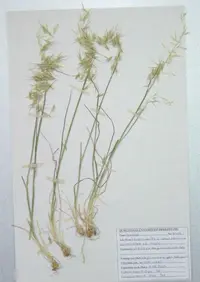
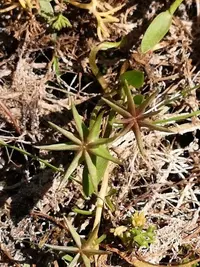
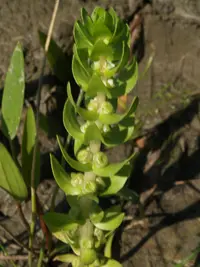
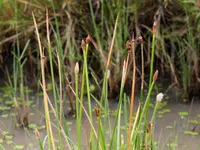
slim spikerush Care (Eleocharis elongata)

slim spikerush

About slim spikerush

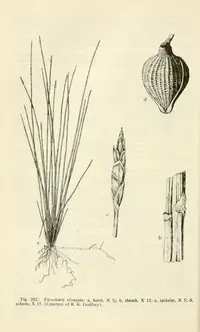
Slim spikerush (Eleocharis elongata) is a perennial wetland sedge forming fine, upright, hair-like stems from dense clumps or creeping rhizomes. It often creates soft, grasslike mats along shallow shorelines and in marshy edges of ponds and slow streams.

This species is native to parts of North America, where it thrives in consistently wet or shallowly flooded conditions. Its preference for saturated soils makes it useful in naturalistic water gardens, rain gardens, and restoration plantings.

Growth is generally straightforward if moisture is constant, but plants decline quickly in dry or compacted sites, which is key when planning how to care for slim spikerush.

Main Plant Requirements

Care Difficulty

Moderate Care

Light Preference

Full Sun

Water Requirements

Aquatic

Temperature Preference

Warm Climate

Hardiness Zone

8–11

Soil Texture

Loamy, Silty, Organic-rich

Soil pH

Acidic (5.5–6.5), Slightly acidic (6.5–7.0)

Soil Drainage

Waterlogged tolerant

Fertilization

Minimal (feed rarely)

Get Personalized Care Plan

Scan your plant to receive care tips personalized for your specific plant

Available on iOS and Android

How to Care for the slim spikerush

This aquatic sedge prefers bright exposure but adapts to varying light in wetland or pond-edge settings.

  • Provide 4–6 hours of direct morning sun with light shade or filtered light in the hot afternoon to avoid leaf scorch.
  • Tolerates light to moderate partial shade, but slim spikerush becomes thinner and taller in less than 3–4 hours of sun.
  • In summer, protect from intense, all-day sun in shallow water; in winter, ensure at least open, unobstructed sky to maximize low-angle light.

This species is adapted to saturated soils and shallow standing water rather than periodic drying.

  • Maintain soil constantly saturated; in ponds or bog gardens, keep crowns in 2–10 cm of water rather than letting the substrate surface dry.
  • If grown in very wet soil instead of flooding, do not allow the top 1–2 cm to dry completely; drooping or browning tips signal underwatering.
  • Yellowing, limp stems with sour-smelling, blackened roots indicate overwatering in poorly aerated containers; improve drainage or increase water movement for Eleocharis elongata.

This species favors mild, consistently cool to warm conditions and is sensitive to hard frost when crowns are exposed.

  • Strong growth occurs around 65–80°F (18–27°C), typical of late spring to early fall in many temperate regions.
  • Tolerates short dips to about 32°F (0°C) if submerged or insulated by water, but exposed foliage can be damaged by frost and repeated freezes.
  • Handles summer heat up to about 90°F (32°C) if roots remain submerged and water stays oxygenated; above this, growth slows and stressed plants may yellow or thin.

This wetland sedge needs consistently very high humidity around foliage and root zone.

  • Aim for 70–100% humidity; situate slim spikerush at pond edges, in water trays, or in bog containers to keep air and substrate moist.
  • Dry air causes browning tips, reduced shoot density, and stalled new growth, especially during hot, windy weather.
  • Increase humidity by using standing water saucers, grouping bog plants, or placing containers inside larger watertight troughs to create a humid microclimate.

This species prefers permanently wet, fine-textured, organic-rich soil that mimics shallow marsh or pond margins.

  • Use a heavy mix of 60–80% clay or loam garden topsoil with 20–40% peat or coco coir to retain water and support upright stems.
  • Soil should stay saturated or shallowly flooded; avoid free-draining sandy or gravelly mixes that dry out between waterings.
  • A slightly acidic to neutral pH of 6.0–7.0 suits Eleocharis elongata; avoid alkaline mixes rich in lime or shell grit.
  • If using commercial aquatic planting medium, top-dress with a thin layer of coarse sand to limit particle float and stabilize the root zone.

This species is well suited to container culture when grown as a marginal or bog plant.

  • Select a wide, relatively shallow container so rhizomes can spread horizontally without quickly hitting pot walls.
  • Use solid, non-porous materials like plastic or glazed ceramic to slow moisture loss and keep the root zone saturated.
  • Place the pot inside a larger water-filled outer container to keep the crown just above water level while roots remain submerged.

Eleocharis elongata grows in nutrient-poor, wet habitats and usually needs only light feeding in containers or managed plantings.

  • Use a balanced, water-soluble NPK fertilizer at 1/4–1/2 strength for slim spikerush grown in pots or controlled water gardens.
  • Apply fertilizer every 4–6 weeks during the main growing season if growth looks weak or foliage pales.
  • Avoid feeding in winter or when growth slows significantly, as excess nutrients can weaken roots and encourage algae.
  • Organic compost or a low-dose slow-release aquatic fertilizer plug can be used sparingly near, not directly on, the root crown.

Pruning Eleocharis elongata is mainly cosmetic and helps maintain tidy, healthy clumps in managed beds or containers.

  • Best time for light pruning is late winter to early spring, before new shoots elongate strongly.
  • Use clean scissors or shears to cut back brown, dead, or damaged stems at or just above the substrate level.
  • Thin out crowded, weak culms to improve air movement and light penetration, keeping the stand more upright and uniform.
  • Avoid cutting all foliage at once; retain some green stems to support photosynthesis and steady regrowth.

This rush is more often transplanted than repotted, as it is usually grown in ponds, wet margins, or shallow containers.

  • Transplant or divide every 2–3 years, or when clumps become dense, growth slows, or roots circle basket edges.
  • Choose early spring or early fall, when temperatures are mild and the plant is not under strong heat stress.
  • Lift the clump gently, rinse off excess substrate, and tease or cut into sections with healthy roots and several shoots each.
  • Replant divisions at the same depth in saturated, fine-textured soil, then keep water level steady to limit root stress.

Propagation of Eleocharis elongata is straightforward by division and more variable from seed in home settings.

  • Divide mature clumps in early spring or early fall, when plants are actively growing but conditions are cool and stable.
  • Lift the clump, then separate into small sections with intact roots and multiple stems using hands or a clean knife.
  • Plant divisions into shallow, water-retentive substrate and keep consistently saturated until strong new growth appears.
  • For seed, sow on the surface of wet, fine aquatic soil, maintain constant moisture, and provide bright, indirect light for germination.

In many temperate regions this rush is cold hardy, but container plants benefit from simple winter precautions.

  • Tolerates light to moderate frost once established, especially when crowns remain submerged or in consistently wet soil.
  • In cold climates, sink containers deeper in ponds or group pots in a sheltered spot to moderate temperature swings.
  • Apply a thin mulch around in-ground plants in the coldest zones, keeping it off the crown to avoid rot.
  • Move small containers of slim spikerush into a cool, bright, frost-free area if freeze periods are prolonged.

Care Tips

Aquatic Pot Containment

Plant in perforated aquatic baskets lined with fine mesh to keep the rhizomes and fine roots contained while still allowing full water exchange in ponds or tubs.

Regular Clump Thinning

Lift and divide dense clumps every 1–2 years, trimming away older brown bases to maintain vigorous new shoot production and prevent self-shading in the center of the stand.

Water Level Management

Adjust water depth seasonally, keeping the crown just below the surface in cool seasons and allowing slightly deeper water in summer to stabilize temperature and reduce algal competition.

Nutrient Load Control

Limit nutrient-rich runoff and avoid overfertilizing nearby plants so that the stand does not become excessively lush, weak-stemmed, and more prone to lodging in wind or strong water flow.

Algae And Weed Suppression

Shade the water surface partially with taller emergent plants or floating plants and hand-remove filamentous algae or invasive seedlings so that they do not outcompete the fine stems when growing slim spikerush.

Common Pests and Diseases

Aquatic snails

This pest feeds on young shoots and soft tissue, causing shredded, notched, or missing culms, especially in shallow or still water. Damage is often most visible on new growth of slim spikerush clumps.

Solution

Hand-pick snails at dusk or use simple traps such as blanched vegetable pieces or inverted pots to collect them, then remove from the pond. Reduce excess decaying organic matter where snails shelter, and in outdoor ponds consider introducing natural predators such as fish that eat snails, while keeping the water level stable to avoid stressing the plants.

Algae overgrowth

This problem develops in nutrient-rich, still water and can coat stems and leaf bases with green or brown slime. Symptoms include stunted growth, reduced vigor, and poor water clarity around the plant base.

Solution

Limit fertilizer entering the water, shade part of the water surface with floating plants, and increase circulation with a small pump or air stone. Manually remove filamentous algae from around the clumps and perform partial water changes to reduce nutrient load without exposing the plant crowns.

Leaf spot

This disease produces small brown to dark olive spots or streaks on culms, which may merge into larger lesions under warm, humid conditions. Symptoms include premature yellowing and thinning of dense stands.

Solution

Thin overcrowded clumps to improve airflow at the water surface and avoid overhead splashing from nutrient-rich water. Remove and discard heavily spotted stems, keep water relatively clean of plant debris, and in severe cases apply a pond-safe fungicide according to label directions while monitoring for new healthy growth.

Spider mites

These insects may colonize plants grown in very shallow containers or indoor trays with low humidity, leading to fine webbing and pale, speckled stems. Symptoms include dull, yellowed culms and slowed growth, especially away from direct water contact.

Solution

Increase humidity around the foliage, regularly rinse stems with a gentle stream of water, and wipe affected areas with a damp cloth or soft brush. For persistent infestations, use an insecticidal soap or horticultural oil labeled for use on aquatic-margin plants, keeping the product out of main fish-containing water if present.

Rhizoctonia crown rot

This disease affects the crown at the waterline or just below, causing brown, sunken lesions, lodging of culms, and dieback of entire clumps under warm, stagnant conditions. Symptoms include thinning patches and easy pull-out of affected stems from the substrate.

Solution

Improve water movement and avoid burying crowns too deeply in fine, anaerobic substrates, which favor this pathogen. Remove and discard affected clumps and replant only firm, healthy divisions into clean, washed sand or gravel, keeping crowns just at the substrate surface and maintaining stable water depth to support recovery and future Eleocharis elongata plant care.

Interesting Facts

Specialist wetland species

This sedge-like plant is naturally restricted to permanently or seasonally wet habitats such as marsh edges, wet meadows, and shallow ditch margins, where its dense, fibrous roots help anchor soil in saturated conditions.

Slender, elongated culms

It is characterized by very thin, wire-like, elongated stems (culms) that can form loose to dense tufts, a growth form that reduces resistance to flowing water and wind in open wetland sites.

Seed-based population renewal

Populations often rely strongly on seed production and seedling establishment in disturbed or fluctuating wetland sites, so changes in water levels or land use can quickly affect its local abundance.

FAQs about slim spikerush

This species spreads by creeping rhizomes and can form dense colonies in shallow water or saturated soil. In small ponds or containers, divide clumps regularly and use barriers if needed to keep it within bounds.

Grow Healthy Plants with Botan Care

Keep your plants happy and healthy with plant identification, disease detection, and easy care guidance.


Botan plant care app — identify plants on mobile

Explore More Plants