Establish in plugs
For long-term stands, plant in small groups of 3–5 plugs spaced 20–30 cm apart so the clumps knit together, which stabilizes dry slopes and reduces weed invasion between plants.

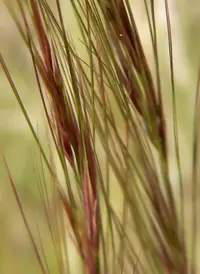
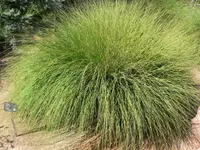
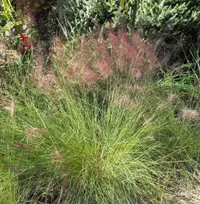
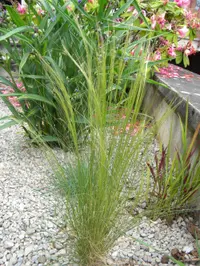
Purple threeawn (Aristida purpurea) is a fine-textured perennial bunchgrass native to dry prairies, plains, and open slopes across much of North America. It forms narrow, upright clumps that show airy purple to pinkish seed awns, giving the plant a soft, hazy look when in bloom. This grass is highly drought-tolerant and adapted to poor, sandy or rocky soils, which makes it well suited to low-water landscapes and naturalistic plantings. It prefers full sun and dry to slightly moist conditions, and usually dislikes heavy, soggy ground. For gardeners who want to care for purple threeawn successfully, it helps to mimic its native dry, open habitat as closely as possible.

Care Difficulty
Easy Care

Light Preference
Full Sun

Water Requirements
Low Water

Temperature Preference
Cold Hardy

Hardiness Zone
4–9

Soil Texture
Sandy, Loamy, Rocky

Soil pH
Slightly acidic (6.5–7.0), Neutral (7.0)

Soil Drainage
Well-drained

Fertilization
Minimal (feed rarely)
Scan your plant to receive care tips personalized for your specific plant
Available on iOS and Android
This sun-loving grass thrives in open, exposed sites with strong light.
Aristida purpurea is a drought-tolerant grass that prefers dry, fast-draining conditions.
This warm-season grass is adapted to wide temperature swings in arid and semi-arid climates.
This grass tolerates a wide humidity range and rarely needs special humidity care indoors or outdoors.
This drought-tolerant grass prefers lean, very well-drained soil and declines in rich, wet conditions.
This species can be grown in containers outdoors if drainage and stability are carefully managed.
This drought-adapted native grass needs very little feeding, and excess nutrients can weaken growth.
Pruning needs for Aristida purpurea are minimal and mainly cosmetic.
Aristida purpurea is usually grown in the ground, with transplanting needed only when clumps outgrow their site or containers.
New plants are usually raised from seed, with division possible but more stressful for mature clumps.
This species is cold hardy in much of its native range and needs little winter care in the ground.

Plant Health Check
Not sure what's wrong with your plant? Check your plant's health inside the app.
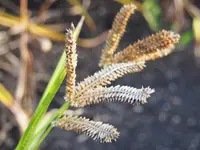
The flowering panicles emerge green, then turn a vivid purple before drying to a straw color, a color shift caused by changes in pigment concentration and cell structure as the tissues mature and desiccate.
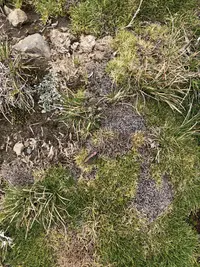
This grass is particularly abundant on sandy, gravelly, and disturbed soils in the North American West and Great Plains, where its deep, fibrous root system helps it persist under low rainfall and high temperature conditions.
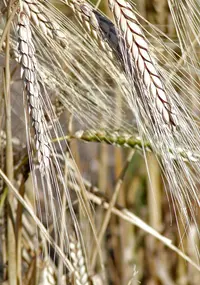
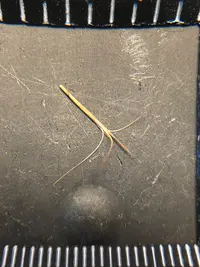
Each spikelet carries three long, bristle-like awns that catch on fur and clothing, allowing the seeds to hitchhike with animals and humans to colonize new, often harsh, habitats.

Genetic studies place this species as part of a group of drought-adapted Aristida grasses that diversified in North American drylands, indicating that it is the product of a long evolutionary history of adaptation to arid and semi-arid ecosystems.
This grass is a short-lived perennial, often persisting 3–5 years under suitable conditions. It may behave almost like a reseeding annual where conditions are harsh, as self-sown seedlings can replace older clumps over time.
Keep your plants happy and healthy with plant identification, disease detection, and easy care guidance.