


Train Young Vines
Install a sturdy trellis, wire, or fence before planting and loosely tie new shoots with soft garden ties so the vine establishes an orderly framework that is easy to maintain and prevents stems from tangling on the ground.

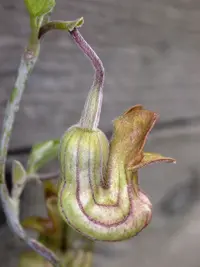
California dutchman's pipe (Aristolochia californica) is a deciduous woody vine native to Northern and Central California, often found along streams, canyons, and oak woodlands. It twines over shrubs, fences, or small trees, forming a loose, scrambling mass of stems and heart-shaped leaves.
Its unusual pipe-shaped flowers appear before or with the leaves and are mainly valued for supporting native pipevine swallowtail butterflies. Once established, it is long-lived but slow to settle in, which can make it seem challenging at first.
Gardeners who learn how to care for California dutchman's pipe usually find it reliable if given cool roots, moderate moisture, and light shade in hotter regions.

Care Difficulty
Moderate Care

Light Preference
Partial Sun

Water Requirements
Moderate Water

Temperature Preference
Cool Climate

Hardiness Zone
7–10

Soil Texture
Sandy, Loamy, Clay

Soil pH
Slightly acidic (6.5–7.0), Neutral (7.0)

Soil Drainage
Moist but well-drained

Fertilization
Minimal (feed rarely)
Scan your plant to receive care tips personalized for your specific plant
Available on iOS and Android
This deciduous vine prefers bright outdoor conditions that balance sun and protection from intense heat.
This vine prefers evenly moist, well-drained soil that never stays saturated for long periods.
This species is adapted to Mediterranean-type climates with mild, wet winters and warm, dry summers.
This vine handles a wide humidity range and rarely needs special humidity management outdoors.
This species prefers moderately fertile, well-drained, slightly moist soil that still contains some organic matter.
This species can be grown in containers if the pot is large and stable enough to support its vining habit.
This native vine usually needs minimal feeding, especially in the ground with decent soil.
Pruning helps manage size and maintain healthy, flowering growth on Aristolochia californica.
This vine is usually grown in the ground, with transplanting focused on young plants rather than mature specimens.
Aristolochia californica is typically propagated by seed or softwood cuttings under controlled conditions.
This species is cold hardy in much of its range and usually needs only minimal winter care.

Plant Health Check
Not sure what's wrong with your plant? Check your plant's health inside the app.
This vine is the primary native host plant for the pipevine swallowtail butterfly (Battus philenor) in much of California, whose caterpillars feed almost exclusively on its foliage and sequester its toxic compounds for their own defense.
Its curved, pipe-shaped flowers produce a faint odor that lures small flies, which become temporarily trapped inside and dusted with pollen before escaping, increasing the chances of cross‑pollination.
Unlike many tropical Aristolochia species, this plant is winter-deciduous in its native California climate, dropping its leaves in the cool season and leafing out again in late winter or early spring in sync with local rainfall patterns.

The flowers often bloom before the leaves fully emerge, so in late winter the bare, twisting stems can be dotted with pale, pipe-shaped blooms that stand out in oak woodlands and along stream corridors, making the species easier to spot in its natural habitat.
This vine is an important host plant for pipevine swallowtail butterflies. Caterpillars feed on the leaves, while the unusual flowers are mainly pollinated by small flies rather than bees, so bee activity around it is usually low.
Keep your plants happy and healthy with plant identification, disease detection, and easy care guidance.

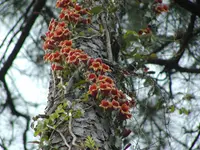
crossvine
Bignonia capreolata
 POPULAR
Philodendron Cobra
Monstera standleyana
 POPULAR
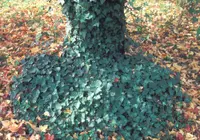
English Ivy
Hedera helix
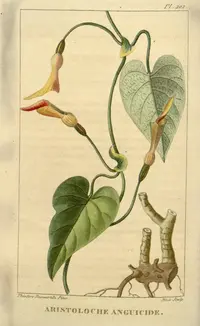
harlequin dutchman's pipe
Aristolochia anguicida
 POPULAR
Monstera lechleriana
Monstera lechleriana
 POPULAR
Monstera minima
Monstera minima
 POPULAR
Window-Leaf Monstera
Monstera obliqua
Jelly Melon
Cucumis metuliferus