


Supportive trellis setup
Install a sturdy trellis, wire mesh, or fence before planting so the vine can attach and climb naturally, and gently guide new shoots onto the support rather than letting them sprawl on the ground.

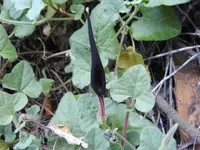
Wright's dutchman's pipe (Aristolochia wrightii) is a perennial twining vine valued for its unusual, pipe-shaped flowers and dense foliage. It often climbs on fences, trellises, or shrubs, forming a leafy screen.
This species is native to the southwestern United States and northern Mexico, where it grows in dry, sunny habitats. The flowers attract specialized butterflies, making it useful in wildlife gardens.
It is generally sturdy once established but needs support to climb and consistent moisture during its early growth. Understanding how to care for Wright's dutchman's pipe helps keep the vine healthy and prevent stress in hotter or drier sites.

Care Difficulty
Moderate Care

Light Preference
Full Sun

Water Requirements
Moderate Water

Temperature Preference
Warm Climate

Hardiness Zone
8–10

Soil Texture
Sandy, Loamy, Rocky

Soil pH
Slightly acidic (6.5–7.0), Neutral (7.0)

Soil Drainage
Well-drained

Fertilization
Minimal (feed rarely)
Scan your plant to receive care tips personalized for your specific plant
Available on iOS and Android
This sun-loving vine needs strong light to flower well outdoors in warm climates.
This vine prefers evenly moist, not soaked, soil during its main growing season.
This species thrives in warm conditions and dislikes prolonged cold or frost.
Humidity is a minor factor for Wright's dutchman's pipe, which adapts well to typical household or outdoor levels.
Aristolochia wrightii prefers a loose, draining substrate that stays slightly moist but never waterlogged.
This species can be grown successfully in containers outdoors.
This drought-tolerant native vine needs only light feeding when grown in lean or sandy soils; many garden plants of Wright's dutchman's pipe perform well with minimal fertilizer.
Pruning helps manage the vigorous growth of Aristolochia wrightii and keeps the vine within its support area.
Aristolochia wrightii is most often grown in the ground, where transplanting is more relevant than frequent repotting.
Aristolochia wrightii is commonly propagated from seeds or softwood cuttings, both of which benefit from warm, stable conditions.
This vine is reasonably cold hardy in much of its range and usually needs only modest winter care once established in the ground.

Plant Health Check
Not sure what's wrong with your plant? Check your plant's health inside the app.
This vine is a primary larval host for the pipevine swallowtail butterfly (Battus philenor) in parts of the southwestern United States, providing both food and chemical protection for the caterpillars.
Native to arid regions of Texas, New Mexico, and northern Mexico, this species is adapted to hot, dry conditions and often grows along washes and rocky slopes where brief rainfall events provide moisture pulses.
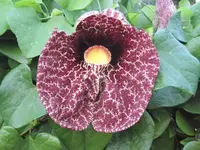
The flowers are small, tubular, and pipe-shaped with a dark, mottled inner surface that helps attract tiny pollinating insects, but they are much less showy than many other related Aristolochia species.

The leaves and other tissues of this plant contain aristolochic acids, toxic compounds that pipevine swallowtail caterpillars store in their bodies, making the adult butterflies distasteful to many predators and contributing to their warning coloration.
This species is especially valuable for native swallowtail butterflies, which use it as a larval host plant. The unusual flowers attract specialized pollinating flies more than bees, so it supports a distinct group of beneficial insects in the garden.
Keep your plants happy and healthy with plant identification, disease detection, and easy care guidance.

hyacinthbean
Lablab purpureus
 POPULAR
Monstera minima
Monstera minima
crossvine
Bignonia capreolata
Jelly Melon
Cucumis metuliferus
 POPULAR
Philodendron Cobra
Monstera standleyana
Charentais Melon
Cucumis melo var. cantalupo
 POPULAR
Monstera lechleriana
Monstera lechleriana
elegant dutchman's pipe
Aristolochia littoralis