Improve Drainage Mounds
On heavier soils, plant clumps on slight mounds or low rock berms 5–10 cm high to keep the crown from sitting in winter-wet conditions and reduce root rot risk.

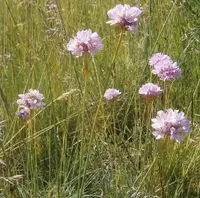
Jersey thrift, Armeria arenaria, is a compact, evergreen perennial forming low cushions of narrow, grassy leaves. It produces rounded heads of pink or white flowers on slender stems. In nature it occurs in coastal dunes, sandy grasslands, and rocky slopes in western Europe, where it tolerates wind, salt, and poor soils. This background makes it a reliable choice for rock gardens, edging, and containers in exposed sites. The plant prefers full sun, good drainage, and relatively dry, lean soil, which helps prevent rot and keeps the foliage dense. These traits generally make it easy to grow if excess moisture is avoided, and understanding how to care for Jersey Thrift mainly means matching its dry, sunny, coastal conditions.

Care Difficulty
Easy Care

Light Preference
Full Sun

Water Requirements
Low Water

Temperature Preference
Cold Hardy

Hardiness Zone
4–9

Soil Texture
Sandy, Loamy, Rocky

Soil pH
Acidic (5.5–6.5), Slightly acidic (6.5–7.0)

Soil Drainage
Well-drained

Fertilization
Minimal (feed rarely)
Scan your plant to receive care tips personalized for your specific plant
Available on iOS and Android
This coastal perennial thrives in bright, open sites with plenty of direct sun.
This species prefers dry to slightly moist soil and is sensitive to standing water.
This hardy perennial tolerates a wide temperature range once established.
This coastal perennial prefers dry to moderately dry air and rarely needs humidity adjustment.
Armeria arenaria prefers lean, sharply drained, sandy soil that mimics coastal or rocky habitats.
This species can grow well in containers if drainage is carefully controlled.
Armeria arenaria needs only modest feeding to maintain compact mounds and steady flowering.
Pruning Armeria arenaria focuses on deadheading and tidying to extend bloom and keep plants compact.
This species is most often grown in beds or rock gardens; transplanting is infrequent and should be done carefully.
Armeria arenaria is commonly propagated by division or seeds to maintain healthy, flowering clumps.
Armeria arenaria is generally cold hardy in much of the US and needs only minimal winter care in the ground.

Plant Health Check
Not sure what's wrong with your plant? Check your plant's health inside the app.
Armeria arenaria is naturally restricted to coastal and inland sandy habitats of western Europe, where it anchors loose, nutrient-poor sand with its dense fibrous root system and tight leaf tufts.
The species forms low, compact cushions that stabilize dunes and sandy slopes, reducing soil erosion while leaving small gaps that other specialized sand plants can later colonize.
Its narrow, grass-like leaves tolerate salt spray and occasional salt deposition, allowing populations to persist close to the sea where many less tolerant species fail to establish.
Lack of flowers usually comes from too much shade, overly rich or wet soil, or old, crowded clumps. Provide full sun, sharply drained soil, and deadhead spent blooms. Dividing dense plants every few years often restores flowering.
Keep your plants happy and healthy with plant identification, disease detection, and easy care guidance.