Armeria canescens Care

Armeria canescens

About Armeria canescens

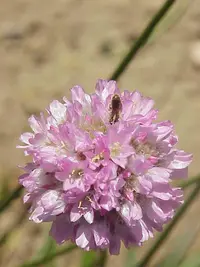
Armeria canescens is a compact perennial, often used as a rock garden or edging plant. It forms low, neat clumps of narrow, grass-like leaves with small round flower heads held on short stems.

This species is native to rocky, often coastal or alpine habitats in parts of Europe, where it thrives in well-drained, poor soils. It is generally easy to grow if kept in sun and not overwatered.

The plant tolerates wind, lean soil, and some drought, which makes it suitable for low-maintenance borders and containers. Understanding how to care for Armeria canescens mainly involves providing sharp drainage and avoiding heavy, wet conditions.

Main Plant Requirements

Care Difficulty

Easy Care

Light Preference

Full Sun

Water Requirements

Low Water

Temperature Preference

Cold Hardy

Hardiness Zone

4–8

Soil Texture

Sandy, Loamy, Rocky

Soil pH

Acidic (5.5–6.5), Slightly acidic (6.5–7.0)

Soil Drainage

Well-drained

Fertilization

Minimal (feed rarely)

Get Personalized Care Plan

Scan your plant to receive care tips personalized for your specific plant

Available on iOS and Android

How to Care for the Armeria canescens

This alpine perennial prefers bright, open conditions to flower well.

  • Provide 6–8 hours of direct sun daily; morning to early afternoon sun is ideal for compact growth and abundant blooms.
  • It tolerates light afternoon shade in hotter regions, but flowering of Armeria canescens declines if it receives less than about 4–5 hours of direct sun.
  • In summer heatwaves, protect from intense late-afternoon sun with nearby plants or light shade to reduce leaf scorch and soil moisture loss.

This species prefers relatively dry, sharply drained conditions and dislikes prolonged wet soil.

  • Allow the top 3–5 cm of soil to dry between waterings; in many climates this means deep but infrequent watering once the foliage no longer looks turgid and the soil feels dry.
  • During cool seasons and rainy periods, watering is rarely needed if soil drains freely; persistent limp foliage, yellowing bases, or a rotten crown often indicate overwatering or poor drainage.
  • In hot, dry spells, water thoroughly, then let excess drain away; crisp leaf tips and shrinking clumps suggest underwatering, but avoid leaving the soil wet for more than 1 day.

This hardy perennial performs best in cool to moderately warm conditions typical of temperate climates.

  • Optimal growth occurs around 55–70°F (13–21°C), with flowering strongest in cool springs and mild summers when roots stay relatively cool and soil is not waterlogged.
  • Established plants tolerate winter cold down to about 0°F (−18°C) with good drainage; prolonged freeze-thaw in wet soil is more damaging than steady low temperatures.
  • In summer, plants handle brief heat up to 85–90°F (29–32°C) if soil is not soggy; light afternoon shade and mulch that does not touch the crown help reduce heat stress.

This species prefers dry, airy conditions and does not need elevated humidity.

Armeria canescens thrives in lean, sharply drained soil that does not stay wet.

  • Use a sandy or gritty loam with low to moderate organic matter to prevent compaction.
  • Aim for mildly acidic to neutral pH, around 6.0–7.0, avoiding strongly alkaline substrates.
  • Blend mineral components such as coarse sand, fine gravel, or grit to improve drainage and root aeration.
  • Avoid heavy clay, peat-heavy mixes, or any soil that holds water for longer than 1–2 days after rain or watering.

This species can grow reliably in containers when drainage and root conditions are controlled carefully.

  • Choose a wide, shallow pot to match the shallow, fibrous root system and keep the crown above the rim for quick surface drying.
  • Use a gritty, fast-draining mix and raise the container slightly on pot feet so drainage holes stay clear.
  • Select a heavier container material, such as terracotta or ceramic, to prevent tipping in windy, exposed positions.

This alpine perennial stays compact and flowers well in lean soil, so Armeria canescens needs only light feeding.

  • Use a low-dose, balanced fertilizer (around 10-10-10) or a thin layer of compost in early spring.
  • Feed once at the start of the main growing season; a second light dose in midsummer is optional.
  • Dilute liquid fertilizer to 1/2–1/4 strength to avoid lush, weak growth.
  • Avoid feeding in late fall and winter to let growth harden and rest.

Pruning Armeria canescens is simple and mainly supports tidy growth and repeat flowering.

  • Deadhead spent flower stems through spring and summer using clean scissors or hand pruners.
  • In late summer or early fall, lightly trim back faded foliage tufts to refresh the mound.
  • Remove any dead, diseased, or damaged leaves and crowns whenever noticed.
  • Avoid cutting into the woody crown; keep pruning to soft, green growth to prevent setbacks.

This species is usually grown in rock gardens or borders, so transplanting matters more than frequent repotting.

  • Transplant or divide in early spring or early fall when temperatures are mild.
  • Look for tight clumps with bare centers or weak flowering as signs the plant needs lifting and resetting.
  • Move or divide every 3–5 years, replanting in sharply drained soil at the same depth.
  • Lift clumps carefully, keep roots slightly moist, and water in gently to reduce transplant shock.

Armeria canescens is commonly multiplied by division, with seeds as a secondary option.

  • Divide healthy clumps in early spring, keeping several shoots and roots on each section.
  • Replant divisions into gritty, well-drained soil and keep evenly moist until established.
  • Sow seeds in late winter or early spring in a bright, cool spot around 60–65°F.
  • Provide excellent drainage and avoid overwatering to prevent rot during rooting or germination.

This hardy perennial tolerates typical winters in many temperate regions and needs only modest care.

  • Plants in the ground usually overwinter well if soil drains freely and does not stay waterlogged.
  • Apply a thin, dry mulch around but not over the crown in colder areas to buffer freeze–thaw cycles.
  • Move containers to a sheltered, unheated but frost-light area, or insulate pots to protect roots.

Care Tips

Encourage compact mounds

Shear back spent flower stems and the top 2–3 cm of foliage in late summer to maintain a dense cushion and promote fresh basal growth before winter.

Improve drainage structure

In heavier soils, create a shallow raised ridge or berm 5–8 cm high mixed with grit or small gravel and plant on top to prevent crown rot in wet periods.

Use gravel mulch

Apply a 1–2 cm layer of coarse grit or fine gravel around the crown to keep leaf bases dry, reduce soil splash, and mimic the plant’s natural rocky habitat.

Plan for winter wet

In regions with wet winters, site plants on a slight slope or in rock crevices so excess water drains away from the crown, or integrate them into a rock garden where water sheds quickly.

Renew aging clumps

Every 3–4 years, lift and gently divide only the healthiest outer sections of the cushion in early spring, discarding any woody centers to maintain vigor when growing Armeria canescens.

Common Pests and Diseases

Leaf spot

This disease causes small brown to purplish spots on leaves and flower stalks, often enlarging and merging in damp conditions.

Solution

Remove and discard affected leaves, avoid overhead watering, and improve air circulation around plants; in persistent wet weather, a copper-based fungicide labeled for ornamentals can be applied according to the label as part of general Armeria canescens care instructions.

Crown rot

This disease leads to yellowing, collapse, and rotting at the base of the plant, especially in heavy or waterlogged soils.

Solution

Dig out and discard severely affected clumps, improve drainage with gritty material, and replant only in sharply drained soil or raised beds while avoiding mulch piled against the crown.

Aphids

These insects cluster on new growth and flower stems, sucking sap and causing distortion, sticky honeydew, and sooty mold on foliage.

Solution

Spray affected areas with a strong stream of water to dislodge colonies, then treat remaining insects with insecticidal soap or neem oil, repeating weekly until populations drop; encourage natural predators such as lady beetles by avoiding broad-spectrum insecticides nearby.

Spider mites

This pest causes fine speckling, dull foliage, and delicate webbing, especially in hot, dry conditions or in exposed, stressed plants.

Solution

Rinse foliage thoroughly with water, focusing on leaf undersides, then maintain more even soil moisture and increase air movement; if needed, apply a horticultural oil or insecticidal soap, repeating at intervals to target successive generations.

Rust

This disease produces small orange to brown pustules on leaf undersides, sometimes causing yellowing or early leaf drop in humid conditions.

Solution

Remove and destroy infected leaves, water at soil level instead of wetting foliage, and space plants to improve airflow; in recurring cases, use a labeled ornamental fungicide on new growth early in the season according to package directions.

Interesting Facts

Native limestone specialist

This species occurs naturally on calcareous, often limestone-rich mountain slopes and rocky outcrops in parts of southern Europe, showing a clear preference for alkaline, mineral-rich substrates.

Silvery leaf coating

The foliage has a fine, grayish hairiness that gives a canescent, or hoary, appearance and helps reduce water loss and reflect intense sunlight in exposed habitats.

Compact alpine cushion

In its native range it forms low, dense cushions adapted to wind-exposed alpine and subalpine conditions, helping stabilize thin soils on rocky ledges.

FAQs about Armeria canescens

This species forms tight, slowly expanding clumps and short mats. It does not run by invasive roots or stolons. In most gardens it stays well behaved and is unlikely to crowd out neighboring plants.

Grow Healthy Plants with Botan Care

Keep your plants happy and healthy with plant identification, disease detection, and easy care guidance.

Botan plant care app — identify plants on mobile

Explore More Plants