Armeria macrophylla Care

Armeria macrophylla

About Armeria macrophylla

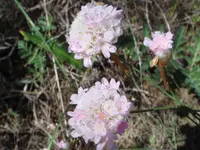
Armeria macrophylla is a compact, clump-forming perennial known for its neat mounds of grassy foliage and rounded clusters of small, pink to rosy flowers. It is often grown as an edging or rock garden plant, where its tidy form and long flowering period provide consistent structure and color.

This species is native to rocky and coastal habitats, so it typically prefers well-drained, low to moderately fertile soils and does not like waterlogged conditions. Its tolerance of poor soils and wind makes it relatively straightforward to grow, provided drainage is good. For gardeners learning how to care for Armeria macrophylla, its main needs are strong light, good air circulation, and avoidance of overly rich or wet sites.

Main Plant Requirements

Care Difficulty

Easy Care

Light Preference

Full Sun

Water Requirements

Moderate Water

Temperature Preference

Cold Hardy

Hardiness Zone

4–8

Soil Texture

Sandy, Loamy, Rocky

Soil pH

Acidic (5.5–6.5), Slightly acidic (6.5–7.0)

Soil Drainage

Well-drained

Fertilization

Minimal (feed rarely)

Get Personalized Care Plan

Scan your plant to receive care tips personalized for your specific plant

Available on iOS and Android

How to Care for the Armeria macrophylla

This coastal perennial prefers bright, open conditions to flower well.

  • Provide 6–8 hours of direct sun daily; morning sun with light afternoon shade suits hotter inland climates best.
  • Tolerates light partial shade (3–4 hours sun), but flowering of Armeria macrophylla decreases and foliage becomes looser in deeper shade.
  • In summer, protect from intense, reflected afternoon sun in very hot areas to reduce leaf scorch; in winter, choose the sunniest spot available to support compact growth.

This plant prefers slightly dry conditions and is prone to rot in wet soil.

  • Allow the top 3–5 cm of soil to dry between waterings; the surface should feel dry and the soil slightly crumbly before adding water.
  • Use sharply drained, sandy or gritty soil so water runs through quickly; avoid sites where water pools for more than 30 minutes after rain to reduce root rot risk for Armeria macrophylla.
  • In cooler months, rainfall is often sufficient; in hot, dry spells, water deeply when foliage begins to lose stiffness or outer leaves show slight curl.

This hardy perennial tolerates a wide temperature range when soil drainage is excellent.

  • Best growth occurs around 55–70°F (13–21°C), with compact mounds and steady flowering in spring and early summer.
  • Mature plants usually survive short drops to about 0°F (−18°C) if soil is well drained; in colder regions, mulch lightly to buffer freeze–thaw cycles around the crown.
  • Handles summer heat up to about 85–90°F (29–32°C) if roots stay cool and soil is not waterlogged; prolonged extreme heat above this can reduce flowering and stress foliage.

This coastal perennial handles a wide humidity range and rarely needs special humidity management.

  • Performs well at 30–60% humidity, similar to most outdoor conditions in temperate climates.
  • Tolerates dry air without stress provided soil moisture is consistent and roots do not dry completely.
  • True humidity stress is uncommon; leaf tip burn usually indicates drought or excess fertilizer rather than low humidity.
  • In very dry, windy sites, shelter the plant with nearby stones or low edging to slightly buffer moisture loss.

Armeria macrophylla prefers lean, sharply drained soil that does not stay wet after rain or watering.

  • Use sandy or gritty loam with low to moderate organic matter; aim for a loose, crumbly texture that never compacts.
  • Maintain pH around 6.0–7.5; avoid very acidic or alkaline spots that can restrict nutrient uptake and weaken plants.
  • Blend coarse sand or fine gravel with garden soil and a small amount of compost to improve drainage while still holding some moisture.
  • Avoid heavy clay, sites where water puddles, or mixes rich in peat that stay wet, as these conditions promote crown and root rot.

This species adapts well to container growing when drainage and root space are carefully managed.

  • Choose a wide, shallow pot so the mat-forming roots can spread laterally without sitting in deep, wet compost.
  • Select a gritty mix and a pot with large drainage holes so water exits quickly after irrigation or heavy rain.
  • Use a heavier clay or ceramic container in windy spots to prevent the plant’s tufted foliage and flower stalks from tipping the pot.

This coastal perennial prefers lean soil, so Armeria macrophylla needs only light, careful feeding.

  • Use a low-dose balanced fertilizer (around 5-5-5) or a thin layer of compost in early spring.
  • Apply once at the start of the growing season; a second light feed in midsummer is enough in poor soils.
  • Dilute liquid fertilizer to 1/2–1/4 strength to avoid soft, floppy growth and reduced flowering.
  • Do not feed in fall or winter, as the plant is relatively dormant and excess nutrients can stress roots.

Thoughtful pruning keeps Armeria macrophylla compact and flowering well.

  • Deadhead spent flower stems throughout the blooming season to extend flowering and maintain a tidy mound.
  • In late summer or early fall, trim back faded foliage lightly to encourage fresh, dense growth.
  • Remove any dead, damaged, or diseased leaves and stems with clean, sharp scissors or hand pruners.
  • Avoid cutting into the woody crown; focus on soft, green tissue to prevent plant stress and rot risks.

This species is usually grown in the ground, with only occasional transplanting or container refreshing needed.

  • Check for signs like roots circling the pot, water running straight through, or stalled growth in containers.
  • Transplant or up-pot in early spring so Armeria macrophylla can reestablish before summer heat.
  • Use a gritty, sharply drained mix and move only 1 pot size up to limit excess moisture around the crown.
  • Handle the root ball gently, keeping it mostly intact, then water once and allow the soil to dry slightly between waterings.

Division and seeds are the most practical ways to increase Armeria macrophylla.

  • Divide mature clumps in early spring, before strong new growth, separating into firm, healthy sections with roots attached.
  • Replant divisions at the same depth in well-drained soil and water lightly until established.
  • Sow seeds on the surface of a gritty mix, barely covering, and keep at 60–68°F with even but light moisture.
  • Provide bright light and good air movement to reduce damping-off and encourage compact seedling growth.

This hardy perennial tolerates cold well and usually needs only minimal winter care in most temperate gardens.

  • Armeria macrophylla copes with frost when planted in sharply drained soil that prevents winter waterlogging.
  • In colder regions, add a thin, loose mulch around but not over the crown to buffer freeze–thaw cycles.
  • For container plants, move pots to a sheltered, unheated spot to avoid saturated, frozen root zones.

Care Tips

Improve drainage mound

Plant on a slight soil mound 3–5 cm high in heavier soils so the crown sits just above the surrounding grade, which reduces winter crown rot and keeps the root zone better aerated when growing Armeria macrophylla.

Compact clump renewal

Every 3–4 years, lift and divide congested clumps in early spring, replanting only the firm, outer sections to maintain dense flowering cushions and prevent die-out in the center.

Salt and wind use

Site plants where they receive good air movement or mild coastal exposure, as this species tolerates salt-laden winds and benefits from reduced foliar disease in breezy locations.

Targeted deadhead method

Cut spent flower stems back to just above the foliage rosette rather than shearing the whole plant, which preserves the leaf cushion while stimulating a cleaner flush of new buds.

Winter wet protection

In regions with cold, wet winters, apply a very thin layer of sharp grit or small gravel around the crown in late autumn to keep foliage off saturated soil and limit fungal problems.

Common Pests and Diseases

Aphids

This pest feeds on young flower stems and foliage, causing distortion, yellowing, and sticky honeydew on the leaves and flower stalks.

Solution

Rinse colonies off with a firm stream of water, then spot-treat remaining insects with insecticidal soap or a ready-to-use neem oil spray, making sure to coat stems and the undersides of leaves. Encourage natural predators such as ladybird beetles by avoiding broad-spectrum insecticides and keeping surrounding vegetation diverse.

Spider mites

These insects puncture leaf surfaces and suck out sap, leading to fine speckling, dull or bronzed foliage, and very fine webbing between leaves and stems in hot, dry weather.

Solution

Increase humidity around the plant where feasible and hose down foliage thoroughly, directing water to the undersides of leaves to dislodge mites. For persistent infestations, apply insecticidal soap or a horticultural oil on a 7–10 day schedule, rotating products if needed and avoiding treatments during high heat above 85°F.

Leaf spot

This disease causes small brown to dark purple spots on leaves that may enlarge and merge, leading to premature leaf yellowing and thinning of the clump.

Solution

Remove and discard affected leaves to reduce inoculum, and avoid overhead watering so foliage stays as dry as possible, especially in the evening. Improve spacing and airflow around plants and, in severe or recurring cases, use a labeled copper or chlorothalonil fungicide according to Armeria macrophylla care instructions.

Crown rot

This disease affects the dense basal rosette, causing a mushy crown, collapse of outer leaves, and eventual death of the clump, especially in heavy or poorly drained soils.

Solution

Dig up and discard severely affected plants, including surrounding wet soil, to prevent spread. Improve drainage by amending soil with grit or sand, plant on a slight mound, avoid overwatering, and do not mulch tightly around the crown so its base can dry quickly after rain.

Interesting Facts

Large-leaved thrift

Among sea thrift relatives, this species is notable for its unusually broad, flat leaves, which create a denser, more substantial clump compared with the narrow, grass-like foliage typical of many other Armeria species.

Rocky mountain specialist

In its native range, it typically occurs on rocky, often calcium-poor slopes and outcrops, where it anchors in thin, well-drained soils that many other perennials cannot tolerate.

Compact flowering cushions

Mature plants form tight, dome-shaped cushions that send up numerous short flower stalks, creating a concentrated display of pink flower heads held just above the foliage in late spring to early summer; this growth habit is valuable in rock gardens and alpine plantings when growing Armeria macrophylla.

FAQs about Armeria macrophylla

This species is a perennial, forming evergreen or semi-evergreen clumps that return each year. Individual rosettes may be short-lived, but the overall tuft persists for many seasons when conditions are well-drained and not overly fertile.

Grow Healthy Plants with Botan Care

Keep your plants happy and healthy with plant identification, disease detection, and easy care guidance.

Botan plant care app — identify plants on mobile

Explore More Plants