Support in windy sites
Install low, unobtrusive wire hoops or a short ring stake around clumps in exposed sites so stems stay upright and flowers are held above surrounding vegetation rather than lodging in heavy rain or wind.

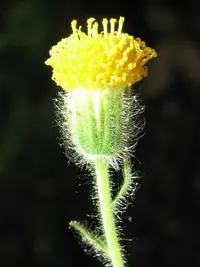
Rayless arnica (Arnica discoidea) is a small perennial wildflower in the Asteraceae family, native to western North America. It typically grows in open woods, mountain meadows, and rocky slopes.
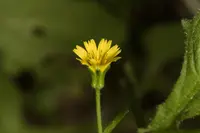
The plant forms low clumps with yellow, button-like flower heads that lack the showy outer ray petals seen in many daisies. Its upright stems and simple leaves give it a modest, tidy appearance in naturalistic plantings.
Arnica discoidea prefers cool to mild climates, with sun to light shade, well-drained soil, and moderate moisture. It can be somewhat challenging outside its native range, so learning how to care for rayless arnica helps improve long-term success.

Care Difficulty
Moderate Care

Light Preference
Partial Sun

Water Requirements
Moderate Water

Temperature Preference
Cool Climate

Hardiness Zone
5–9

Soil Texture
Sandy, Loamy, Rocky

Soil pH
Acidic (5.5–6.5), Slightly acidic (6.5–7.0)

Soil Drainage
Well-drained

Fertilization
Minimal (feed rarely)
Scan your plant to receive care tips personalized for your specific plant
Available on iOS and Android
This montane wildflower prefers bright conditions that mimic open woodland or meadow edges.
This species prefers consistently moist, cool soil but not waterlogged conditions.
This plant is adapted to cool to mild climates with distinct seasons.
Arnica discoidea tolerates a wide humidity range and usually does not need special humidity management outdoors or in typical homes.
Arnica discoidea prefers loose, fast-draining, slightly acidic to neutral soil that mimics open woodland or meadow conditions.
This species can be grown in containers if the pot setup prevents waterlogging and root overheating.
Arnica discoidea is a modest feeder that benefits from light nutrition in poorer soils.
Pruning needs for Arnica discoidea are light and mainly focused on maintaining plant health.
This species is more often transplanted in beds or naturalistic plantings than grown long term in containers.
Arnica discoidea is typically propagated by seed or by careful division of established clumps.
This species is generally cold hardy in its native range and requires minimal winter care in the ground.

Plant Health Check
Not sure what's wrong with your plant? Check your plant's health inside the app.
Unlike most other arnica species, this plant typically lacks the showy outer ray florets, so its flower heads appear as tight clusters of yellow disk florets only, which led to the common name rayless arnica.
This species is native to western North America, where it grows mainly in mid- to high-elevation coniferous forests, open woods, and mountain slopes, often on relatively dry, well-drained soils.
Arnica discoidea is known to hybridize with some closely related Arnica species in areas where their ranges overlap, which can create local populations with intermediate leaf shape and flower traits that complicate field identification.

Arnica discoidea has been treated under different scientific names in the past and has a complex taxonomic history, with some botanists historically considering it a variety or form of other Arnica species before molecular and morphological studies supported its recognition as a distinct species.
Growth is moderate rather than fast. In suitable outdoor conditions, plants usually reach near-mature size in 2–3 seasons. Poor soils, heat stress, or low moisture slow development, while cool summers and consistent moisture support steady growth.
Keep your plants happy and healthy with plant identification, disease detection, and easy care guidance.