Joe Pye Weed Care (Eutrochium maculatum 'Gateway')

Also known as: Spotted joepyeweed, Joepyeweed

About Joe Pye Weed

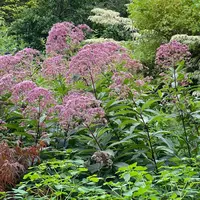
Eutrochium maculatum 'Gateway', commonly called Joe Pye weed, is a tall, clump-forming perennial grown mainly for its large, mauve-pink flower clusters. It has strong, upright stems, whorled leaves, and a bold, architectural habit that suits the back of borders or naturalistic plantings.

This cultivar is native to moist meadows and stream edges in North America, so it thrives in consistently damp soil and full sun to light shade. Its sturdy growth, disease resistance, and ability to adapt to average garden conditions make it relatively straightforward to care for Joe Pye Weed when its moisture needs are met.

Main Plant Requirements

Care Difficulty

Easy Care

Light Preference

Full Sun

Water Requirements

Keep Soil Moist

Temperature Preference

Cold Hardy

Hardiness Zone

4–9

Soil Texture

Loamy, Clay, Organic-rich

Soil pH

Acidic (5.5–6.5), Slightly acidic (6.5–7.0)

Soil Drainage

Moist but well-drained

Fertilization

Minimal (feed rarely)

Get Personalized Care Plan

Scan your plant to receive care tips personalized for your specific plant

Available on iOS and Android

How to Care for the Joe Pye Weed

This tall perennial thrives in bright, open positions with consistent moisture and moderate sun exposure.

  • Provide 4–6 hours of direct sun daily, ideally morning sun with light afternoon shade, especially in hotter regions above 85°F (29°C).
  • Tolerates partial shade, but flowering and stem strength decrease if it receives less than 3–4 hours of direct light during summer.
  • In full, harsh afternoon sun, foliage of Joe Pye Weed can scorch or wilt; use neighboring plants or structures to give dappled or filtered light protection at peak heat.

This moisture-loving perennial prefers consistently damp soil but not stagnant or waterlogged conditions.

  • Keep soil evenly moist, allowing only the top 2–3 cm to begin drying before the next deep watering, especially during active growth and flowering.
  • In summer heat or drought, increase watering frequency and check soil near the root zone; drooping leaves that recover by evening usually indicate temporary dryness rather than disease.
  • Reduce watering in late fall and winter dormancy, but avoid completely dry soil; yellowing, limp stems can signal waterlogging, while crispy leaf edges suggest chronic underwatering for Eutrochium maculatum 'Gateway'.

This hardy perennial is adapted to cool to warm outdoor climates with cold winters and mild to warm summers.

  • Optimal growth occurs around 65–80°F (18–27°C), with strong stems and reliable flowering in this range.
  • Dormant crowns tolerate winter lows down to about -30°F (-34°C) in the ground, provided soil drains reasonably and plants are not heaved by freeze–thaw cycles.
  • Mature plants handle summer heat up to about 90°F (32°C) if soil stays moist; prolonged extreme heat or hot, dry winds can cause leaf scorch and reduced bloom size.

This plant grows well outdoors in typical garden humidity and rarely needs special humidity management.

This moisture-loving perennial needs consistently damp, organic-rich soil with structure that holds water yet allows some air around the roots.

  • Use a deep, loamy mix with 40–60% compost plus existing garden soil to mimic streamside conditions.
  • Ensure soil drains slowly rather than quickly; it should stay evenly moist without forming standing water for more than a few hours.
  • Aim for slightly acidic to neutral pH, around 6.0–7.0, which supports nutrient uptake and strong stem growth in Eutrochium maculatum 'Gateway'.
  • Improve heavy clay by incorporating shredded leaf mold or fine bark to increase aeration while still retaining moisture.

This tall perennial can be grown in large outdoor containers if the pot is chosen to match its height and moisture needs.

  • Select a wide, heavy container at least 40–50 cm deep so the tall, top-heavy stems remain stable in wind.
  • Use a moisture-retentive mix and place the pot in a tray that allows brief soaking to keep the root zone evenly damp.
  • Position the container where it is sheltered from strong gusts so the tall stems do not rock and loosen the root mass.

This hardy perennial benefits from modest feeding to support tall growth and flowering.

  • Use a balanced, slow-release fertilizer (for example 10-10-10) or a thin layer of compost in early spring.
  • Feed once in spring and, if soil is poor, again in midsummer during active growth.
  • Apply at half the label rate for perennials to avoid overly lush, floppy stems on Joe Pye Weed.
  • Avoid fertilizing in late fall or winter when the plant is dormant.

Thoughtful pruning keeps Eutrochium maculatum 'Gateway' sturdy, tidy, and floriferous.

  • Cut back dead stems to 5–10 cm above ground in late fall or very early spring using clean pruners.
  • Remove damaged, diseased, or storm-broken stems as needed during the growing season.
  • Thin a few crowded stems at the base in late spring to improve air flow and reduce flopping.
  • Optional: shear back taller stems by 1/3 in late spring to encourage bushier growth and slightly later bloom.

This plant is usually grown in garden beds, with transplanting only needed occasionally.

  • Plan divisions or transplants in early spring or early fall when temperatures are mild.
  • Transplant clumps every 3–5 years if centers thin out, growth slows, or stems become weak and crowded.
  • Water thoroughly before and after moving, and keep soil evenly moist for 1–2 weeks to limit root stress.
  • Lift the clump with a sharp spade, keep roots shaded and moist, then replant at the same depth in enriched soil.

Division is the most reliable way to increase Eutrochium maculatum 'Gateway' in home gardens.

  • Divide mature clumps in early spring just as new shoots emerge, or in early fall after flowering.
  • Use a sharp spade or knife to split the root mass into sections, each with several buds and healthy roots.
  • Replant divisions promptly in moist, fertile soil and water well to settle soil around the roots.
  • Seeds can be sown outdoors in fall; natural cold exposure supports dormancy break and germination.

This species is cold hardy in most temperate climates and needs only modest winter care outdoors.

  • Tolerates freezing temperatures once established, with roots surviving typical USDA zones 4–9.
  • After hard frost, leave dead stems standing for wildlife, or cut back to 5–10 cm above soil level.
  • Apply 5–8 cm of organic mulch around the crown in late fall to buffer freeze–thaw cycles.
  • In containers, move pots to a sheltered, unheated area and prevent the root ball from drying out completely.

Care Tips

Sturdy staking system

Install 3–4 sturdy stakes in a ring around each clump in late spring, then loop soft garden twine loosely around the stems at 30–45 cm intervals to prevent wind damage and flopping as the tall flowering stalks develop.

Strategic clump division

Every 3–4 years in early spring, lift and divide the clump into 2–4 sections with a sharp spade, replanting only the most vigorous outer portions to maintain strong stems and abundant flower heads.

Targeted deadheading

If self-seeding is not desired, remove spent flower heads just as the color fades but before seed fluff forms, which keeps the plant tidy while preventing unwanted spread into nearby beds.

Pollinator corridor planning

Place plants in loose drifts of 3–5 clumps and coordinate bloom times with other late-season natives such as Solidago and asters to create a continuous nectar corridor that maximizes pollinator activity.

Moisture zone management

When growing Joe Pye Weed in mixed borders, position it at the lower or rear edge of beds where runoff naturally collects so the roots receive consistent moisture without waterlogging surrounding plants.

Common Pests and Diseases

Powdery mildew

This disease causes a white, powdery coating on upper leaf surfaces, often in late summer during warm days and cool, humid nights. Symptoms include reduced vigor and premature leaf yellowing or browning.

Solution

Space plants to improve air circulation, avoid overhead watering in the evening, and remove heavily infected leaves to reduce spore spread. In persistent cases, use a labeled sulfur or potassium bicarbonate fungicide early in the outbreak, following all product directions.

Rust

This disease produces orange to brown pustules on the undersides of leaves and yellow spots above, often during prolonged humid weather. Symptoms include leaf distortion and gradual thinning of the clump if infection is severe.

Solution

Promptly remove and destroy affected leaves and any heavily infected stems, and keep the area around the plant free of fallen, diseased foliage. Improve airflow, avoid wetting the foliage, and apply a labeled rust fungicide if the problem recurs each year.

Leaf spot

This disease causes irregular brown or purplish spots on leaves that can merge into larger blotches, especially in crowded, damp plantings. Symptoms include cosmetic damage and, in severe cases, early leaf drop late in the season.

Solution

Thin crowded stems, water at the base rather than from above, and clear away spotted fallen leaves to lower inoculum levels. For repeated outbreaks, apply a broad-spectrum fungicide labeled for ornamental perennials at the first sign of spotting.

Aphids

These insects cluster on tender stems and undersides of leaves, sucking sap and excreting sticky honeydew that can attract sooty mold. This pest can cause distorted new growth and may stress young or newly planted clumps.

Solution

Knock clusters off with a firm stream of water, and encourage natural predators such as lady beetles by minimizing broad-spectrum insecticides nearby. For heavier infestations, use insecticidal soap or a horticultural oil, making sure to coat the undersides of leaves and repeating as needed according to the label.

Leafhoppers

These insects feed by piercing and sucking on leaf tissue, leading to pale speckling, stippling, and sometimes leaf edges that turn brown. This pest is more common in sunny, open sites and can also transmit certain leaf pathogens.

Solution

Reduce tall surrounding weeds and grasses that host leafhoppers, and use a strong spray of water to dislodge them from foliage. If damage is significant, apply an insecticidal soap or pyrethrin-based product in the evening when pollinators are less active, following label directions carefully.

Interesting Facts

Sturdy compact stature

This selection was bred to stay shorter and more compact than wild Eutrochium maculatum, typically forming dense clumps about 4–6 ft tall that hold upright without staking in ordinary garden conditions.

Butterfly magnet umbels

Its large, dome-shaped clusters of mauve-pink flowers are especially attractive to monarchs, swallowtails, and many native bees, making it a reliable nectar hub in late summer when other sources may be declining.

Spotted stem identity

The cultivar retains the species’ characteristic purple-spotted, often hollow stems, which help distinguish it from similar tall perennials and give additional ornamental interest even before flowering.

Botan icon

Did you know?

This cultivar originated as a selected form in European nursery trade for its combination of shorter height, strong stems, and floriferous habit, and it has since become a standard reference plant in many public gardens for demonstrating how to take care of Joe Pye Weed in smaller landscape spaces.

FAQs about Joe Pye Weed

This species is highly attractive to butterflies, bees, and other pollinators due to its large, nectar-rich flower clusters. It is often used in pollinator gardens and can significantly increase insect activity from mid to late summer.

Grow Healthy Plants with Botan Care

Keep your plants happy and healthy with plant identification, disease detection, and easy care guidance.

Botan plant care app — identify plants on mobile

Explore More Plants