Succession Sowing
Sow small batches every 2–3 weeks in early spring to keep blooms coming longer and avoid having all plants age and decline at the same time.

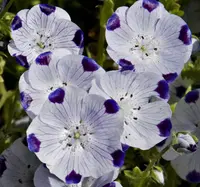
Fivespot, Nemophila maculata, is a low, spreading annual wildflower native to California grasslands and open woodland edges. It is often grown as a cool-season bedding or meadow plant.
Plants form small mounds with finely divided foliage and delicate, cup-shaped white flowers, each petal marked with a distinctive purple spot near the tip. The display is showy when many plants bloom together.
This species prefers mild temperatures, full sun to light shade, and evenly moist, well-drained soil. Short life cycle, preference for cool weather, and sensitivity to heat are the main factors that influence how to care for fivespot.

Care Difficulty
Moderate Care

Light Preference
Partial Sun

Water Requirements
Regular Water

Temperature Preference
Cool Climate

Hardiness Zone
3–10

Soil Texture
Sandy, Loamy, Organic-rich

Soil pH
Acidic (5.5–6.5), Slightly acidic (6.5–7.0)

Soil Drainage
Moist but well-drained

Fertilization
Minimal (feed rarely)
Scan your plant to receive care tips personalized for your specific plant
Available on iOS and Android
Nemophila maculata prefers cool, bright conditions with protection from intense midday sun.
This annual prefers consistently moist but not waterlogged soil throughout its growing season.
This cool-season annual thrives in mild temperatures and struggles in heat or hard frost.
Humidity is rarely a limiting factor for Nemophila maculata in typical outdoor conditions.
Nemophila maculata prefers loose, moist but well-drained soil that does not stay waterlogged.
This species is well suited to container growing, especially for seasonal displays.
Nemophila maculata is a low-feeding annual that benefits from light nutrition in poor soils during active growth.
Pruning needs for Nemophila maculata are minimal and focus on tidying and extending bloom.
This annual is usually direct-sown, so transplanting Nemophila maculata is done gently and infrequently.
Nemophila maculata is most often propagated from seed, which makes renewal each year straightforward.
As a cool-season annual, Nemophila maculata generally completes its life cycle before harsh winter and needs no special winter care.

Plant Health Check
Not sure what's wrong with your plant? Check your plant's health inside the app.
Each flower typically has five white petals, each marked with a single dark purple to almost black spot near the tip, a pattern that inspired the common name fivespot and helps distinguish it from other Nemophila species with more diffuse markings.
This species is a cool-season annual native to California, naturally flowering in early spring and often completing its life cycle before the onset of hot, dry summer conditions.
In its native range, fivespot contributes to early-season nectar and pollen resources in mixed wildflower communities, supporting small native bees and other pollinators in coastal and foothill habitats.

Historical records show that fivespot was introduced into European horticulture by the 19th century as an ornamental novelty in cool-season flower beds, valued for its distinctive spotted corollas among early spring bedding plants.
This species performs best outdoors in cool spring conditions, where it receives good light, air movement, and space. Indoors, light and temperature are harder to control long term, so fivespot indoor care is usually short-term and decorative only.
Keep your plants happy and healthy with plant identification, disease detection, and easy care guidance.