Rocky slope placement
Plant on a slight slope or raised berm with gritty soil so meltwater and heavy rain drain away quickly, which greatly reduces crown rot risk in this alpine species.

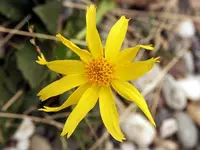
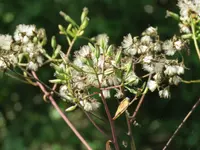
Snow arnica (Arnica griscomii) is a compact, clump-forming perennial wildflower from cold, rocky mountain habitats in North America. It has upright stems with narrow leaves and bright yellow, daisy-like flower heads. The plant typically grows in open alpine meadows, scree slopes, and tundra-like sites, where soils are gritty and sharply drained. It is adapted to cool summers, strong light, and lean soils, which can make garden cultivation somewhat challenging in warmer, lowland climates. Those who care for Snow Arnica should aim to mimic its native conditions, providing plenty of light, good air flow, and consistently moist but free-draining soil.

Care Difficulty
Moderate Care

Light Preference
Partial Sun

Water Requirements
Moderate Water

Temperature Preference
Cold Hardy

Hardiness Zone
3–7

Soil Texture
Loamy, Sandy, Rocky

Soil pH
Acidic (5.5–6.5)

Soil Drainage
Well-drained

Fertilization
Minimal (feed rarely)
Scan your plant to receive care tips personalized for your specific plant
Available on iOS and Android
This alpine perennial prefers bright, cool conditions with moderate direct sun exposure.
This species favors consistently moist but not saturated soil in its natural mountain habitats.
This alpine plant thrives in cool to mild temperatures and dislikes prolonged heat or severe lowland frost.
This alpine perennial tolerates a wide humidity range but prefers moderately dry air.
This species prefers a cool, sharply draining, mineral-rich substrate that mimics alpine slopes.
This species can be grown in containers if the pot and substrate strictly prevent waterlogging.
This alpine perennial needs only light feeding, as Snow Arnica is adapted to nutrient-poor soils.
Pruning Arnica griscomii is minimal and mainly for tidiness and plant health.
This species is usually grown in the ground, so focus on careful transplanting rather than frequent repotting.
Arnica griscomii is most often propagated by division or seed under cool, moist conditions.
This cold-hardy alpine usually needs little special winter care in its suitable hardiness range.

Plant Health Check
Not sure what's wrong with your plant? Check your plant's health inside the app.
This species is native to high Arctic and subarctic regions of eastern North America, where it grows on cold, windswept rocky slopes and tundra, tolerating short growing seasons and low nutrient soils.
Unlike several related Arnica species, its leaves have a specific pattern of fine hairs mainly along the margins and veins, a trait botanists use in combination with leaf shape and size to distinguish it in the field.
Arnica griscomii has a relatively restricted and fragmented distribution, occurring in scattered mountain and coastal Arctic sites, which makes accurate local identification important for monitoring sensitive tundra ecosystems.
Lack of flowers usually comes from too much shade, overly rich nitrogen fertilizer, or plants that are still juvenile. Ensure strong light, lean, well-drained soil, and avoid heavy feeding to support regular alpine-style flowering.
Keep your plants happy and healthy with plant identification, disease detection, and easy care guidance.