Scree-style planting
Plant on a gentle, well-drained slope or in a rock garden bed with coarse gravel mixed into the top 5–8 cm of soil to mimic natural scree conditions and reduce crown rot risk.

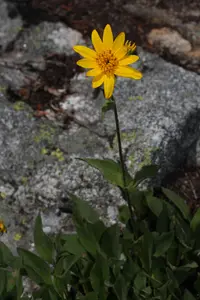
Hairy arnica (Arnica mollis) is a perennial wildflower in the aster family, known for its bright yellow, daisy-like blooms and softly hairy leaves and stems. It forms loose clumps and typically grows in open, cool mountain habitats.
In nature, it occurs in higher elevations of western North America, often in moist meadows and along forest edges. Its preference for cool summers and consistent moisture can make it more challenging in hot or very dry climates.
Gardeners who care for hairy arnica should provide sun to light shade, evenly moist but well-drained soil, and protection from extreme heat for best performance.

Care Difficulty
Moderate Care

Light Preference
Partial Sun

Water Requirements
Moderate Water

Temperature Preference
Cold Hardy

Hardiness Zone
3–8

Soil Texture
Loamy, Sandy, Rocky

Soil pH
Acidic (5.5–6.5)

Soil Drainage
Well-drained

Fertilization
Minimal (feed rarely)
Scan your plant to receive care tips personalized for your specific plant
Available on iOS and Android
This mountain wildflower prefers cool, bright conditions that mimic open subalpine meadows.
This species prefers consistently moist, cool soil without prolonged dryness or saturation.
This species is adapted to cool, high-elevation climates and dislikes prolonged heat.
This mountain wildflower tolerates a broad humidity range, so air moisture is rarely a critical factor in home cultivation.
Arnica mollis prefers cool, moist, sharply drained soil that mimics open mountain meadows.
This species can be grown in containers if moisture and drainage are managed carefully to mimic its cool, free-draining native habitat.
Arnica mollis usually needs only light feeding when grown in low-nutrient garden soils or containers.
Pruning Arnica mollis focuses on tidiness and encouraging continued flowering rather than reshaping the plant.
Arnica mollis is usually grown in the ground, so care centers on dividing and transplanting clumps rather than frequent repotting.
Propagation of Arnica mollis is usually done by division or seed to maintain healthy planting patches.
Arnica mollis is cold hardy in suitable climates and generally needs only simple winter care outdoors.

Plant Health Check
Not sure what's wrong with your plant? Check your plant's health inside the app.
This species is native to high-elevation meadows and open slopes in western North America, often growing above 1,500 m in cool, short-summer environments where many other flowering herbs cannot persist.
Its bright yellow flower heads are composite structures made of both ray florets and disk florets, a typical trait of the Asteraceae family, which provides many small nectar sources within a single apparent flower for visiting insects.
The plant spreads and survives harsh winters using short rhizomes, which are underground stems that store energy and allow it to resprout after snowmelt and minor physical disturbance in its alpine and subalpine habitats.

Arnica mollis is considered a species of conservation concern in parts of its range, such as some U.S. states where its naturally restricted high-elevation habitats and sensitivity to land-use changes have led to regional monitoring and protection efforts.
Poor flowering usually comes from too much shade, nutrient‑rich or heavy soil, or excess moisture. This plant needs lean, well‑drained, slightly acidic soil and cool conditions. Avoid high nitrogen fertilizers, which promote foliage instead of flower buds.
Keep your plants happy and healthy with plant identification, disease detection, and easy care guidance.