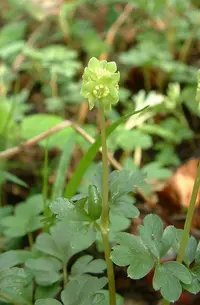
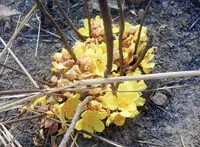
twin arnica Care (Arnica sororia)

Also known as: Orange Arnica
twin arnica

About twin arnica

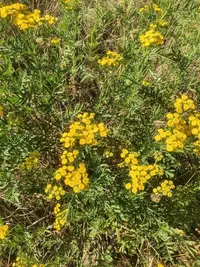
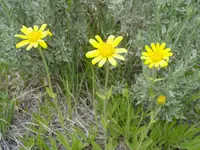
Twin arnica (Arnica sororia) is a small, clump-forming perennial wildflower in the aster family, valued for its bright yellow, daisy-like blooms. It typically grows in open mountain meadows and dry to moderately moist slopes across western North America, often in cooler, higher-elevation habitats.

Plants have upright stems, simple green leaves, and showy flower heads that attract a range of pollinators. Once established, twin arnica is relatively hardy but dislikes heavy, waterlogged soils.

For gardeners, how to care for twin arnica centers on providing sun to light shade, good drainage, and moderate moisture that mimics its natural mountain conditions.

Main Plant Requirements

Care Difficulty

Moderate Care

Light Preference

Full Sun

Water Requirements

Moderate Water

Temperature Preference

Cold Hardy

Hardiness Zone

3–8

Soil Texture

Sandy, Loamy, Rocky

Soil pH

Acidic (5.5–6.5), Slightly acidic (6.5–7.0)

Soil Drainage

Well-drained

Fertilization

Minimal (feed rarely)

Get Personalized Care Plan

Scan your plant to receive care tips personalized for your specific plant

Available on iOS and Android

How to Care for the twin arnica

This mountain perennial prefers bright sites with cool conditions and moderate sun exposure.

  • Provide 4–6 hours of direct morning sun with light afternoon shade; in hotter regions, use dappled or filtered light after 12 p.m. to prevent leaf scorch.
  • Twin arnica tolerates open sun in cool, high-altitude or northern climates if soil stays evenly moist and roots are mulched.
  • In partial shade (2–4 hours sun), stems may stretch and flowering declines, signaling the plant needs slightly more light.

This species likes consistently moist, cool soil but not prolonged saturation.

  • Outdoors in draining, gritty or loamy soil, water when the top 2–4 cm feels dry, allowing moisture to reach the deeper root zone without puddling.
  • During hot, dry weather, increase frequency, but avoid soaking the crown; in cool or rainy seasons, reduce watering so soil stays damp, not soggy.
  • Wilting and dry, crisp leaf edges suggest underwatering, while yellowing, soft stems and a sour soil smell indicate excess moisture and poor drainage for Arnica sororia.

This hardy perennial is adapted to cool summers and cold winters in its native mountain habitats.

  • Active growth is strongest around 55–70°F (13–21°C), with flowering best in cooler summer conditions rather than high heat.
  • Plants tolerate winter cold down to about -20°F (-29°C) with snow cover or mulch, entering dormancy rather than suffering permanent damage.
  • Prolonged heat above 85°F (29°C), especially with dry soil, can stress foliage; provide mulch, afternoon shade, and steady moisture during hot spells.

Arnica sororia handles a wide humidity range and usually does not need special adjustment outdoors.

Arnica sororia grows best in loose, draining soil that mimics open mountain meadow conditions.

  • Use a sandy or sandy-loam mix with moderate organic matter to keep the root zone airy and free-draining.
  • Aim for slightly acidic to neutral pH around 6.0–7.0, avoiding strongly alkaline or saline soils.
  • Blend coarse sand or fine gravel with composted pine bark to enhance pore space and prevent waterlogging.
  • Avoid compacted clay, constantly wet sites, or heavy peat mixes that hold water and exclude oxygen from roots.

This species can be grown in containers if the pot is set up to drain quickly and avoid prolonged root wetness.

  • Select a pot at least 25–30 cm deep so the taproot can extend without bending or circling tightly.
  • Choose a heavier clay or ceramic pot if exposed to wind, as tall flower stems can make the container unstable.
  • Water only when the top 3–4 cm of mix is dry, then drain saucers immediately to prevent chronic moisture at the root zone.

This mountain native needs very modest feeding, as Arnica sororia is adapted to lean, well-drained soils.

  • Use a light top-dressing of compost or a low-strength balanced NPK fertilizer in early spring as new growth starts.
  • Apply at most 1–2 times during the growing season for garden plants; container plants may need 1 extra light feeding.
  • Dilute liquid fertilizer to 1/4–1/2 strength to avoid root burn and lush, floppy growth.
  • Stop feeding in late summer so plants can harden off; do not fertilize during winter dormancy.

Pruning for Arnica sororia focuses on cleanup and maintaining healthy flowering clumps.

  • Best time is late fall after dieback or early spring before strong new growth emerges.
  • Remove dead, damaged, or diseased stems and spent flower stalks with clean, sharp scissors or hand pruners.
  • Thin crowded stems lightly to improve airflow and reduce foliar diseases while keeping a natural shape.
  • Deadheading faded blooms can direct energy back to root and rhizome development rather than seed.

This wildflower is usually grown in the ground, so focus on occasional division and careful transplanting rather than frequent repotting.

  • Transplant or divide clumps in early spring or early fall when weather is cool and soil is moist.
  • Look for congested crowns, slow vigor, or small, weak flowering as signs Arnica sororia would benefit from lifting and replanting.
  • Lift clumps with a spade, gently tease apart sections with healthy roots, and replant at the same soil depth.
  • Water thoroughly after transplanting, then keep soil lightly moist for 1–2 weeks to limit transplant shock and support root recovery.

Propagation of this species is usually done by seed or careful division of established clumps.

  • Sow fresh seed in fall or early spring outdoors; natural chilling over winter improves germination.
  • For division, lift mature clumps in early spring, separating sections with several shoots and firm roots.
  • Replant divisions into well-drained, moderately fertile soil, spacing to allow air movement between plants.
  • Keep soil consistently but lightly moist until new growth is established, avoiding waterlogging around young roots.

This cold-hardy perennial generally needs minimal winter care in its outdoor planting sites.

  • Arnica sororia tolerates typical frost and snow in temperate climates once established.
  • After stems die back, an optional 2–5 cm mulch layer helps insulate crowns in exposed or windy sites.
  • Avoid heavy, soggy winter soils around the root zone, which increase risk of rot.
  • Container-grown plants in very cold regions can be moved into an unheated, frost-free garage or shed.

Care Tips

Slope-friendly placement

Plant clumps on a slight slope or raised berm so snowmelt and rain drain away quickly, which reduces crown rot and keeps the root collar from staying waterlogged.

Gritty collar zone

When planting, backfill the top 2–3 cm around the crown with extra grit or small gravel mixed into the soil to keep the stem base drier and reduce fungal issues in heavy spring moisture.

Spring division timing

Divide older clumps in early spring just as new shoots emerge, replanting only the vigorous outer sections so plants stay compact, flower better, and resist stress from drought and competition.

Weed-suppression ring

Maintain a 15–20 cm weed-free ring of coarse mulch or gravel around each plant to limit competition from grasses and forbs that quickly overtake the shallow, fibrous roots.

Targeted seed collection

If growing twin arnica from seed, bag a few fading flower heads with fine mesh before they fluff out so you can capture mature achenes and re-sow them in a prepared, weed-free patch nearby.

Common Pests and Diseases

Leaf spot fungi

This disease causes small brown to dark purplish spots on leaves that may merge into larger blotches, especially in wet weather or crowded plantings. Symptoms include premature yellowing and drop of lower leaves, reducing flowering vigor.

Solution

Remove and destroy heavily spotted leaves and any dead foliage around the clump to reduce fungal spores. Improve air circulation, avoid overhead watering, and, in persistent cases, apply a sulfur or copper-based fungicide during extended wet periods, following local label directions for Arnica sororia care.

Powdery mildew

This disease appears as a white to gray powdery coating on upper leaf surfaces, stems, and sometimes buds, often developing during warm days and cool, humid nights. Symptoms include distorted new growth and reduced flowering if the infection is heavy.

Solution

Thin nearby vegetation to improve airflow and avoid wetting foliage late in the day. Remove and dispose of badly infected leaves, and use a labeled organic fungicide such as potassium bicarbonate or neem oil at first signs of mildew, repeating as needed according to product instructions.

Aphids

These insects cluster on young stems, buds, and the undersides of leaves, sucking sap and excreting sticky honeydew that can attract sooty mold. This pest can cause curling or distortion of new growth and a general decline in vigor if populations are high.

Solution

Spray plants with a firm stream of water to dislodge colonies, repeating every few days. For persistent infestations, treat with insecticidal soap or horticultural oil, ensuring thorough coverage of leaf undersides and tender shoots while avoiding application during hot midday sun.

Leaf miners

These insects create winding, pale tunnels inside the leaf tissue, leaving irregular whitish or translucent trails that can reduce photosynthesis. Symptoms include cosmetic damage and, in heavy infestations, premature leaf drop.

Solution

Hand-remove and destroy leaves that show fresh mines to break the life cycle. Keep plants healthy with proper spacing and sun, and where damage is recurrent, use a neem oil spray targeted at young larvae on new foliage according to label instructions.

Rust

This disease produces small orange to brown pustules on the undersides of leaves, sometimes with yellowing on the upper surface. Symptoms include early leaf drop and reduced plant vigor, especially in dense stands during humid periods.

Solution

Remove and discard infected leaves and plant debris, and avoid overhead irrigation to keep foliage dry. Improve spacing around plants, and when rust recurs, apply a labeled rust-control fungicide such as a copper or sulfur product at the first appearance of pustules.

Interesting Facts

Mountain habitat specialist

This species is native to high-elevation regions of western North America, where it grows in open coniferous forests, meadows, and rocky slopes that experience cold winters and short growing seasons.

Distinctive paired flower heads

The common name twin arnica refers to the frequent occurrence of two flower heads arising closely together on a single stem, a feature that helps distinguish it from some other yellow-flowered mountain daisies.

Adapted to disturbance

Twin arnica often colonizes sites affected by natural disturbances such as fire or soil movement, taking advantage of increased light and reduced competition in these open patches.

Botan icon

Did you know?

Genetic and morphological studies have shown that Arnica sororia is closely related to and sometimes difficult to distinguish from Arnica cordifolia, and some botanists have treated it as a variety or subspecies, reflecting an ongoing discussion about how best to classify this mountain wildflower.

FAQs about twin arnica

Poor flowering usually comes from too much shade, nutrient-rich or heavily fertilized soil, or drought at bud formation. This species prefers lean, well-drained ground, full sun to light shade, and minimal fertilizer to set buds reliably.

Grow Healthy Plants with Botan Care

Keep your plants happy and healthy with plant identification, disease detection, and easy care guidance.

Botan plant care app — identify plants on mobile

Explore More Plants