Early staking system
Install sturdy stakes or discreet wire supports when shoots are 20–30 cm tall so the tall flower stalks develop straight and are less likely to lodge in summer storms.

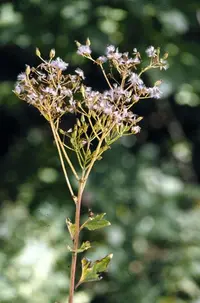
Pale Indian plantain, Arnoglossum atriplicifolium, is a tall North American native perennial in the aster family. It forms sturdy clumps topped by upright stems with pale, creamy flower clusters. The bold, blue-green leaves are broadly oval and give the plant a strong architectural look in summer and early fall.
This species naturally occurs in prairies, open woodlands, and roadsides, often in moderately moist, well-drained soils. It is long-lived, cold-hardy, and generally resistant to deer and common pests, which makes it relatively easy to maintain once established. Gardeners who learn how to care for pale Indian plantain usually find it reliable in sunny native or meadow-style plantings.

Care Difficulty
Moderate Care

Light Preference
Partial Sun

Water Requirements
Regular Water

Temperature Preference
Cold Hardy

Hardiness Zone
4–8

Soil Texture
Loamy, Clay, Organic-rich

Soil pH
Acidic (5.5–6.5), Slightly acidic (6.5–7.0)

Soil Drainage
Moist but well-drained

Fertilization
Minimal (feed rarely)
Scan your plant to receive care tips personalized for your specific plant
Available on iOS and Android
This tall native perennial performs best in bright, open conditions with some protection from harsh afternoon sun.
This species prefers consistently moist, not saturated, soil and responds best to watering guided by soil feel and rainfall.
This hardy perennial tolerates a wide temperature range but grows best in moderate summer conditions.
This species tolerates a wide humidity range and usually does not need special humidity management outdoors.
This tall native perennial prefers deep, moist, loamy soil that stays aerated but not waterlogged.
This species can be grown in large containers, but only when the pot is sized and stabilized for its tall, top-heavy growth.
This native perennial, pale Indian plantain, typically needs only light feeding in average garden soil.
Pruning Arnoglossum atriplicifolium is minimal and mainly focused on tidiness and plant health.
This tall native perennial is best grown in the ground, with transplanting done infrequently and with care.
Propagation of Arnoglossum atriplicifolium is usually done by seed, with division used more sparingly.
This hardy perennial tolerates typical winters in much of its range and needs only basic care once established.

Plant Health Check
Not sure what's wrong with your plant? Check your plant's health inside the app.
This species is one of the taller native prairie forbs in eastern North America, often reaching 120–200 cm in height and forming a strong vertical accent above surrounding grasses and wildflowers.
Instead of showy ray florets like a typical daisy, it carries many small, tubular white florets in tight, plume-like corymbs that are especially attractive to a wide range of native bees and wasps.
Its thick, pale bluish-green leaves often show a whitish bloom and high mineral content, which may help it tolerate the relatively dry, calcareous soils of upland prairies and open wood margins.

Pale Indian plantain is considered a conservative prairie species, meaning it tends to persist mainly in relatively undisturbed, high-quality habitats and is used by botanists as an indicator of intact native prairie and savanna remnants in parts of its range.
This species forms clumps and can slowly expand by short rhizomes and self-seeding, but it is not usually aggressive. Deadhead spent flower stalks before seed ripens if a gardener wants to limit spread.
Keep your plants happy and healthy with plant identification, disease detection, and easy care guidance.