

Wind-firm staking
Install 2–3 discreet stakes and loosely tie the tall stems in a figure-eight pattern before midsummer storms to prevent wind snap and keep the flower stalks vertical for pollinators.

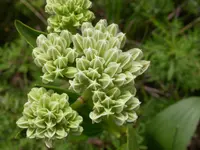
Groovestem Indian plantain, Arnoglossum plantagineum, is a tall, long-lived perennial native to moist prairies, open woods, and stream edges in central and eastern North America. It forms clumps of broad, plantain-like basal leaves and sends up sturdy, grooved flower stalks topped with clusters of creamy white blooms in mid to late summer.
The plant has a strong vertical habit and can become a focal point in naturalistic or meadow-style plantings. It adapts best to consistently moist, well-drained soils and open sun to light shade.
For gardeners looking to care for groovestem Indian plantain, its main needs are stable moisture, room for height, and protection from prolonged drought or heavy competition from aggressive plants.

Care Difficulty
Moderate Care

Light Preference
Partial Shade

Water Requirements
Keep Soil Moist

Temperature Preference
Cold Hardy

Hardiness Zone
4–8

Soil Texture
Loamy, Silty, Organic-rich

Soil pH
Acidic (5.5–6.5), Slightly acidic (6.5–7.0)

Soil Drainage
Moist but well-drained

Fertilization
Minimal (feed rarely)
Scan your plant to receive care tips personalized for your specific plant
Available on iOS and Android
This tall native perennial prefers bright, gentle light rather than harsh, all-day sun.
This species prefers consistently moist soil without becoming waterlogged.
This hardy perennial is adapted to temperate climates with cold winters and warm summers.
This species is tolerant of a wide humidity range and rarely needs special humidity management outdoors.
This species prefers deep, moisture-retentive but not waterlogged soil for vigorous growth.
This tall, deep-rooted species can be grown in large containers but needs careful setup for stability and moisture management.
This native perennial generally grows well in average garden soil and needs only modest feeding for healthy foliage and flowering.
Arnoglossum plantagineum needs only light, purposeful pruning to stay healthy and tidy in a garden setting.
This tall prairie perennial is best grown in the ground, where it resents frequent disturbance and only occasional transplanting is recommended.
Propagation of Arnoglossum plantagineum is usually done by seed, with division attempted only when relocation or rejuvenation is necessary.
This species is cold hardy in much of its native range and usually needs minimal winter care in the ground.

Plant Health Check
Not sure what's wrong with your plant? Check your plant's health inside the app.
This species commonly reaches 1.5–2.5 m in height in rich, moist soils of Midwestern and Eastern North American woodlands and prairies, making it one of the more imposing native perennials in its habitats.
The plant has conspicuously grooved, often hollow flowering stems, a feature that inspired the common name groovestem Indian plantain and distinguishes it from many other tall aster family relatives.
Its large, oval to elliptic basal leaves with strongly parallel veins resemble those of common plantain weeds (Plantago spp.), which is reflected in the species name plantagineum meaning plantain-like.

This species is considered a conservative woodland and prairie plant in parts of its range, meaning it tends to persist mainly in relatively undisturbed, high-quality habitats and can serve as an indicator of remnant native plant communities.
This species has a moderate growth rate. Seedlings usually take 2–3 years to reach noticeable size, then stems can extend 30–60 cm per year under consistent moisture, fertile soil, and good light exposure.
Keep your plants happy and healthy with plant identification, disease detection, and easy care guidance.

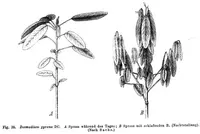
telegraph-plant
Codariocalyx motorius
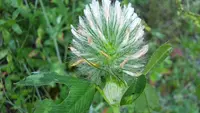
diffuse clover
Trifolium diffusum
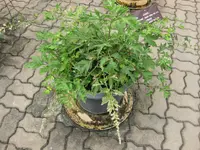
White mugwort
Artemisia lactiflora
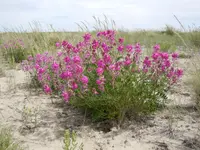
Boreal Sweet-vetch
Hedysarum boreale
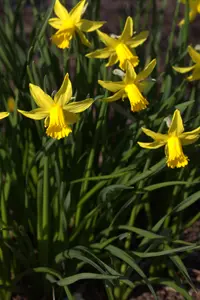
Cyclamen-flowered Daffodil
Narcissus cyclamineus
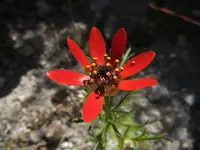
Scarlet Pheasant's-eye
Adonis flammea
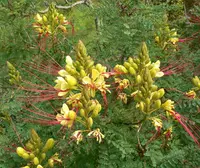
yellow bird-of-paradise shrub
Erythrostemon gilliesii
Urospatha sagittifolia
Urospatha sagittifolia