Encourage Low Mat
Lightly pinch back the longest runners during active growth to keep the plant forming a dense, low mat rather than becoming patchy or leggy.

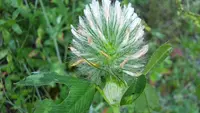
Diffuse clover, Trifolium diffusum, is a low-growing annual clover with fine stems and small trifoliate leaves that form a light, spreading mat. Its flower heads are usually small and pale, giving a soft, understated look rather than bold color.
This species occurs mainly in dry, open habitats in parts of the Mediterranean and nearby regions, often in light, sandy or stony soils. It tends to be relatively undemanding but can be short-lived and dependent on suitable conditions for reseeding.
Gardeners who want to care for diffuse clover should focus on providing sun, good drainage, and moderate moisture, avoiding heavy, waterlogged ground.

Care Difficulty
Moderate Care

Light Preference
Full Sun

Water Requirements
Moderate Water

Temperature Preference
Cool Climate

Hardiness Zone
6–9

Soil Texture
Sandy, Loamy, Silty

Soil pH
Acidic (5.5–6.5), Slightly acidic (6.5–7.0)

Soil Drainage
Well-drained

Fertilization
Minimal (feed rarely)
Scan your plant to receive care tips personalized for your specific plant
Available on iOS and Android
This species favors bright, open conditions typical of sunny meadows and pastures.
This clover prefers consistently moist but not saturated soil in the root zone.
This species performs best in mild, temperate conditions without extreme heat or hard frost.
Humidity is not a critical factor for Trifolium diffusum in typical outdoor or indoor conditions.
This clover prefers moderately fertile, well-aerated, free-draining soil.
This species can be grown in containers if provided with shallow, well-drained conditions that suit its fibrous root system.
This low-growing legume fixes atmospheric nitrogen and usually needs only light fertilization in lean soils.
Trifolium diffusum benefits from light, targeted cutting to keep patches dense and healthy.
This clover is usually grown in the ground, so focus on gentle transplanting rather than frequent repotting.
Most gardeners manage Trifolium diffusum by seed, since it sets abundant seed under suitable conditions.
In many temperate regions this clover is fairly cold hardy and typically needs minimal winter care outdoors.

Plant Health Check
Not sure what's wrong with your plant? Check your plant's health inside the app.
This annual clover is native to dry, open habitats in parts of the Mediterranean region, where it completes its life cycle quickly before summer drought stress becomes severe.
The plant has a low, spreading, and finely branched growth form, which allows its small leaves and flower heads to create a diffuse mat that competes efficiently for light close to the soil surface.
Like other clovers, it forms root nodules with Rhizobium bacteria that convert atmospheric nitrogen into forms available to the plant, which can modestly enrich the surrounding soil.
This species spreads low and outward but is usually not strongly aggressive. It forms thin, open patches rather than dense mats. Occasional edging and removing unwanted seedlings keeps it in bounds among other small ground-level plants.
Keep your plants happy and healthy with plant identification, disease detection, and easy care guidance.