Seed pre-chilling
For better germination, place dry seeds in a labeled plastic bag with slightly moistened sand and refrigerate at 35–40°F for 30–45 days before sowing outdoors in spring.

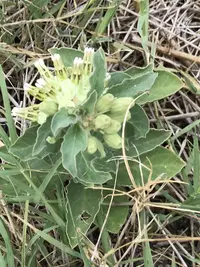
Zizotes milkweed, Asclepias oenotheroides, is a perennial wildflower native to dry grasslands and open rangelands of the southern United States and northern Mexico. It is an important host plant for monarch butterfly caterpillars.
This species forms low, somewhat sprawling clumps with narrow, gray-green leaves and small, pale yellowish flowers held in clusters. The foliage often looks slightly fuzzy due to fine hairs.
Asclepias oenotheroides is adapted to heat, drought, and poor, rocky or sandy soils, which makes it relatively low-maintenance once established. Those who want to learn how to care for zizotes milkweed should know it prefers full sun, well-drained soil, and modest watering.
It suits water-wise gardens, meadow plantings, and restoration projects where a tough, wildlife-supporting native is desired.

Care Difficulty
Easy Care

Light Preference
Full Sun

Water Requirements
Low Water

Temperature Preference
Warm Climate

Hardiness Zone
7–10

Soil Texture
Sandy, Loamy, Rocky

Soil pH
Slightly acidic (6.5–7.0), Neutral (7.0)

Soil Drainage
Well-drained

Fertilization
Minimal (feed rarely)
Scan your plant to receive care tips personalized for your specific plant
Available on iOS and Android
This sun-loving perennial thrives in bright, open sites typical of its native range.
This species prefers dry to moderately dry conditions once established.
This drought-adapted perennial handles heat well but is vulnerable to hard frost.
This species is adapted to dry climates, so humidity is not a critical factor for zizotes milkweed.
This species prefers lean, well-drained, sandy to loamy soil and resents waterlogged conditions.
This species can be grown in containers outdoors, provided the pot mimics its naturally dry, well-drained conditions.
This drought-adapted native milkweed needs minimal feeding, especially in the ground.
Pruning Asclepias oenotheroides is mostly about cleanup and maintaining a tidy, flowering clump.
This deep-rooted milkweed dislikes frequent disturbance, so transplant only when clearly necessary.
Asclepias oenotheroides is most reliably propagated from seed, with some natural self-sowing in suitable sites.
This species is generally cold hardy in its native range and needs little special winter attention in the ground.

Plant Health Check
Not sure what's wrong with your plant? Check your plant's health inside the app.
Zizotes milkweed is an important larval host for monarch butterflies in the southern Great Plains and Texas, especially in drier rangelands where other milkweed species are scarce.
This species forms a deep, thickened root that allows it to survive prolonged dry periods and resprout after grazing or mowing in arid and semi-arid grasslands.
The small, pale yellow-green flowers release more noticeable fragrance in the evening and at night, helping attract nocturnal pollinators such as moths in its native range.

Unlike many milkweeds that prefer mesic or moist habitats, zizotes milkweed naturally occupies thin, rocky, or calcareous soils in dry prairies and open rangelands, making it one of the more xeric-adapted milkweeds in the southern United States and northern Mexico.
Lack of blooms often comes from too much shade, nutrient‑rich or heavily fertilized soil, or plants that are still immature. Poor drainage or repeated cutting of stems before buds form can also reduce or delay flowering.
Keep your plants happy and healthy with plant identification, disease detection, and easy care guidance.