Staggered Bulb Planting
Plant bulbs at 1–2 week intervals in fall so flowering is spread over several weeks rather than all blooms opening at once.

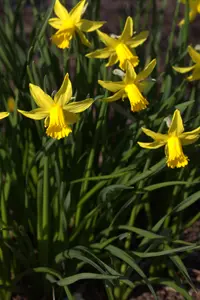
Cyclamen-flowered daffodil (Narcissus cyclamineus) is a small spring-blooming bulb, valued for its swept-back petals and long, narrow trumpets. The nodding flowers give a delicate, refined look despite the plant’s toughness.
It naturally occurs in damp, wooded areas and stream banks of northwestern Spain and Portugal, where soils are moist but well drained. In gardens it forms clumps over time, staying compact and suitable for borders, rock gardens, and under deciduous shrubs.
This daffodil is generally easy to grow if provided with cool winters, adequate moisture in spring, and a dry, resting period in summer. Those conditions are the main focus when learning how to care for Cyclamen-flowered Daffodil.

Care Difficulty
Moderate Care

Light Preference
Full Sun

Water Requirements
Moderate Water

Temperature Preference
Cold Hardy

Hardiness Zone
4–8

Soil Texture
Sandy, Loamy, Organic-rich

Soil pH
Acidic (5.5–6.5), Slightly acidic (6.5–7.0)

Soil Drainage
Well-drained

Fertilization
Minimal (feed rarely)
Scan your plant to receive care tips personalized for your specific plant
Available on iOS and Android
This small spring-blooming bulb prefers bright, cool light with some protection from intense midday sun.
This bulb prefers steady moisture in active growth but is sensitive to waterlogged soil.
This hardy bulb grows best in cool conditions and tolerates typical outdoor winters in many temperate regions.
Humidity is not a critical factor for Narcissus cyclamineus, which copes well with typical indoor and outdoor air.
Narcissus cyclamineus prefers loose, well-drained, moderately fertile soil that stays evenly moist but never waterlogged.
This species is well suited to container growing for patios, balconies, or small gardens.
Narcissus cyclamineus needs modest feeding, especially in containers or poor soils.
Narcissus cyclamineus requires minimal pruning focused on post-bloom clean-up rather than shaping.
This small bulb is usually grown in the ground, with transplanting done infrequently and carefully.
Narcissus cyclamineus is most practically propagated by bulb division, with seed used mainly by specialists.
This species is generally hardy in cool climates and often needs little dedicated winter care outdoors.

Plant Health Check
Not sure what's wrong with your plant? Check your plant's health inside the app.
The flowers have strongly reflexed tepals that bend backward, giving a cyclamen-like appearance and inspiring the species name cyclamineus, meaning cyclamen-like.
In the wild this species occurs mainly along moist, shaded stream banks and damp woodland in northwestern Portugal and northwestern Spain, where it benefits from cool, wet winters and springs.
This species has been widely used in daffodil breeding, especially for miniature and early-flowering cultivars, due to its small size, strong reflexed form, and reliable early bloom.

Narcissus cyclamineus is considered rare in parts of its native range and is protected in some regions of the Iberian Peninsula, where habitat loss and drainage of wet woodlands have reduced its natural populations.
This species usually blooms in late winter to early spring, depending on climate. Flowers appear for about 3–4 weeks, sometimes longer in cool, mild weather. Good bulb health and appropriate moisture help maintain the display.
Keep your plants happy and healthy with plant identification, disease detection, and easy care guidance.