Mark Dormant Clumps
Place small, weatherproof labels where clumps finish flowering so you can find and divide them accurately during summer dormancy without damaging unseen bulbs.

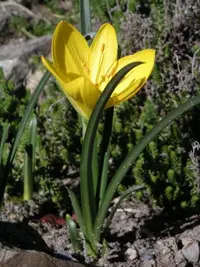
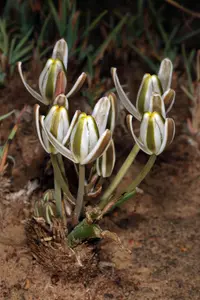
Winter daffodil, Sternbergia lutea, is a small bulb-forming perennial valued for its bright golden, crocus-like blooms that appear in autumn or early winter. The flowers rise above narrow, glossy green leaves, giving a clean, tidy look in borders, rock gardens, and naturalized areas.
This species is native to the Mediterranean and parts of the Middle East, where it grows in sunny, well-drained, often rocky sites. In gardens it is generally easy to grow if kept on the dry side in summer and not shaded by taller plants.
Those learning how to care for winter daffodil mainly need to provide good drainage and a bright, sheltered position, as the bulbs dislike heavy, waterlogged soils.

Care Difficulty
Easy Care

Light Preference
Full Sun

Water Requirements
Low Water

Temperature Preference
Cold Hardy

Hardiness Zone
6–9

Soil Texture
Sandy, Loamy, Rocky

Soil pH
Slightly acidic (6.5–7.0), Slightly alkaline (7.0–7.5)

Soil Drainage
Well-drained

Fertilization
Minimal (feed rarely)
Scan your plant to receive care tips personalized for your specific plant
Available on iOS and Android
This autumn-flowering bulb thrives in bright, open positions with strong light.
This bulb prefers a dry, free-draining environment with careful, seasonal watering.
This species is adapted to warm, dry summers and mild, relatively cool winters.
Humidity is not a critical factor for Sternbergia lutea, which handles typical home and outdoor air well in temperate regions.
Sternbergia lutea performs best in lean, sharply drained soil that mimics dry, rocky hillsides.
This species is suitable for container growing, especially where outdoor winter conditions are wet or very cold.
Sternbergia lutea grows from nutrient-storing bulbs and needs only modest feeding in most garden soils.
Sternbergia lutea requires minimal pruning, mainly to keep the clump tidy and disease free.
This bulb is usually grown in the ground, with transplanting focused on dividing crowded clumps rather than frequent repotting.
Propagation of Sternbergia lutea is most reliable through bulb division, with seeds used mainly by specialists or breeders.
In suitable climates, this hardy bulb needs minimal winter care, especially when planted in well-drained soil.

Plant Health Check
Not sure what's wrong with your plant? Check your plant's health inside the app.
This species is a true autumn geophyte, producing bright yellow, crocus-like blooms in fall while many surrounding plants are entering dormancy.
Wild populations are strongly associated with sunny, rocky slopes and calcareous soils across the eastern Mediterranean, especially in Greece, Turkey, and the Levant.
Like many members of the Amaryllidaceae family, it contains alkaloid compounds that make the bulbs and leaves toxic if eaten, protecting them from many herbivores.

Historical records and archaeological interpretations suggest that this species, often called fall crocus or lily-of-the-field in older texts, may be one of the yellow autumn bulbs referenced in classical Mediterranean literature and associated with seasonal religious festivals.
Lack of flowering usually comes from bulbs being too shaded, planted too shallow or deeply, or weakened by past drought or overcrowding. Allow foliage to die back naturally, then divide congested clumps and replant at the correct depth.
Keep your plants happy and healthy with plant identification, disease detection, and easy care guidance.