great Indian plantain Care (Arnoglossum reniforme)

great Indian plantain

About great Indian plantain

Great Indian plantain, Arnoglossum reniforme, is a tall, clump-forming perennial native to moist prairies, open woods, and stream edges in central and eastern North America. It belongs to the aster family and is grown mainly as an ornamental wildflower.

Plants develop large, rounded, kidney-shaped basal leaves and send up sturdy stems topped with clusters of small, creamy white flowers in summer. They create strong vertical structure in naturalistic or meadow-style plantings.

This species prefers consistently moist, rich, well-drained soil and bright, open to lightly shaded sites. Once established, it is fairly resilient, so learning how to care for great Indian plantain is manageable for most gardeners.

Main Plant Requirements

Care Difficulty

Moderate Care

Light Preference

Partial Shade

Water Requirements

Regular Water

Temperature Preference

Cold Hardy

Hardiness Zone

4–8

Soil Texture

Loamy, Clay, Organic-rich

Soil pH

Acidic (5.5–6.5), Slightly acidic (6.5–7.0)

Soil Drainage

Moist but well-drained

Fertilization

Minimal (feed rarely)

Get Personalized Care Plan

Scan your plant to receive care tips personalized for your specific plant

Available on iOS and Android

How to Care for the great Indian plantain

This moisture-loving perennial prefers bright conditions without harsh afternoon exposure for strongest growth.

  • Provide 3–6 hours of morning sun or light dappled sun under open trees; bright shade the rest of the day suits great Indian plantain well.
  • Tolerates partial shade and will still flower, but stems may stretch and flop if light drops below about 2–3 hours of direct or filtered sun.
  • Avoid full, exposed afternoon sun in hot summers, which can scorch leaves; in cooler seasons, slightly more direct light is beneficial.

This species prefers consistently moist soil but not stagnant, airless conditions.

  • In the ground, aim for evenly moist soil, letting only the top 2–3 cm dry between rains or waterings; do not allow the root zone to bake hard.
  • Use rich, humus-based soil that drains freely yet holds moisture; slight surface puddling after rain is acceptable if water drains within a few hours.
  • During hot, dry periods, increase watering when leaves begin to droop by midday; yellowing, limp foliage and sour-smelling soil suggest chronic overwatering.

This hardy native is adapted to temperate climates with cold winters and warm, humid summers.

  • Active growth is strongest around 65–80°F (18–27°C), typical of late spring and summer conditions in much of its native range.
  • The root system tolerates winter lows down to about -20°F (-29°C) when planted in the ground with mulch, making it suitable for many cold-winter regions.
  • Mature plants handle brief heat up to 90–95°F (32–35°C) if soil stays moist; prolonged heat with dry soil can cause wilting and leaf scorch.

This species tolerates a wide humidity range but grows best in moderately moist air.

  • Aim for 40–60% humidity, similar to typical outdoor summer conditions in much of its native range.
  • Great Indian plantain copes with brief dry indoor air but prolonged levels below 30% can brown leaf edges.
  • Humidity stress shows as crisp margins and dull, drooping leaves while soil is still moist.
  • Increase humidity outdoors by grouping containers and using mulch; indoors, place pots on a pebble tray rather than misting leaves.

Arnoglossum reniforme prefers deep, moisture-retentive yet aerated soil that does not stay waterlogged.

  • Use a loamy, organic-rich soil that holds moisture, such as garden loam mixed with compost and leaf mold.
  • Ensure drainage is moderate to free-draining; in containers, blend roughly 60% composted loam with 30% compost and 10% perlite.
  • A slightly acidic to neutral pH around 6.0–7.0 supports nutrient uptake and steady growth.
  • Avoid compacted clay, long-term standing water, or very sandy mixes that dry out quickly and reduce root vigor.

This tall, moisture-loving perennial can be grown in containers with careful attention to stability and even moisture.

  • Choose a large, deep container to accommodate the tall top growth and extensive root system without tipping.
  • Select a heavy material such as ceramic or thick-walled terracotta to resist wind and keep the root zone cooler.
  • Position the pot where it is sheltered from strong winds, as tall flower stalks can act like levers and stress the root base in loose substrate.

This native perennial generally needs minimal feeding in average to rich garden soil.

  • If growth appears weak or foliage pale, apply a light top-dressing of compost in early spring around, not against, the stems.
  • In lean soils, use a balanced slow-release fertilizer (around 10-10-10) once in spring at half label strength for caring for great Indian plantain.
  • Avoid additional fertilizer in midsummer onward to prevent soft, weak growth.
  • Do not feed during winter dormancy, and reduce watering so nutrients are not leached rapidly.

Arnoglossum reniforme benefits from light, targeted pruning rather than heavy cutting.

  • In late winter or very early spring, remove dead, damaged, or diseased stems at the base using clean, sharp pruners.
  • During the growing season, clip spent flower stalks to prevent unwanted self-seeding and keep a tidier look.
  • Thin out congested stems lightly to improve air movement and reduce foliar disease risk.
  • Avoid shearing or cutting back hard, which can spoil the plant’s natural tall, architectural form.

This species is usually grown in the ground, where it dislikes frequent disturbance once established.

  • Transplant young plants in early spring or early fall, when temperatures are mild and soil stays evenly moist.
  • Choose a permanent site with deep, well-drained but moisture-retentive soil to reduce the need for future moving.
  • If growth declines or plants are crowded, lift and reset clumps carefully, keeping as much root and surrounding soil intact as possible.
  • Water thoroughly after transplanting and shade temporarily during hot, bright weather to limit transplant shock.

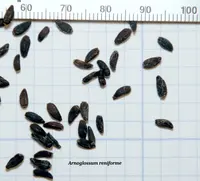
Arnoglossum reniforme is most often propagated by seed, with some growers also using careful division.

  • Collect ripe seed in late summer to early fall and sow fresh in pots or seed trays kept outdoors for natural winter cold stratification.
  • Use a moist, free-draining medium and keep seed just lightly covered to support germination in spring.
  • Divide established clumps only in early spring, taking large sections with several buds and substantial roots.
  • Replant divisions promptly at the same depth, then water steadily until new growth shows firm establishment.

This hardy perennial tolerates normal winter conditions in most temperate climates and needs little special care.

  • In late fall, allow stems to stand if structural winter interest and wildlife habitat are desired, or cut back after frost if a tidy look is preferred.
  • Apply a 5–7 cm layer of organic mulch around the root zone in colder regions, keeping mulch slightly away from crowns.
  • Container-grown plants in very cold areas benefit from moving to a sheltered spot or unheated garage to reduce freeze–thaw stress.

Care Tips

Early staking strategy

Install sturdy stakes or a discreet wire cage in early spring while shoots are under 20–30 cm tall so the tall flowering stems stay upright and are not damaged by wind or heavy rain later in the season.

Cool soil mulching

Maintain a 5–8 cm layer of shredded bark or leaf mold around the root zone (but not touching the stems) to keep the shallow roots cool, conserve moisture, and reduce weed competition that can stress this woodland species.

Root competition management

Avoid planting directly against aggressive, shallow-rooted shrubs or trees and instead give a clear root zone of at least 30–45 cm so the plant can access enough moisture and nutrients to support its tall growth.

Flower stalk timing

If stronger foliage and root development are desired, remove the first year’s flower stalks when they reach about 30–45 cm tall so the plant can redirect energy into building a more robust crown for future seasons when growing great Indian plantain.

Preventing slug damage

In spring, protect emerging leaves with physical barriers like copper tape rings or coarse grit, and reduce nearby moist hiding spots such as dense groundcover where slugs and snails can shelter during the day.

Common Pests and Diseases

Leaf beetles

These insects chew irregular holes in the broad basal leaves, often starting along the edges and between veins. Symptoms include thinning foliage and a ragged appearance on lower leaves during the growing season.

Solution

Hand-pick adults and larvae into soapy water when first noticed and remove heavily damaged leaves to reduce egg-laying sites. Encourage ground beetle and bird predators, avoid broad-spectrum insecticides, and maintain diverse native vegetation around the planting to keep leaf beetle numbers in check.

Caterpillars

This pest feeds on the tender foliage and can skeletonize sections of leaves, especially on young plants in partial shade. Symptoms include chewed margins, missing chunks of leaf tissue, and occasional frass (droppings) on leaves or nearby soil.

Solution

Inspect leaves regularly, especially in late spring and early summer, and hand-remove caterpillars when numbers are low. If damage becomes significant, use a targeted Bacillus thuringiensis (Bt) product labeled for caterpillars, applied in the evening and only to affected foliage to preserve beneficial insects.

Slugs and snails

These pests rasp away at the fleshy leaves near ground level, leaving irregular holes and silvery slime trails. Symptoms include damaged leaf edges, missing tissue on young shoots, and more injury during cool, wet periods.

Solution

Use physical barriers such as copper tape around pots, place rough mulch like crushed eggshells or gravel at the base, and hand-remove slugs and snails at night or after rain. In heavy infestations, set out shallow beer or yeast-water traps away from the plant and maintain good spacing and airflow so the soil surface dries more quickly.

Leaf spot

This disease causes scattered tan to brown spots on leaves, sometimes with darker borders and occasional yellowing around lesions. Symptoms include premature leaf aging on lower foliage while upper leaves may remain relatively healthy.

Solution

Remove and discard affected leaves promptly and keep overhead watering to a minimum so foliage dries quickly. Space plants to improve airflow, avoid watering in the evening, and if leaf spot returns yearly, apply a copper- or chlorothalonil-based fungicide in early spring according to label directions, focusing on lower leaves.

Powdery mildew

This disease appears as a white or gray powdery coating on upper leaf surfaces, often in late summer in shaded or crowded sites. Symptoms include dulled leaf color, slight distortion, and reduced vigor if coverage is heavy.

Solution

Improve airflow by thinning nearby vegetation and avoid excess nitrogen fertilizer that promotes very soft, mildew-prone growth. Remove the most affected leaves, water at soil level, and if needed apply a labeled organic sulfur or potassium bicarbonate fungicide early in the infection period to protect remaining foliage as part of broader Arnoglossum reniforme plant care.

Interesting Facts

Native streambank specialist

This species is naturally found along moist streambanks, seeps, and woodland edges in the central and southeastern US, where it helps stabilize soil in periodically wet but not permanently flooded sites.

Distinct kidney-shaped leaves

It is easily recognized by its large, thick, kidney-shaped basal leaves, which can reach notable widths and create a bold foliage mound at ground level before the tall flower stalks emerge.

Tall late-summer bloomer

In its native habitat, this plant sends up tall flowering stalks in mid to late summer bearing clusters of small, pale flower heads that support a range of pollinating insects, including native bees and butterflies.

FAQs about great Indian plantain

This species is highly attractive to native pollinators. Its tall midsummer flower stalks provide nectar and pollen for many bees, butterflies, and beneficial wasps, making it a strong choice for wildlife-friendly and prairie-style plantings.

Grow Healthy Plants with Botan Care

Keep your plants happy and healthy with plant identification, disease detection, and easy care guidance.

Botan plant care app — identify plants on mobile

Explore More Plants