Root zone mulching
Apply a thin 2–3 cm layer of coarse gravel or grit around the root zone to suppress weeds and keep the crown dry, which helps reduce fungal problems in caring for Artemisia capillaris.

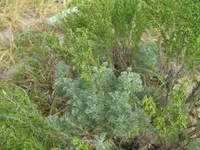
Artemisia capillaris, often called capillary wormwood, is a fine-textured perennial herb in the daisy family. It forms airy clumps of slender, branching stems with very narrow, feathery leaves. Foliage is usually gray-green and lightly aromatic when touched.
This species is native to East Asia, where it grows in open, sunny habitats and well-drained soils. In gardens it is valued more for its light, cloud-like foliage than for its small, inconspicuous flowers.
The plant generally prefers full sun, moderate moisture, and lean, well-drained soil, which helps keep growth compact. Once established, it shows good drought tolerance and is not demanding, so learning how to care for Artemisia capillaris is straightforward for most growers.

Care Difficulty
Easy Care

Light Preference
Full Sun

Water Requirements
Low Water

Temperature Preference
Warm Climate

Hardiness Zone
6–9

Soil Texture
Sandy, Loamy, Rocky

Soil pH
Slightly acidic (6.5–7.0), Neutral (7.0)

Soil Drainage
Well-drained

Fertilization
Minimal (feed rarely)
Scan your plant to receive care tips personalized for your specific plant
Available on iOS and Android
This sun-loving shrub thrives in open, bright conditions with lean, well-drained soil.
This species prefers dry to slightly dry soil and is highly drought-tolerant once established.
This hardy perennial tolerates a wide temperature range but prefers moderate, dry conditions.
This species prefers dry air and usually does not need special humidity management.
This species prefers light, well-drained mineral soils that never stay waterlogged.
This species grows reliably in containers when drainage and root space are managed carefully.
This plant is adapted to lean soils, so Artemisia capillaris needs only light, occasional feeding in cultivation.
Pruning helps Artemisia capillaris maintain a compact, healthy mound of foliage.
This species is usually grown in the ground, but container-grown Artemisia capillaris may need occasional repotting or transplanting.
Gardeners commonly propagate Artemisia capillaris to expand plantings or renew aging clumps.
This species is fairly cold hardy, so Artemisia capillaris needs only modest winter care in most temperate climates.

Plant Health Check
Not sure what's wrong with your plant? Check your plant's health inside the app.
This species commonly establishes on freshly deposited river sand and gravel in East Asia, acting as an early successional plant that stabilizes substrates prone to erosion.
Artemisia capillaris shows strong tolerance to high light, summer heat, and periods of limited water, which helps it persist on open, exposed slopes and dry river terraces.
The plant produces essential oils containing specific monoterpenes and sesquiterpenes, such as capillarisin and related compounds, which are used as chemical markers to distinguish it from closely related Artemisia species.

In East Asian traditional pharmacopeias and modern pharmacognosy research, Artemisia capillaris is one of the better-characterized Artemisia species, with its dried young shoots (often referred to as capillaris herba) standardized and described in major references such as the Japanese Pharmacopoeia and the Chinese Pharmacopoeia for use as a defined crude drug.
This species forms loose clumps and can self-seed in suitable conditions, but it is not usually aggressively spreading. Occasional thinning and deadheading flower stalks help keep it in defined patches and prevent unwanted seedlings.
Keep your plants happy and healthy with plant identification, disease detection, and easy care guidance.