Promote Dense Mounding
Pinch or lightly shear new growth after flowering to maintain a compact mound and prevent the woody center from opening up over time.

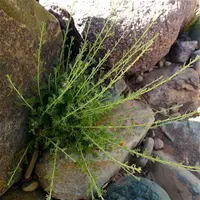
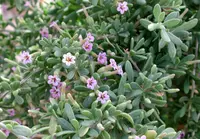
White wormwood (Artemisia herba-alba) is a small, woody perennial shrub from dry steppe and semi-desert regions of the Mediterranean and North Africa. It forms low, rounded mounds of finely divided, gray-white, aromatic foliage.
This plant is strongly drought-adapted and naturally occurs on poor, rocky or sandy soils with high light and low rainfall. Its slow to moderate growth and need for sharp drainage can challenge beginners who overwater.
Those who learn how to care for white wormwood tend to find it durable in hot, dry locations. It prefers full sun, lean mineral soil, and infrequent but deep watering in cultivation.

Care Difficulty
Easy Care

Light Preference
Full Sun

Water Requirements
Low Water

Temperature Preference
Cold Hardy

Hardiness Zone
5–9

Soil Texture
Sandy, Loamy, Rocky

Soil pH
Neutral (7.0), Slightly alkaline (7.0–7.5)

Soil Drainage
Well-drained

Fertilization
Minimal (feed rarely)
Scan your plant to receive care tips personalized for your specific plant
Available on iOS and Android
This drought-adapted shrub needs strong sun to stay compact and aromatic.
This species prefers dry, fast-draining conditions and is sensitive to excess moisture.
This hardy desert-steppe shrub tolerates a wide temperature range once established.
This drought-adapted shrub tolerates low humidity and usually does not need special moisture control indoors or outdoors.
Artemisia herba-alba prefers lean, mineral-rich, sharply drained soil that dries quickly between waterings.
This species can grow successfully in containers when drainage and root conditions are carefully controlled.
Artemisia herba-alba is adapted to poor, dry soils and needs only minimal feeding in cultivation.
Pruning Artemisia herba-alba helps maintain a compact, woody subshrub and prevents it from becoming overly leggy.
This species is more often grown in the ground than in pots, so care focuses on careful transplanting rather than frequent repotting.
Artemisia herba-alba is commonly propagated by semi-ripe cuttings, division of established clumps, and occasionally by seed.
This drought-tolerant shrub is generally cold hardy in many temperate regions and requires only modest winter care outdoors.

Plant Health Check
Not sure what's wrong with your plant? Check your plant's health inside the app.
This dwarf shrub is a dominant species in vast North African and Middle Eastern steppes, where its dense patches help structure plant communities and influence how water and nutrients move through dry soils.
The leaves contain abundant volatile oils that give a strong camphor-like scent, which helps reduce grazing by some herbivores and may protect the plant from certain fungi and insects.
Its small, woolly, grey-white leaves reflect sunlight and reduce water loss, and the plant can tolerate both intense summer drought and winter frosts common in continental semi-arid climates.

In parts of the Mediterranean and North Africa, this species is used as a bioindicator of land degradation, because its spread or decline across rangelands reflects long-term changes in grazing pressure and soil condition.
Poor flowering often comes from too much nitrogen, excess watering, or too much shade. Avoid rich fertilizers, keep soil very free-draining, and ensure strong light. Light pruning after flowering also helps redirect energy to next season’s buds.
Keep your plants happy and healthy with plant identification, disease detection, and easy care guidance.