Stable host selection
Choose long-lived, slow-growing tree trunks or large branches with stable bark texture, since frequent bark shedding or pruning can physically remove the lichen colony over time.

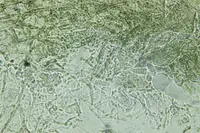
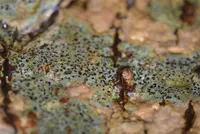
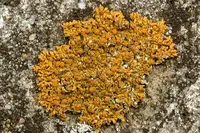
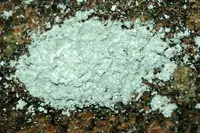
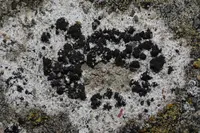
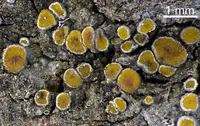
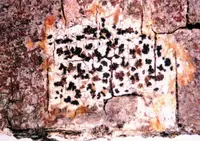
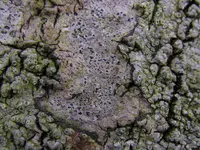
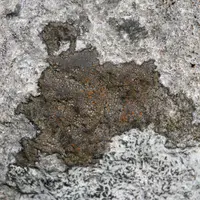
Arthothelium lirellans is a crustose lichen, not a typical leafy houseplant. It forms thin, closely attached patches on bark or rock, often with fine dark lines. These lines are lirellae, narrow fruiting bodies where spores are produced and released. The overall appearance is subtle and best appreciated up close.
This species occurs in natural habitats, especially on tree trunks in humid or temperate regions, rather than in pots or gardens. It is sensitive to air quality and moisture stability, so it is difficult to maintain in artificial conditions. For anyone trying to care for Arthothelium lirellans, stable humidity and clean air are more important than typical soil or fertilizer choices.

Care Difficulty
Moderate Care

Light Preference
Partial Shade

Water Requirements
Moderate Water

Temperature Preference
Warm Climate

Hardiness Zone
Unknown

Soil Texture
Loamy

Soil pH
Slightly acidic (6.5–7.0)

Soil Drainage
Well-drained

Fertilization
Minimal (feed rarely)
Scan your plant to receive care tips personalized for your specific plant
Available on iOS and Android
Provide bright, indirect light with some protection from intense midday sun for stable growth.
Maintain steady, slightly moist conditions without prolonged saturation to support healthy growth.
Provide cool to mild conditions with protection from temperature extremes to keep this species stable.
This lichen does not have specific humidity requirements beyond avoiding extremely dry, desiccating conditions.
Arthothelium lirellans grows on bark or rock surfaces, so focus on a firm, fast‑draining, low‑nutrient substrate rather than conventional potting soil.
This species is not well suited to conventional container culture and is usually maintained on bark slabs or rocks rather than in pots.
This lichen grows naturally on nutrient-poor bark or rock and does not require intentional fertilization.
As a crustose lichen, Arthothelium lirellans does not need horticultural pruning in the usual sense.
This species is substrate-bound and not suited to standard repotting, so focus on conserving its natural habitat surface.
In cultivation, intentional propagation of Arthothelium lirellans is rarely practical and is usually left to natural dispersal.
This lichen is generally cold hardy and normally needs no special winter care in outdoor conditions within its native climate.

Plant Health Check
Not sure what's wrong with your plant? Check your plant's health inside the app.
This lichen forms a thin, tightly attached crust on tree bark, especially on smooth trunks of broadleaf trees in humid forests, rather than on rocks or soil.
Its dark, elongated fruiting bodies, called lirellae, are narrow and often slightly branched or curved, giving the thallus a finely lined appearance visible under magnification.
This lichen grows very slowly, often adding only fractions of a millimeter each year. Growth rate depends on clean air, stable moisture, and an undisturbed surface. Any noticeable annual increase in size is already relatively strong growth.
Keep your plants happy and healthy with plant identification, disease detection, and easy care guidance.