Parish's glasswort Care (Arthroceras subterminale)

Parish's glasswort

About Parish's glasswort

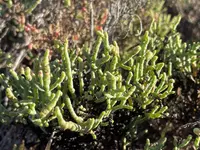
Parish's glasswort (Arthroceras subterminale) is a low, fleshy, jointed-stem succulent typical of coastal salt marshes and tidal flats. It forms compact, segmented green to reddish clumps with very reduced leaves.

This halophytic plant is adapted to salty, periodically flooded soils and is most often found along the Pacific coast of North America. Its tolerance of salt and occasional drought makes it tough in the right environment but difficult in regular garden beds.

Those who want to learn how to care for Parish's glasswort should focus on recreating its natural conditions: very bright light, poor but salty or at least very well-drained soil, and regular exposure to moisture without long-term fresh-waterlogging.

Main Plant Requirements

Care Difficulty

Moderate Care

Light Preference

Full Sun

Water Requirements

Aquatic

Temperature Preference

Warm Climate

Hardiness Zone

8–11

Soil Texture

Sandy, Loamy, Silty

Soil pH

Neutral (7.0), Slightly alkaline (7.0–7.5)

Soil Drainage

Waterlogged tolerant

Fertilization

Minimal (feed rarely)

Get Personalized Care Plan

Scan your plant to receive care tips personalized for your specific plant

Available on iOS and Android

How to Care for the Parish's glasswort

This halophytic coastal succulent prefers strong light in open, exposed sites.

  • Provide full sun for 6–10 hours daily; plants growing slightly above the tidal zone benefit from unobstructed southern or western exposure.
  • Parish's glasswort tolerates light partial shade for a few hours, but stems may elongate and turn duller green if shaded more than 3–4 hours per day.
  • In hot inland sites, brief afternoon shade reduces tissue scorching, while in winter lower sun angles are generally sufficient if the site remains unshaded and open.

This salt-marsh plant is adapted to fluctuating moisture rather than evenly moist soil.

  • In natural coastal or marsh settings, Arthroceras subterminale tolerates cycles from saturated to briefly dry, provided roots experience periodic flushing by tides or brackish water.
  • For managed plantings in saline soils, water thoroughly when the surface crust looks dry and the top 2–3 cm feel barely damp, then allow excess to drain away quickly.
  • Signs of overwatering in poorly drained, non-saline soils include stem collapse and blackened bases; underwatering shows as wrinkled, shriveling segments and slowed new growth.

This species thrives in mild, frost-free coastal climates with moderate seasonal variation.

  • Optimal growth occurs around 60–80°F (16–27°C), typical of many maritime zones with cool summers and mild winters.
  • Plants tolerate brief drops to about 30°F (-1°C), but repeated or hard frosts below 28°F (-2°C) can damage succulent segments and reduce long-term vigor.
  • Heat tolerance is good up to about 90–95°F (32–35°C) if soil remains somewhat moist and roots are not exposed, but extended hot, dry inland conditions can stunt growth.

Humidity is not a major concern for this coastal halophyte in typical outdoor conditions.

This salt-marsh succulent requires very specific, saline, fast-draining soils to grow well.

  • Use sandy or sandy-loam soil with coarse texture that mimics coastal marsh substrates rather than dense garden soil.
  • Ensure very rapid drainage by blending washed sand and fine grit; avoid mixes that hold water like peat-heavy potting soil.
  • Target a neutral to slightly alkaline pH (7.0–8.0), as Arthroceras subterminale naturally occurs in saline, alkaline environments.
  • Incorporate a measured source of salt or saline irrigation water only if replicating natural habitat, and monitor plants for salt burn at leaf tips.

This species is suitable for container growing mainly for habitat simulation or research plantings rather than ornamental use.

  • Choose a wide, shallow container to accommodate its spreading, shallow roots and to keep the substrate profile similar to marsh edges.
  • Use a heavy, stable pot material such as ceramic or concrete to prevent tipping in strong coastal winds common where it is grown.
  • Include a deep drainage layer of coarse gravel beneath the sandy mix so excess saline water exits quickly without stagnating around the roots.

Arthroceras subterminale, commonly called Parish's glasswort, usually needs minimal fertilization when grown in its natural salty, nutrient-poor habitats.

  • In containers or amended beds, use a light application of balanced slow-release fertilizer (around 10-10-10) at the start of the growing season.
  • Feed at low strength, about 25–50% of label rate, to avoid excess vigor and weak, floppy growth.
  • Do not apply fertilizer in winter or dormancy, when growth is naturally slow or stopped.

Pruning Arthroceras subterminale is mainly done to maintain a clean, compact stand rather than to shape individual plants.

  • Best time is late winter to early spring before strong new growth begins.
  • Use clean, sharp scissors or hand pruners to remove dead, damaged, or diseased stems.
  • Thin crowded, weak shoots at the base to improve air flow and light penetration through the clump.
  • Light trimming can keep spreading edges tidy in managed coastal or saline garden beds.

This halophytic coastal species is more often transplanted in restoration or landscape settings than repotted as a container plant.

  • Transplant in cool seasons (early spring or fall) when temperatures are mild and soil moisture is stable.
  • Lift and move plants with a generous soil plug to limit root disturbance and salt-stress shock.
  • Space transplants to match natural spread, allowing adequate airflow and access to saline or brackish conditions.
  • Water gently after transplanting and shade briefly if needed to reduce transpiration until new growth resumes.

Propagation of this salt-marsh annual or short-lived perennial is most practical from seed collected from mature stands.

  • Collect ripe seed in late summer to fall, when seed heads are dry but not yet shed.
  • Sow fresh seed on the soil surface or barely covered, keeping the medium moist and saline if matching natural habitat.
  • Provide full sun and mild temperatures; germination often improves after a cool, moist period that mimics winter.
  • Direct seeding into restoration sites usually works better than container production due to its specialized salt requirements.

In coastal climates within its native range, this salt-marsh plant generally needs no special winter care outdoors.

  • Plants tolerate cool, wet winter conditions where soil does not freeze deeply or for long periods.
  • In marginal climates or containers, ensure excellent drainage so roots do not sit in cold, stagnant water.
  • Container-grown plants can be moved to a cold, bright, frost-free spot if prolonged hard freezes are expected.

Care Tips

Salinity Management

Periodically mix a small amount of non-iodized sea salt into irrigation water for container or trial plantings to maintain the moderate salinity levels this halophyte expects, but always introduce salt gradually and monitor foliage for stress such as sudden yellowing or tip burn.

Tidal Irrigation Mimicry

In coastal or experimental plantings, use shallow basins or furrows and irrigate in occasional, deeper flushes rather than daily light sprinkling to imitate tidal wetting and drying, which helps oxygenate roots and reduces anaerobic root rot issues.

Seasonal Biomass Harvest

Lightly harvest older, lower segments at the end of the main growth flush rather than all at once, which encourages new succulent growth while preventing the stand from becoming too woody and crowded.

Soil Structure Stabilization

In restoration or shoreline settings, plant in staggered rows and avoid disturbing the root zone once established, allowing the dense, mat-forming roots to bind soil and reduce erosion over several seasons.

Saline Companion Planning

Combine this species with other salt-tolerant halophytes in coastal beds so irrigation and salinity management can be handled as a single regime, simplifying caring for Parish's glasswort in larger landscape blocks.

Common Pests and Diseases

Aphids

These insects sometimes colonize tender new growth on Parish's glasswort, especially in slightly less saline spots or in cultivation. This pest feeds by sucking sap, which can cause distorted shoots and sticky honeydew on stems.

Solution

Rinse stems thoroughly with a strong stream of clean water to dislodge colonies, repeating every few days as needed. In low-salinity cultivation beds, encourage natural predators such as lady beetles or apply an insecticidal soap labeled for edible or halophytic plants, avoiding overspray into natural salt marsh water bodies.

Scale insects

These insects may appear as small, immobile bumps on older, woody portions of stems, particularly where plants grow in more sheltered or less frequently flooded microhabitats. This pest weakens plants by removing sap over time and can cause localized yellowing or dieback of segments.

Solution

Scrape or rub off individual scales by hand or with a soft brush, then rinse stems with water to remove remaining juveniles. In managed or restoration plantings, spot-treat localized outbreaks with horticultural oil during cooler parts of the day, ensuring good coverage but avoiding runoff into surrounding marsh channels.

Powdery mildew

This disease can develop on plants grown outside their natural tidal flushing regime, especially under warm, humid, and stagnant air conditions. Symptoms include whitish, powdery patches on fleshy segments and reduced vigor of affected shoots.

Solution

Improve air movement around plants, thin overcrowded stands, and avoid overhead irrigation late in the day so surface moisture dries quickly. Remove and discard the most affected segments and, in cultivated settings, use a sulfur or bicarbonate-based fungicide labeled for succulent foliage if environmental adjustments do not stop spread.

Salt crust stem burn

This physiological disorder occurs when evaporating water leaves heavy salt crusts directly on stems during prolonged hot, dry spells without tidal washing. Symptoms include localized bleaching, tissue collapse, and brittle, dead stem tips where salt accumulates most heavily.

Solution

In cultivation, provide periodic low-salinity rinses over the plant surface to dissolve crusts while maintaining saline root-zone conditions, and offer light shade during extreme afternoon heat. In restoration or outdoor beds, adjust microtopography or water delivery so plants receive occasional gentle flushing that mimics natural tidal action.

Interesting Facts

Salt movement specialist

This species can move excess salt into older segments and then shed those segments, a strategy that helps it survive in highly saline tidal marshes of the Pacific coast of North America.

Tidal marsh native

It is naturally restricted to coastal salt marshes and upper intertidal zones from California into northwestern Mexico, where it helps stabilize soft, salty mudflats and contributes to organic matter buildup.

Jointed succulent stems

Instead of broad leaves, it has fleshy, jointed stem segments that perform most of the photosynthesis and water storage, reducing surface area and limiting water loss in harsh, salty environments.

Botan icon

Did you know?

This plant is often one of the low-growing, dominant halophytes in certain Pacific Coast salt marsh zones, forming nearly pure stands that create a distinct habitat structure for specialized insects, shorebirds, and other wildlife.

FAQs about Parish's glasswort

This halophytic plant is sometimes foraged and eaten in small amounts, especially young shoots, in some coastal cuisines. Only harvest from clean, uncontaminated sites, as it can accumulate salts and pollutants from saline or disturbed habitats.

Grow Healthy Plants with Botan Care

Keep your plants happy and healthy with plant identification, disease detection, and easy care guidance.

Botan plant care app — identify plants on mobile

Explore More Plants