Wispy elbow orchid Care (Arthrochilus prolixus)

Wispy elbow orchid

About Wispy elbow orchid

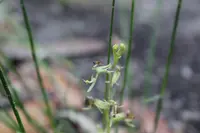
The wispy elbow orchid, Arthrochilus prolixus, is a small terrestrial orchid native to eastern Australia. It grows from underground tubers and appears only during its active season. Plants produce slender stems with narrow leaves and delicate, elongated flowers that often mimic the shape of insects. This specialized form is linked to its pollination by certain wasps in the wild.

In cultivation it can be challenging, as it has a marked seasonal rest period and dislikes disturbance. Successful growers usually provide bright, filtered light, an airy, well-drained mix, and steady, moderate moisture while in growth. Understanding this rhythm is central to how to care for Wispy elbow orchid.

Main Plant Requirements

Care Difficulty

Hard Care

Light Preference

Partial Shade

Water Requirements

Moderate Water

Temperature Preference

Warm Climate

Hardiness Zone

Unknown

Soil Texture

Loamy, Sandy, Organic-rich

Soil pH

Acidic (5.5–6.5)

Soil Drainage

Well-drained

Fertilization

Minimal (feed rarely)

Get Personalized Care Plan

Scan your plant to receive care tips personalized for your specific plant

Available on iOS and Android

How to Care for the Wispy elbow orchid

This terrestrial orchid prefers bright but softened light that mimics open, lightly shaded woodland.

  • Provide 2–4 hours of gentle morning sun with the rest of the day in bright, filtered light under shrubs or light tree canopy.
  • Tolerates light to medium shade, but flowering of Wispy elbow orchid declines if grown in deep shade with less than 2 hours of indirect brightness.
  • Avoid harsh midday and afternoon sun, which can scorch leaves; increase dappled shade in summer and allow slightly more morning light in winter.

Watering should keep the root zone lightly moist in growth, then drier in dormancy.

  • During active growth, water when the top 2–3 cm of soil or leaf litter feels dry, aiming for consistently moist but not soggy conditions.
  • Ensure sharply draining, gritty or sandy soil so excess water runs off quickly; prolonged puddling or sour smell indicates poor drainage and risk of root rot in Arthrochilus prolixus.
  • In cooler dormant periods, reduce watering to occasional light drinks just to prevent complete drying, watching for shriveling tubers or limp foliage as signs of underwatering.

This species prefers mild, frost-free conditions with only modest seasonal variation.

  • Optimal growth occurs around 60–77°F (16–25°C), with steady, moderate temperatures supporting foliage and flowering.
  • Protect from frost; short dips to about 40°F (4°C) may be tolerated if soil is well drained, but freezing conditions can damage tubers and new shoots.
  • In hotter weather above 86°F (30°C), provide shade, mulch, and good air movement to keep the root zone cooler and reduce heat stress.

This terrestrial orchid benefits from moderately humid air but tolerates typical indoor levels if roots are not waterlogged.

  • Aim for 50–70% humidity, especially during active growth and flowering of Wispy elbow orchid.
  • Dry air may cause leaf-tip browning and slow bud development, while very damp stagnant air encourages fungal spotting.
  • Increase humidity with a nearby pebble tray or room humidifier, but maintain gentle air movement to prevent fungal issues.

This species prefers a loose, well-aerated, fast-draining mix that mimics a leaf-litter forest floor.

  • Use a blend of fine orchid bark, coarse sand, and a small amount of composted leaf mold or peat-free compost for structure and nutrients.
  • Aim for slightly acidic to neutral pH around 6.0–7.0 to support healthy root function in Arthrochilus prolixus.
  • Ensure strong drainage so water runs through quickly and the mix re-aerates between waterings, preventing root suffocation.
  • Avoid heavy garden soil, pure peat, or compacted mixes that stay wet and exclude air from the fine roots.

This orchid can be grown in containers if the pot supports its fine, shallow root system and rapid drainage.

  • Choose a squat, wide pot so the shallow roots spread horizontally while excess water exits quickly.
  • Use a pot material such as unglazed clay if moisture tends to linger, since it allows faster evaporation from the mix.
  • Elevate the container slightly on pot feet so drainage holes stay clear and runoff does not reabsorb into the medium.

This terrestrial orchid grows in low-nutrient habitats and needs only light, careful feeding in cultivation.

  • Use a very dilute balanced NPK orchid fertilizer at 1/4 strength during active growth in spring–summer.
  • Apply no more than every 4–6 weeks, and always water lightly before feeding to avoid root burn.
  • Skip feeding in dormancy or winter, as the tubers rest and excess nutrients can cause rot.
  • For caring for Wispy elbow orchid, avoid compost-rich mixes and rely on low-salt, orchid-specific products.

Arthrochilus prolixus requires minimal structural pruning, but light maintenance improves plant health and hygiene.

  • Carry out any pruning just after flowering finishes, while the plant is still in active growth.
  • Remove spent flower spikes at the base and trim dead or damaged leaves with clean, sharp scissors.
  • Thin out any crowded or yellowing foliage to maintain airflow and reduce fungal issues.
  • Disinfect tools before use to limit disease spread, especially when cutting close to tubers or the crown.

This species dislikes frequent disturbance, so repot or transplant Arthrochilus prolixus only when clearly necessary.

  • Check for tight, circling roots, crowded tubers, or declining vigor as signs it needs a new container or position.
  • Plan repotting for late winter to early spring, just before new growth begins, about every 2–3 years at most.
  • Use a shallow pot with a very free-draining, gritty orchid mix and replant tubers at the same depth.
  • Handle roots and tubers gently, keep them slightly moist but not wet afterward, and shade from strong sun until growth resumes.

Propagation of Arthrochilus prolixus is specialized and usually left to experienced growers or conservation programs.

  • Division of dormant tubers in late winter is the most practical method under cultivation.
  • Lift the plant carefully, separate firm, healthy tubers with at least one bud each, and replant into fresh, free-draining mix.
  • Keep newly divided tubers just barely moist in a bright, shaded location to avoid rot while buds activate.
  • Seed propagation requires controlled, sterile conditions and fungal partners, so it is not suited to typical home setups.

This orchid prefers mild, frost-free winters and benefits from simple protective measures in colder regions.

  • In climates with frost, grow in containers and move plants indoors or into a cool greenhouse before temperatures drop below 40°F.
  • Keep soil slightly drier in winter dormancy to protect resting tubers from cold, wet conditions.
  • Outdoors in mild areas, add a light mulch around the root zone, avoiding direct contact with the crown, to buffer temperature swings.

Care Tips

Seasonal rest setup

After flowering, gradually reduce watering and keep the pot slightly cooler and drier for several months to mimic the natural dry season and help the tubers recharge for the next growth cycle.

Label tuber positions

When repotting, mark the pot rim to show where each tuber was placed so you do not accidentally damage emerging shoots when inserting labels or supports later.

Use fine top-dressing

Add a 0.5–1 cm layer of fine, inert grit or sand on the surface of the mix to keep emerging shoots clean, reduce algal growth, and discourage fungus gnats that prefer exposed organic media.

Staggered repotting

Divide and repot only part of a clump each year so at least one pot remains undisturbed, which reduces the risk of losing all plants if a new mix or position does not suit them when growing Wispy elbow orchid.

Gentle air circulation

Run a small fan on a very low setting across, not directly at, the plants to keep foliage dry, lower fungal risk, and strengthen the slender flowering stems without causing excessive evaporation from the pots.

Common Pests and Diseases

Scale insects

These insects sometimes colonize stems, leaf bases, and flower spikes in sheltered or indoor-grown plants, feeding on sap and weakening small terrestrial orchids like this species. Symptoms include sticky honeydew, sooty mold growth, and slow, stunted growth.

Solution

Physically remove visible scale with a cotton swab dipped in isopropyl alcohol and gently wipe affected areas, then rinse with lukewarm water. For larger infestations, use a light application of horticultural oil or insecticidal soap, repeating every 7–10 days, and avoid overfertilizing, which can encourage soft, scale-prone growth.

Spider mites

These pests can appear on plants grown in warm, dry indoor or greenhouse conditions, especially when humidity is low around the fine leaves and inflorescences. Symptoms include tiny pale speckling on foliage, fine webbing, and a dull, stressed appearance.

Solution

Increase humidity around the plant and regularly mist-rinse the foliage with lukewarm water to disrupt mites, taking care not to leave water sitting in the crown for long periods. For persistent problems, use insecticidal soap or a miticide labeled for ornamentals and improve air movement so the potting mix dries evenly between waterings.

Leaf spot fungus

This disease can develop when foliage stays damp for extended periods in close, still air, which is common in tightly packed native orchid collections. Symptoms include small brown or black spots on leaves that may merge into larger irregular patches.

Solution

Remove and discard affected leaves, improve spacing and airflow, and water early in the day so foliage can dry quickly. If spotting continues to spread, apply a mild ornamental fungicide according to label directions and avoid overhead watering, directing water to the potting mix instead.

Rhizoctonia orchid disease

This disease is associated with soilborne Rhizoctonia fungi, which can attack the fine roots and underground tubers of small terrestrial orchids, especially if grown in heavy or poorly drained media. Symptoms include loss of vigor, yellowing foliage, and progressive decline despite normal watering.

Solution

Unpot the plant and inspect roots and tubers, trimming away any soft, dark, or shriveled tissue with sterile tools, then repot into a fresh, very free-draining terrestrial orchid mix. Disinfect pots, avoid reusing old media, water in the morning so the mix can dry slightly between waterings, and maintain moderate, not constant, moisture to support healthy fungal symbionts while limiting pathogens.

Interesting Facts

Specialized wasp mimicry

The flowers closely mimic the appearance and texture of female thynnine wasps, including a slender, jointed labellum that resembles an insect body, to attract male wasps for pollination.

Trap-like labellum joint

The hinged labellum can snap downward when a male wasp attempts to mate with it, briefly trapping the insect in a position that forces contact with the pollinarium and enhances pollen transfer.

Eastern Australia endemic

This species is naturally restricted to parts of eastern Australia, especially in open forests and woodlands of Queensland and New South Wales, where it grows in well-drained, often sandy or gravelly soils.

Botan icon

Did you know?

Arthrochilus prolixus belongs to a small group of so-called elbow orchids that are so highly specialized for a single group of thynnine wasp pollinators that the plants rarely set seed without their specific local wasp partners present, making their survival tightly linked to the ecology of those insects.

FAQs about Wispy elbow orchid

Poor flowering usually comes from insufficient seasonal temperature drop, lack of winter rest, or depleted tubers. This species often needs a cool, dryish dormant period, then slightly warmer, moist conditions to trigger robust spike and flower formation.

Grow Healthy Plants with Botan Care

Keep your plants happy and healthy with plant identification, disease detection, and easy care guidance.

Botan plant care app — identify plants on mobile

Explore More Plants