

wild ginger Identification (Asarum canadense)

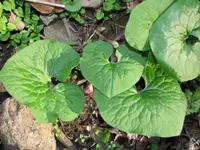
Recognize wild ginger by its low, colony-forming growth and paired, heart-shaped leaves, usually 3 to 6 inches wide (8 to 15 cm), borne on short stalks from the base.

A single cup-shaped flower sits at ground level between the leaf stalks. It has three broad, pointed lobes and no upright stem.

Asarum canadense Identification

Check Your Plant with Botan

Take a photo and use Botan to confirm your plant identification.

Clear images work best. Avoid photos taken too close or too far away

  • 1 free identification
  • No sign-up
  • 30,000+ plants in database

Check Asarum canadense for its low, two-leafed growth and hidden ground-level flower.

  • Each short stem usually carries a single pair of leaves, not many leaves along the stem.
  • Leaves are broad, heart-shaped to kidney-shaped, often 3-6 inches (8-15 cm) wide, with smooth edges.
  • Leaf blades sit on long stalks and spread outward, forming a loose patch close to the ground.
  • The flower sits at soil level between the leaf stalks and is jug-shaped with 3 pointed lobes.
  • Flowers are brownish to maroon and often partly hidden under the leaves.

Lift the leaves gently to check for the ground-level flower.

Asarum canadense shows distinct leaf and flower changes that help separate growth stages.

  • Young plant: Nonflowering shoots carry a single kidney-shaped leaf on a short, ground-level stem, giving a sparse, low clump unlike older paired-leaf shoots.
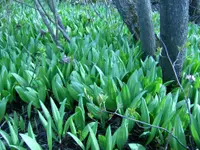
  • Mature plant: Established shoots typically bear 2 broad leaves, each about 3-6 inches (8-15 cm) wide, forming a denser colony with the stem hidden below them.
  • Flowering stage: A solitary, nodding maroon-brown flower appears at soil level between the paired leaf stalks; its 3 flared lobes make this stage immediately distinct.

In spring, wild ginger sends up two soft, kidney- to heart-shaped leaves close to the ground. At the same time, a single nodding maroon to brownish flower appears at the base, often partly hidden under the new leaves. By summer, the leaves enlarge into a low patch and can hide the flower completely. The plant dies back in fall, so winter usually leaves no visible top growth.

A few low woodland plants can be mistaken for wild ginger at a glance.

hexastylis(Hexastylis arifolia)

Often confused because both make low clumps with paired heartlike leaves. Hexastylis usually has thicker, often evergreen leaves with pale marbling, while Asarum canadense has plain green, thinner leaves that die back seasonally.

European wild ginger(Asarum europaeum)

Similar rounded, ground-level leaves can mislead buyers and gardeners. European wild ginger stays evergreen and its leaves are smaller, glossier, and more nearly round; Asarum canadense is deciduous with larger, softer leaves.

Asarum canadense is native to eastern North America, from southern Canada through the eastern and central United States. It is most often found in rich deciduous woods, wooded slopes, and streamside forests, usually in deep shade. Finding it in moist forest leaf litter helps separate it from look-alikes that favor open, dry, or sandy sites.

  • Toxic compounds: Asarum canadense contains aristolochic acids, chiefly in the roots and rhizomes. Ingestion is a concern for humans and pets because these compounds are linked to severe kidney injury and cancer risk.
  • Wild ginger mix-up: The common name wild ginger can suggest culinary ginger, but Asarum canadense is not a substitute. It forms two broad heart-shaped leaves at ground level, not the upright straplike leaves and thick edible rhizomes of true ginger (Zingiber).

Confirm the Species with Botan

Upload a photo to help identify the plant or verify your ID before labeling it or comparing similar species.

FAQ

The clearest field mark is its single, ground-level flower hidden beneath two broad, heart-shaped leaves on a short stem. The bloom is jug-shaped, brownish to maroon, and sits at the soil surface in spring.

More Plant Identification Guides

Identify First. Learn What Comes Next.

Use Botan to identify a plant from a photo, then get plant details, care information, and common problems for that species.

Botan app identifying a plant from a photo
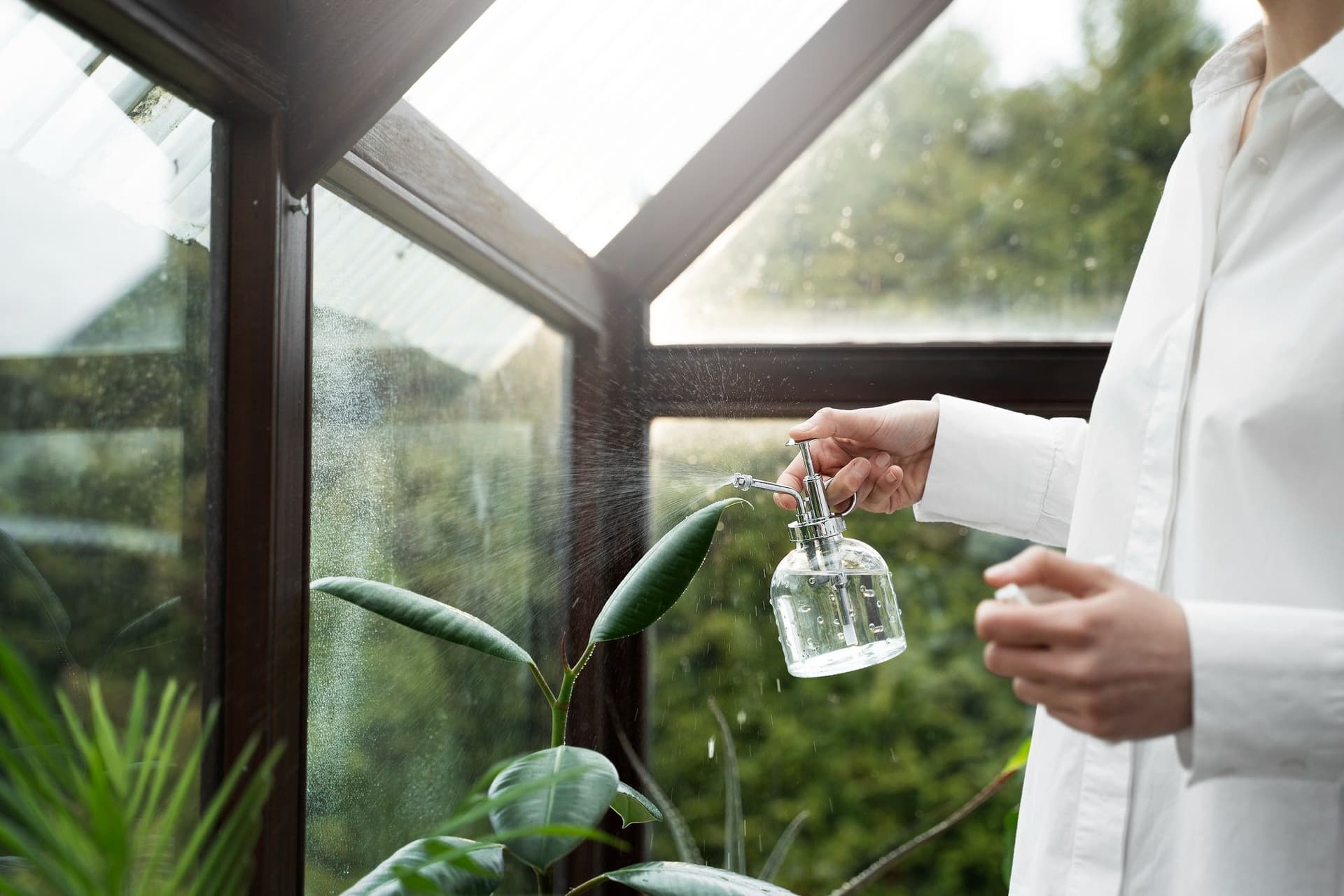
Best Time to Mow Lawn – A Complete Guide

5 min read · 10 Aug 2026

Best Time to Mow Lawn – A Complete Guide

Explore when to mow your lawn for its health and a pleasant green color. Find out the best time for this task during the summer heat, and follow practical tips for correctly cutting the grass, and learn common mistakes to avoid.

Plant Care
Best Time to Mow Lawn – A Complete Guide
How to Increase Humidity for Plants – 8 Simple Ways That Work

8 min read · 14 Aug 2026

How to Increase Humidity for Plants – 8 Simple Ways That Work

Dry indoor air stresses a lot of houseplants. You usually notice it first in the browning leaf tips. This guide describes 8 simple ways to raise the moisture around your plants, from humidifiers to pebble trays.

Plant Care
How to Increase Humidity for Plants – 8 Simple Ways That Work
12 Best Plants for Bathroom That Thrive in Humid Conditions

9 min read · 29 Sept 2026

12 Best Plants for Bathroom That Thrive in Humid Conditions

Discover the 12 best plants for bathroom spaces. Each pick comes with its own advantages, plus light, humidity, watering, and placement tips. Take a look and match the plant to your specific bathroom.

Plant Recommendations
12 Best Plants for Bathroom That Thrive in Humid Conditions