Hartweg's wildginger Care (Asarum hartwegii)

Hartweg's wildginger

About Hartweg's wildginger

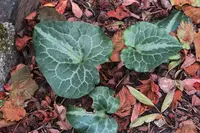
Hartweg's wildginger, Asarum hartwegii, is a low-growing woodland perennial native to shaded mountain forests of California and parts of the western United States. It forms dense mats of heart-shaped, often mottled leaves that create a natural groundcover under trees and shrubs.

The plant produces small, hidden, jug-shaped flowers at soil level, mainly appreciated by keen observers rather than for showy display. It generally prefers cool, moist, humus-rich soil and protection from hot, direct sun.

Due to its slow spread and preference for stable, shaded conditions, it is considered moderately easy to grow once established but not ideal for very dry or exposed sites. Gardeners who learn how to care for Hartweg's wildginger often use it to create a natural woodland effect.

Main Plant Requirements

Care Difficulty

Moderate Care

Light Preference

Shade

Water Requirements

Keep Soil Moist

Temperature Preference

Cold Hardy

Hardiness Zone

7–9

Soil Texture

Loamy, Silty, Organic-rich

Soil pH

Acidic (5.5–6.5), Slightly acidic (6.5–7.0)

Soil Drainage

Moist but well-drained

Fertilization

Minimal (feed rarely)

Get Personalized Care Plan

Scan your plant to receive care tips personalized for your specific plant

Available on iOS and Android

How to Care for the Hartweg's wildginger

This woodland perennial prefers low to moderate light that mimics a shaded forest floor.

  • Provide bright full shade to dappled or filtered light, with at most 1–2 hours of gentle morning sun and no harsh afternoon sun to prevent leaf scorch.
  • Site Hartweg's wildginger under deciduous shrubs or trees so it receives brighter light in spring, then deeper shade once canopies leaf out in summer.
  • If leaves become pale, scorched, or curled, reduce sun exposure; if growth is sparse and leaves are very dark and thin, allow slightly more filtered light.

This rhizomatous groundcover prefers consistently moist but not saturated soil.

  • Water when the top 2–3 cm of soil feel barely dry, aiming for soil that stays evenly damp during active growth, especially in late spring and early summer.
  • Ensure rich, humus-heavy soil with good drainage; standing water, a sour smell, or yellowing, mushy leaves indicate overwatering and poor aeration around roots.
  • During cool, wet seasons reduce watering to avoid rot, while in hot, dry spells increase frequency, watching for limp, dull, or curling leaves as a sign of underwatering in Asarum hartwegii.

This species thrives in cool, stable woodland temperatures and dislikes extremes.

  • Active growth is best at 55–75°F (13–24°C), with steady moisture and shade helping buffer short warm spells without stressing the foliage.
  • Mature plants tolerate brief drops to around 20°F (-7°C) when mulched, but repeated freeze–thaw cycles with bare soil can damage rhizomes and new buds.
  • In summer, protect from prolonged heat above 85°F (29°C) by providing deep shade and thick organic mulch to keep soil cool and prevent stress-related leaf decline.

This woodland perennial prefers moderate, stable humidity to keep foliage lush.

  • Aim for 50–70% humidity, which usually matches shaded outdoor beds or sheltered patios.
  • It tolerates brief dips into drier air, but prolonged <40% humidity can cause leaf edges to brown and curl.
  • Increase humidity by mulching thickly around the crown and grouping Hartweg's wildginger with other shade plants to reduce moisture loss.

Asarum hartwegii prefers consistently moist, humus-rich soil that drains freely but never dries out completely.

  • Use a loose, crumbly mix based on loam with 40–60% organic matter such as leaf mold, compost, or fine bark to mimic forest soil.
  • Ensure moderate drainage with added pine bark fines or perlite so water moves through but soil still holds even moisture around shallow roots.
  • Target slightly acidic to neutral pH around 6.0–7.0, which supports nutrient availability and healthy root development.
  • Avoid heavy clay that compacts, waterlogged spots, or very sandy mixes that dry quickly, as all can stunt growth and thin the groundcover.

This species can grow reliably in containers when moisture and shade are carefully managed.

  • Choose a wide, shallow pot to match its creeping rhizomes and allow the colony to spread horizontally rather than forcing deep rooting.
  • Use a heavier material such as clay or ceramic to stabilize the low, spreading foliage and slow surface drying in windy or exposed spots.
  • Raise the container slightly on feet or bricks so drainage holes stay clear and excess water escapes quickly after deep watering.

This woodland perennial needs only light feeding, as Hartweg's wildginger is adapted to low-nutrient forest soils.

  • In spring, top-dress with a thin layer of leaf mold or compost instead of high-salt synthetic products.
  • Use a mild balanced fertilizer (around 5-5-5) at 1/2 strength if growth appears weak.
  • Apply any fertilizer only once in mid-spring during active growth.
  • Stop feeding entirely in late summer and during winter dormancy to avoid soft, frost-tender growth.

Pruning Asarum hartwegii is minimal and mainly focused on hygiene rather than shaping.

  • In late winter or very early spring, remove dead or winter-damaged leaves at the base.
  • Trim yellowing, diseased, or torn foliage as needed during the growing season to maintain appearance.
  • Use clean, sharp scissors or small pruning snips to avoid tearing the fleshy petioles.
  • Light thinning of crowded leaves can improve air movement and reduce fungal issues without altering the plant’s natural form.

This species is usually grown as a groundcover, so focus on careful transplanting rather than frequent repotting.

  • Transplant in early spring or early fall when temperatures are mild and soil is evenly moist.
  • Move clumps only when growth is sparse, plants are overcrowded, or roots circle inside a container.
  • Lift with a wide soil ball, disturbing roots as little as possible, and replant at the same depth in humus-rich shade.
  • Water thoroughly after transplanting, then keep soil consistently moist for several weeks to reduce stress and support re-establishment.

Propagation of Asarum hartwegii is most reliable by division of established clumps.

  • Divide rhizomes in early spring just as new growth emerges, choosing healthy, vigorous plants.
  • Lift the clump and gently separate sections, ensuring each division has several buds and roots.
  • Replant divisions immediately into moist, humus-rich, shaded soil, keeping rhizomes just below the surface.
  • Seed propagation is possible but slow; provide cool, moist stratification and expect uneven, gradual germination.

This hardy woodland plant usually needs little winter attention in regions with mild to moderate frost.

  • Tolerates typical garden frosts when planted in the ground with well-drained, humus-rich soil.
  • Apply a 5–7 cm layer of leaf mulch in late fall to insulate the rhizomes and stabilize soil moisture.
  • In very cold climates, grow in containers and move pots into a cold, frost-free shelter for winter.
  • Avoid waterlogged soil in winter, which increases the risk of root and rhizome rot.

Care Tips

Leaf mulch blanket

Maintain a 3–5 cm layer of shredded leaf mulch around the plants to mimic woodland duff, keep roots cool, and reduce competition from shallow-rooted weeds.

Rhizome edge planting

When planting new divisions, set them near the edge of paths or stepping stones so emerging leaves remain visible and accessible for inspection without compacting surrounding soil.

Summer dormancy management

In hotter regions, allow partial summer dieback and simply keep the soil lightly moist, avoiding disturbance of the rhizomes until new growth resumes with cooler weather.

Division timing strategy

Plan divisions for early spring just as new growth nubs appear, lifting and splitting clumps into 3–5 rhizome sections so plants re-establish quickly and fill in gaps more evenly.

Slug and sowbug control

Inspect under leaf litter after wet periods and hand-remove slugs and sowbugs, or place shallow beer or yeast traps nearby, since their feeding can heavily scar the slow-growing foliage when caring for Hartweg's wildginger.

Common Pests and Diseases

slugs and snails

These pests chew irregular holes in the leaves, often starting at the edges, and can skeletonize young foliage in damp, shaded beds.

Solution

Hand-pick at night or early morning, use iron phosphate slug bait around but not on the crowns, and reduce hiding spots such as thick leaf litter touching the plant; coarse grit or copper barriers can also help protect clumps of Hartweg's wildginger in wet seasons.

vine weevils

These insects cause notched leaf margins as adults, while their soil-dwelling larvae feed on roots and rhizomes, leading to wilting or sudden collapse of shoots.

Solution

Inspect leaf edges for characteristic notches, shake plants at night to dislodge adults onto a sheet for removal, and use beneficial nematodes labeled for vine weevil larvae in moist soil to reduce root feeding; avoid keeping the soil saturated for long periods.

leaf spot

This disease produces small, round to irregular brown or purple spots on leaves that may merge into larger patches, especially in cool, moist shade with poor air movement.

Solution

Remove and discard heavily spotted leaves, thin surrounding groundcover to improve airflow and faster drying, and water at soil level rather than overhead; in severe, recurring cases, a labeled fungicide for ornamental foliage plants can be used as a preventive spray early in the season.

rhizoctonia crown rot

This disease causes browning and collapse of petioles at the soil line, with a dry, sunken, brown rot at the crown, often following prolonged warm, wet conditions in dense shade.

Solution

Promptly remove and discard affected clumps including some surrounding soil, improve drainage and reduce mulch thickness over the crowns, and replant divisions only into well-drained, loosely mulched soil; avoid overhead irrigation and overcrowding when trying to grow Asarum hartwegii in humid regions.

Interesting Facts

Low montane specialist

This species is native to low to mid-elevation oak and mixed conifer forests of central California, where it typically grows on north-facing slopes and shaded canyon banks with deep leaf litter.

Hidden ground-level flowers

Its maroon to brownish flowers sit at soil level and are often partly buried in leaf litter, an adaptation thought to attract ground-dwelling pollinators such as fungus gnats or small flies that search close to the forest floor.

Thick, evergreen foliage

Unlike some temperate wild gingers that go fully dormant, this species often keeps its thick, heart-shaped evergreen leaves through mild California winters, helping it photosynthesize early in the growing season under deciduous oaks.

FAQs about Hartweg's wildginger

This species spreads slowly by short rhizomes, forming small clumps that enlarge over time rather than running widely. In garden settings it is generally well behaved and controllable, not considered aggressive or difficult to confine.

Grow Healthy Plants with Botan Care

Keep your plants happy and healthy with plant identification, disease detection, and easy care guidance.

Botan plant care app — identify plants on mobile

Explore More Plants