Pinch First Rosettes
Lightly pinch or trim back the earliest rosettes of flowering stems by 2–3 cm in late spring to encourage sturdier, more branched plants with more flowering spikes.

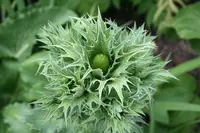
Giant sea holly, Eryngium giganteum, is a biennial or short-lived perennial grown mainly for its striking, architectural flower stems and bristly texture. It forms a rosette of spiny, toothed leaves, then sends up tall silvery stems topped with cone-shaped flower heads surrounded by a spiky collar.
This species is native to regions of the Caucasus and western Asia but is widely grown in temperate gardens for borders and dried arrangements. It prefers sunny, open sites with well-drained, often poor or sandy soil, and does not like being moved once established.
Deep roots and good drought tolerance make it relatively low-maintenance, though seedlings may appear in new spots. Understanding how to care for giant sea holly starts with providing sun and drainage rather than rich, moist soil.

Care Difficulty
Easy Care

Light Preference
Full Sun

Water Requirements
Low Water

Temperature Preference
Cold Hardy

Hardiness Zone
5–9

Soil Texture
Sandy, Loamy, Rocky

Soil pH
Slightly acidic (6.5–7.0), Slightly alkaline (7.0–7.5)

Soil Drainage
Well-drained

Fertilization
Minimal (feed rarely)
Scan your plant to receive care tips personalized for your specific plant
Available on iOS and Android
This sun-loving perennial forms strongest stems and best bracts in open, bright conditions.
This species prefers dry to moderately moist conditions and is sensitive to waterlogged soil.
This hardy perennial tolerates a wide temperature range once established in the ground.
This species is adapted to dry, open sites and rarely needs humidity adjustment in home gardens.
Eryngium giganteum prefers lean, mineral soils that do not stay wet.
This species can grow in containers, but performance is best when roots stay dry and well-aerated.
Eryngium giganteum needs only light feeding in most garden soils.
Pruning Eryngium giganteum is mainly done to manage appearance and encourage reseeding control.
This species is usually grown in the ground and dislikes disturbance once established.
Eryngium giganteum is most reliably propagated by seed rather than division or cuttings.
This cold-hardy perennial generally needs minimal winter care in temperate climates.

Plant Health Check
Not sure what's wrong with your plant? Check your plant's health inside the app.
When the flower heads mature, the spiny collar of bracts turns a pale silvery white that can appear almost ghostlike in evening light, which led to its common name ghost bridle.
This species is usually monocarpic, meaning an individual plant typically flowers once, sets seed, and then dies, relying on abundant self-sown seedlings to persist in a garden.
Its nectar-rich, cone-like flower heads are highly attractive to bees, hoverflies, and certain beetles, making it an effective structural plant for supporting pollinators in summer borders.

This species was popularized in European gardens in the 19th century after the British plantswoman Ellen Willmott reportedly scattered its seeds in other people’s gardens without permission, which is why it is still widely known by the nickname Miss Willmott’s ghost.
Lack of flowers is usually due to too much shade, overly rich soil, or young rosettes that are not yet at flowering age. Avoid heavy fertilizing and ensure full sun to support strong bloom development.
Keep your plants happy and healthy with plant identification, disease detection, and easy care guidance.