

Provide sturdy edging
Install discreet edging or a low barrier around clumps to keep slowly spreading rhizomes contained and to maintain clear borders along paths or mixed beds.

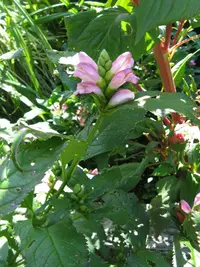
Pink turtlehead, Chelone lyonii, is a hardy, clump-forming perennial grown mainly for its late-season flowers. It typically reaches a medium height and spreads slowly by rhizomes, forming dense, upright stems. Its foliage is deep green and toothed, while the hooded pink flowers resemble a turtle’s head, appearing along the tops of the stems in late summer to fall. It is native to moist areas of eastern North America, such as streambanks and wet meadows. This species adapts well to garden conditions, especially in consistently moist soil with partial sun. Its sturdy growth, pest resistance, and tolerance of wet ground make it relatively straightforward to care for pink turtlehead in many temperate gardens.

Care Difficulty
Easy Care

Light Preference
Partial Shade

Water Requirements
Keep Soil Moist

Temperature Preference
Cold Hardy

Hardiness Zone
3–8

Soil Texture
Loamy, Silty, Organic-rich

Soil pH
Acidic (5.5–6.5), Slightly acidic (6.5–7.0)

Soil Drainage
Moist but well-drained

Fertilization
Minimal (feed rarely)
Scan your plant to receive care tips personalized for your specific plant
Available on iOS and Android
Chelone lyonii prefers bright, cool conditions that mimic moist woodland edges.
Chelone lyonii thrives in consistently moist, never bone-dry soil.
This hardy perennial is adapted to cool to mild temperate climates with distinct seasons.
This moisture-loving perennial prefers consistently moist air but adapts to most outdoor garden humidity levels.
Chelone lyonii grows best in consistently moist, rich, well-aerated soil that never fully dries out.
This species can be grown in containers if moisture and stability are carefully managed.
Chelone lyonii responds well to modest feeding in average garden soil.
Chelone lyonii benefits from light, purposeful pruning to maintain vigor and flowering.
This perennial is usually grown in-ground, so transplanting matters more than repotting.
Chelone lyonii is commonly propagated by division and softwood cuttings.
Chelone lyonii is cold hardy in much of the US and usually needs minimal winter care.

Plant Health Check
Not sure what's wrong with your plant? Check your plant's health inside the app.
This species flowers in late summer to early fall, producing nectar-rich, snapdragon-like blooms that support bumblebees and other native pollinators when many other perennials are fading.
Chelone lyonii is naturally adapted to stream banks and wet woodland edges in the eastern United States, tolerating consistently moist to periodically waterlogged soils better than many garden perennials.
The plant spreads slowly by short rhizomes, forming dense clumps over time that help stabilize soil in rain gardens and along water features without becoming aggressively invasive.

Chelone lyonii is one of the few ornamental perennials that maintains upright, non-flopping stems and clean foliage even in high-moisture, partial-shade sites, which has led to its frequent use in formal rain garden designs and naturalized wetland plantings.
Lack of flowers usually comes from too much shade, dry soil during summer, or plants that are still immature. Consistent moisture, a few hours of direct or bright light, and avoiding heavy nitrogen fertilizer help restore normal flowering.
Keep your plants happy and healthy with plant identification, disease detection, and easy care guidance.

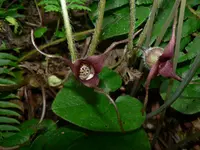
British Columbia wildginger
Asarum caudatum
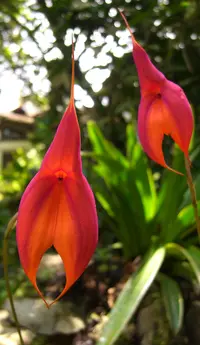
Veitch's Masdevallia
Masdevallia veitchiana
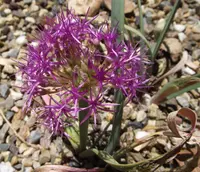
broadstemmed onion
Allium platycaule
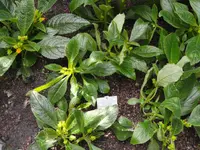
Chrysothemis friedrichsthaliana
Chrysothemis friedrichsthaliana
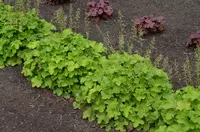
Coral Bells
Heuchera villosa 'Citronelle'
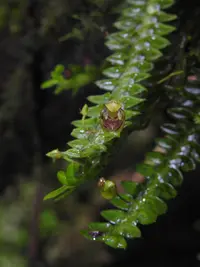
Dichaea neglecta
Dichaea neglecta
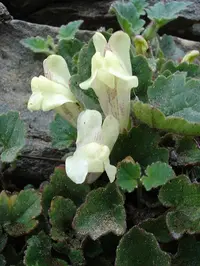
Trailing Snapdragon
Asarina procumbens
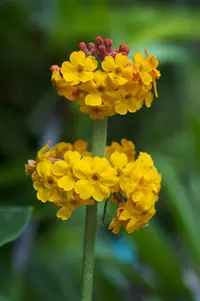
Bulley's Primrose
Primula bulleyana