Encourage Deep Roots
In the first growing season, water less often but more deeply and gradually increase spacing between waterings to promote a deep taproot that will support the plant through future droughts.

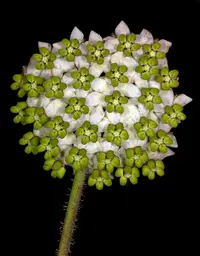
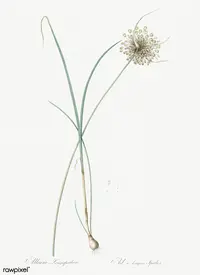
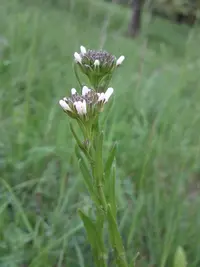
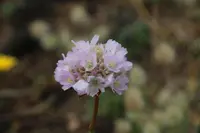
Asclepias albens, commonly called cartwheels or whitestem milkweed, is a shrubby perennial native to dry, open habitats of California and parts of the southwestern United States. It typically grows with upright, branching stems and narrow, pale leaves, topped by rounded clusters of starry, cream to lavender flowers. The overall look is airy and architectural rather than lush. This species is adapted to harsh, low-moisture sites, which makes it relatively drought-tolerant but sensitive to overwatering and heavy, poorly drained soils. Gardeners who learn how to care for cartwheels usually find it easier to manage in sunny, dry landscapes than in traditional, frequently watered beds.

Care Difficulty
Moderate Care

Light Preference
Full Sun

Water Requirements
Low Water

Temperature Preference
Warm Climate

Hardiness Zone
8–10

Soil Texture
Sandy, Loamy, Rocky

Soil pH
Slightly acidic (6.5–7.0), Neutral (7.0)

Soil Drainage
Well-drained

Fertilization
Minimal (feed rarely)
Scan your plant to receive care tips personalized for your specific plant
Available on iOS and Android
Asclepias albens thrives in bright, open conditions that mimic its dry, sunny native habitat.
This species prefers dry to moderately dry soil and is adapted to low rainfall conditions.
This drought-adapted perennial handles heat well but is sensitive to hard, prolonged frost.
Asclepias albens, often called cartwheels, tolerates a wide humidity range and rarely needs special adjustment indoors or outdoors.
Asclepias albens prefers lean, fast-draining, mineral soils that mimic dry, open habitats.
This species can be grown in containers, but only if drainage and depth closely match its dry, open-root conditions.
Asclepias albens generally thrives in lean, well-drained soil and needs minimal fertilization for healthy growth.
Asclepias albens benefits from light, well-timed pruning to maintain vigor and encourage flowering.
This species is usually grown in the ground; focus on careful transplanting rather than frequent repotting.
Reproduction of Asclepias albens is most reliable from seed, as the deep taproot makes division difficult.
This drought-adapted perennial is fairly cold hardy in its native range and usually needs little active winter care.

Plant Health Check
Not sure what's wrong with your plant? Check your plant's health inside the app.
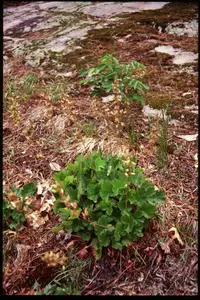
This species is a pale, grayish milkweed native to arid parts of California and nearby regions, where it typically grows on dry, often rocky or sandy slopes and desert scrub rather than in moist meadows like many other milkweeds.
It serves as a larval host plant for several native butterflies, including monarchs, which rely on its toxic latex-rich foliage for caterpillar development and chemical defense against predators.
The plant often occurs on nutrient-poor, well-drained substrates such as decomposed granite and other rocky soils, showing strong adaptation to low-organic, drought-prone habitats in its limited natural range.

The species is considered a habitat specialist within the milkweed group, with a relatively narrow distribution in the southwestern United States compared with more widespread milkweeds, making local habitat protection important for its long-term persistence.
This species is highly attractive to native bees, butterflies, and other beneficial insects. Its nectar-rich flowers are an important resource in dry habitats and can support monarch caterpillars if other suitable milkweeds are nearby.
Keep your plants happy and healthy with plant identification, disease detection, and easy care guidance.