Encourage Deep Roots
In the first growing season, water less often but more deeply so moisture reaches at least 20–25 cm, which promotes a deep taproot that will make the plant far more drought-resilient in future years.

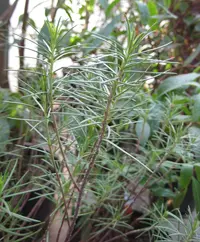
Pineneedle milkweed, Asclepias linaria, is a dryland perennial native to the desert regions of the southwestern United States and northern Mexico. It naturally grows on rocky slopes and open scrub.
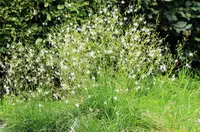
The plant forms upright, slender stems with very narrow, pine-like leaves and clusters of small white to cream flowers that attract butterflies, especially monarchs. Its fine foliage and open habit give it a airy, shrub-like look.
As a desert species, it prefers full sun, fast-draining sandy or rocky soil, and low to moderate moisture. Those conditions are the key when learning how to care for pineneedle milkweed.

Care Difficulty
Moderate Care

Light Preference
Full Sun

Water Requirements
Low Water

Temperature Preference
Warm Climate

Hardiness Zone
8–11

Soil Texture
Sandy, Loamy, Rocky

Soil pH
Slightly acidic (6.5–7.0), Neutral (7.0)

Soil Drainage
Well-drained

Fertilization
Minimal (feed rarely)
Scan your plant to receive care tips personalized for your specific plant
Available on iOS and Android
This desert milkweed needs strong sun to flower and support monarch caterpillars well.
This species is drought-tolerant and prefers drier conditions once established.
This plant is adapted to warm, dry climates with short periods of cold.
This desert-adapted species handles low humidity well and rarely needs extra moisture in the air.
Asclepias linaria prefers lean, fast-draining, sandy soil that mimics desert slopes.
This species can grow in containers if the pot is set up to stay dry and stable like a desert site.
This desert-adapted species needs minimal feeding, so focus on light, infrequent nutrition for healthy growth.
Pruning Asclepias linaria is mainly about keeping the plant tidy and encouraging flowering stems.
This milkweed has a sensitive root system, so transplanting must be done carefully and infrequently.
Asclepias linaria is most reliably propagated from seed under warm, bright conditions.
This species is relatively cold tolerant in its native range and usually needs only modest winter attention in mild climates.

Plant Health Check
Not sure what's wrong with your plant? Check your plant's health inside the app.
This milkweed has very narrow, needle-like leaves that reduce water loss, an adaptation to its native hot, arid habitats in the southwestern US and northern Mexico.
It serves as an important larval host plant for monarch and queen butterflies in desert regions, supporting their life cycle where few other suitable milkweeds grow.
Like other milkweeds, it produces a milky latex rich in cardenolides, bitter defense compounds that can make caterpillars and adult butterflies distasteful to many predators.

In its native desert and chaparral habitats, this species often grows on rocky, well-drained slopes and is considered one of the few milkweeds naturally adapted to such harsh, drought-prone sites, which makes Asclepias linaria care specially relevant for xeric and habitat-restoration plantings.
This species is functionally evergreen in mild, frost-free climates, holding its fine needle-like leaves year-round. In colder or harsher sites, foliage can thin or die back, then resprout from woody stems when conditions improve.
Keep your plants happy and healthy with plant identification, disease detection, and easy care guidance.