Divide Mature Clumps
Lift and divide congested plants every 3–4 years in early spring, replanting small fans with healthy roots 10–15 cm apart to keep growth dense and vigorous.

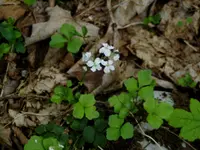
Trefoil cress (Cardamine trifolia) is a low, spreading woodland perennial from the mustard family. It forms dense mats of small, three-part leaves that stay attractive most of the year. In spring it produces delicate white flowers above the foliage.
This species occurs naturally in cool, shaded forests and mountain regions of central and southern Europe. It prefers consistently moist, humus-rich soil and protection from strong sun and drying winds.
Its compact size and slow, steady growth make it suitable for shaded rock gardens, woodland borders, or as a groundcover under shrubs. Understanding how to care for Trefoil Cress mainly involves providing cool conditions, even moisture, and shelter from heat.

Care Difficulty
Moderate Care

Light Preference
Partial Shade

Water Requirements
Keep Soil Moist

Temperature Preference
Cold Hardy

Hardiness Zone
5–8

Soil Texture
Loamy, Silty, Organic-rich

Soil pH
Acidic (5.5–6.5), Slightly acidic (6.5–7.0)

Soil Drainage
Moist but well-drained

Fertilization
Minimal (feed rarely)
Scan your plant to receive care tips personalized for your specific plant
Available on iOS and Android
This woodland groundcover prefers soft, filtered light similar to a deciduous forest floor.
This plant prefers consistently moist, cool soil without becoming waterlogged.
This species is adapted to cool, temperate woodland conditions with moderate seasonal variation.
This woodland groundcover prefers consistently moist air but copes with typical home humidity if soil moisture is stable.
This species favors cool, moist, humus-rich soil that drains freely but never dries out completely.
This plant adapts well to container growing when moisture and root space are carefully managed.
This woodland perennial grows well in modest soils and usually needs only light feeding.
Cardamine trifolia benefits from light maintenance pruning to keep the patch dense and tidy.
This low woodland groundcover is usually grown in the ground, so care focuses on occasional transplanting rather than frequent repotting.
Cardamine trifolia is commonly propagated by division, with seed used less often in gardens.
This species is cold hardy in most temperate gardens and usually needs minimal winter care.

Plant Health Check
Not sure what's wrong with your plant? Check your plant's health inside the app.
In its native Central European mountains, this species often forms dense, low mats on the forest floor under beech and spruce, creating a living ground cover in deep shade where many other herbs cannot persist.
Unlike many woodland Cardamine species that die back completely, this plant typically keeps its small trifoliate leaves through winter in mild to moderately cold conditions, giving it a true evergreen character in cool forests.
This species is physiologically adapted to low-light conditions, maintaining photosynthesis at light levels that are too weak for many sun-adapted herbs, which helps explain its success in deep, moist woodland shade.
Poor flowering usually comes from too little light, excess heat, or dry soil during bud formation. Ensure cool, evenly moist conditions in spring, avoid strong midday sun, and do not use high‑nitrogen fertilizer, which favors leaves over flowers.
Keep your plants happy and healthy with plant identification, disease detection, and easy care guidance.