Bottlebrush Asparagus Care (Asparagus racemosus)

Bottlebrush Asparagus

About Bottlebrush Asparagus

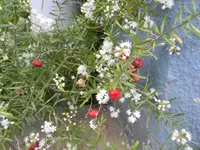
Bottlebrush asparagus (Asparagus racemosus) is a scrambling, semi-woody perennial known for its fine, feathery foliage and slender, climbing or cascading stems. It often forms a dense, airy mass that works well in hanging baskets, containers, or supported against a trellis.

The plant is native to parts of India and surrounding regions, where it grows in warm, seasonally dry habitats. Its tolerance of short dry spells and varied light levels makes it moderately easy to manage indoors or in sheltered outdoor spots.

Those learning how to care for Bottlebrush Asparagus should note its preference for bright, indirect light, evenly moist but not soggy soil, and a free-draining, slightly rich potting mix.

Main Plant Requirements

Care Difficulty

Moderate Care

Light Preference

Partial Shade

Water Requirements

Regular Water

Temperature Preference

Tropical / Frost Sensitive

Hardiness Zone

9–11

Soil Texture

Sandy, Loamy, Organic-rich

Soil pH

Acidic (5.5–6.5), Slightly acidic (6.5–7.0)

Soil Drainage

Moist but well-drained

Fertilization

Light (every 4–6 weeks)

Get Personalized Care Plan

Scan your plant to receive care tips personalized for your specific plant

Available on iOS and Android

How to Care for the Bottlebrush Asparagus

Asparagus racemosus prefers bright, gentle light that mimics dappled sun at woodland edges.

  • Provide 3–5 hours of soft morning sun with light shade or filtered light for the rest of the day, especially in hotter regions.
  • Tolerates partial shade, but very dense shade leads to weak, stretched shoots and sparse foliage over time in Bottlebrush Asparagus.
  • Avoid strong midday and late-afternoon sun; leaves may yellow, scorch, or dry at the tips, particularly during summer in warm climates.

This species prefers evenly moist but not waterlogged soil, with brief drying at the surface between waterings.

  • Water when the top 2–4 cm of soil feels dry, aiming for thorough soaking and full drainage rather than small, frequent splashes.
  • In warm, active growth periods, expect more frequent watering; in cooler months or dormancy, allow deeper drying and reduce frequency.
  • Watch for yellowing, soft stems or sour odor as signs of overwatering, and crisp, browning shoot tips as signs of underwatering or extended drought stress.

This species grows best in warm, frost-free conditions with only moderate seasonal variation.

  • Aim for 70–85°F (21–29°C) for active growth, with slightly cooler nights helping maintain compact, healthy shoots.
  • Tolerates brief dips to about 45°F (7°C), but growth slows; repeated exposure below 40°F (4°C) can damage roots and shoots.
  • Protect from frost and sudden cold snaps, and provide light shade and extra water in heat waves above 95°F (35°C) to limit stress and leaf scorch.

Asparagus racemosus handles a range of home conditions but benefits from moderately humid air.

  • Aim for 40–60% humidity, which aligns with most living spaces and supports steady foliage growth.
  • This species tolerates short dry-air spells, but prolonged very low humidity can cause browning tips and fine leaf drop.
  • Increase humidity with a pebble tray under the pot or by grouping Bottlebrush Asparagus near other plants, rather than misting heavily.

Asparagus racemosus prefers loose, well-aerated, consistently moist but free-draining soil.

  • Use a mix of 50–60% loam or all-purpose potting soil with 20–30% compost and 10–20% coarse sand or perlite for structure and drainage.
  • Target a slightly acidic to neutral pH around 6.0–7.0, which supports root function and nutrient uptake.
  • Ensure the mix stays friable, meaning it crumbles easily, so roots receive air and excess water can move through quickly.
  • Avoid compacted, heavy clay or waterlogged substrates, which encourage root rot and reduce new shoot production.

This species grows reliably in containers when given sufficient root space and firm support.

  • Choose a deep, stable pot that allows the developing tuberous roots to extend down without curling tightly at the base.
  • Use a slightly heavier container material or add weight at the bottom to prevent tipping as long, vining stems develop.
  • Raise the pot on feet or pot risers so drainage holes remain clear and excess water escapes quickly after irrigation.

Asparagus racemosus responds well to moderate feeding during the warm growing season.

  • Use a balanced liquid fertilizer (such as 10-10-10 or 20-20-20) at 1/2 strength every 4–6 weeks in spring and summer.
  • Alternatively, apply a thin layer of well-rotted compost or a mild slow-release fertilizer at the start of the growing season.
  • Pause or greatly reduce feeding in fall and winter when growth slows, especially for Bottlebrush Asparagus grown indoors.
  • Always water before and after applying fertilizer to limit root burn and help nutrients distribute evenly.

Pruning Asparagus racemosus is mainly about keeping the plant tidy and healthy.

  • Carry out light pruning in late winter or early spring before vigorous new growth starts.
  • Remove dead, yellowing, or damaged cladodes and any crowded, tangled stems to improve air flow.
  • Use clean, sharp scissors or pruners, cutting back to healthy tissue without shredding the stems.
  • Shaping light, arching growth encourages a neater outline without greatly reducing flowering potential.

Asparagus racemosus forms fleshy roots that dislike frequent disturbance, so transplant only when clearly needed.

  • Look for roots circling the pot, pushing through drainage holes, or noticeably slowed growth as signs it needs a larger container or ground space.
  • Plan repotting or transplanting in spring when active growth resumes, typically every 2–3 years for container plants.
  • Lift the plant gently, loosen circling roots with fingers, and trim only damaged sections to reduce stress.
  • Replant at the same depth in a slightly larger pot or prepared bed, water thoroughly, then keep evenly moist while new roots establish.

Asparagus racemosus is commonly propagated by division or from seed under warm, controlled conditions.

  • Divide mature clumps in spring, ensuring each section has healthy roots and at least one growing point.
  • Replant divisions immediately into moist, well-drained soil and keep shaded and evenly moist until strong new growth appears.
  • Sow fresh seeds in a warm location (70–75°F) in light, sterile mix, covering them lightly.
  • Maintain steady moisture and warmth, as seed germination can be slow and uneven, often taking several weeks.

Asparagus racemosus is frost-sensitive and benefits from thoughtful winter care in cooler climates.

  • In USDA zones below 9, grow in containers and move plants indoors or into a greenhouse before frost.
  • For in-ground plants in mild climates, apply a 5–8 cm mulch layer around the root zone to buffer temperature swings.
  • If light frost is possible, use frost cloth or similar material to shield foliage on the coldest nights.
  • Reduce watering in winter, keeping soil just barely moist to prevent root rot in cool conditions.

Care Tips

Provide climbing support

Install a small trellis or mesh panel in the pot so the long, wiry stems can climb instead of tangling, which keeps the plant cleaner and reduces breakage during handling.

Encourage tuber health

When repotting, gently spread out the fleshy roots and tubers in a wide, shallow container and cover them evenly, as this species forms storage tubers that benefit from space to expand horizontally.

Rotate for even growth

Turn the pot 90° every 2–3 weeks so stems develop evenly and do not lean strongly to one side, which also reduces the risk of the plant becoming lopsided and top-heavy.

Monitor stem aging

Label or mentally track older, woody stems and remove only those that are clearly declining, since mature stems help store reserves that support new shoot production when you grow Asparagus racemosus long term.

Quarantine new plants

Keep any newly purchased asparagus plants in a separate area for 2–3 weeks and inspect stems and cladodes closely for scale or spider mites before placing them near established plants, as infestations can spread quickly along the fine foliage.

Common Pests and Diseases

Scale insects

This pest attaches to stems and cladodes (leaf-like structures), sucking sap and causing yellowing, stunting, and sticky honeydew deposits that may lead to sooty mold.

Solution

Isolate the plant, then wipe stems and cladodes with a cotton pad dipped in 70% isopropyl alcohol or insecticidal soap, repeating weekly until no new scales appear; for outdoor plants, encourage natural predators like lady beetles and avoid excessive nitrogen fertilization that favors scale outbreaks.

Mealybugs

These insects form white, cottony clusters in leaf axils, along stems, and around root crowns, weakening the plant and causing distorted, pale growth.

Solution

Prune heavily infested parts, then wash remaining foliage with a strong but gentle stream of water and treat hidden clusters with a cotton swab in alcohol or a labeled insecticidal soap, checking and retreating every 7–10 days until the infestation is gone.

Spider mites

This pest thrives in hot, dry conditions, causing fine stippling, bronzing of cladodes, and delicate webbing between stems.

Solution

Increase humidity around the plant, rinse foliage thoroughly with lukewarm water to remove mites and webs, and apply a miticidal soap or horticultural oil to all plant surfaces, repeating several times to target newly hatched mites.

Rust

This disease causes small yellow spots that turn into orange-brown pustules, mainly on older cladodes, leading to premature yellowing and drop.

Solution

Remove and dispose of affected stems, avoid overhead watering, improve air circulation, and if the plant is repeatedly affected, apply a labeled fungicide preventively during warm, humid periods while keeping surrounding weeds and volunteer asparagus hosts controlled.

Fusarium crown and root rot

This disease affects the root system and crown, leading to gradual decline, weak new shoots, and browning or hollowing of underground parts, especially in poorly drained or repeatedly cropped soil.

Solution

Discard severely affected plants, avoid replanting asparagus in the same spot for several years, improve soil drainage and organic matter, and use only healthy, disease-free planting stock; in containers, replace the potting mix and disinfect pots before replanting to improve long-term Asparagus racemosus plant care.

Interesting Facts

Tuberous root system

This species forms clusters of fleshy, carrot-like storage roots that act as water and carbohydrate reservoirs, helping it survive seasonal droughts in its native South Asian habitats.

Climbing leaf-like stems

Its fine, feathery “leaves” are actually cladodes, which are modified stems that perform photosynthesis while the true leaves remain tiny, scale-like, and short-lived.

Specialist pollinator visitors

The small, fragrant white flowers produce nectar that attracts a range of insects, especially bees, which play a key role in cross-pollination in both wild and cultivated populations.

Botan icon

Did you know?

Asparagus racemosus is considered threatened or vulnerable in parts of its native range due to habitat loss and heavy wild harvesting, and regional conservation programs now promote cultivation to reduce pressure on remaining wild populations.

FAQs about Bottlebrush Asparagus

Yellowing foliage often results from water stress, poor drainage, or depleted nutrients. Check for soggy or bone-dry soil, compacted roots, or lack of fertilizer. Correcting moisture balance and repotting overcrowded plants usually improves color over several weeks.

Grow Healthy Plants with Botan Care

Keep your plants happy and healthy with plant identification, disease detection, and easy care guidance.

Botan plant care app — identify plants on mobile

Explore More Plants