Sturdy plant support
Install low, unobtrusive stakes or a simple string grid early in the season to keep tall stems upright and reduce lodging in wind or heavy rain.

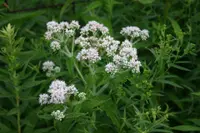
Common boneset, Eupatorium perfoliatum, is a hardy North American native wildflower typically found in wet meadows, stream banks, and marshy edges. It is a perennial herb that forms upright clumps with fuzzy stems and pairs of perfoliate leaves that appear joined around the stem.
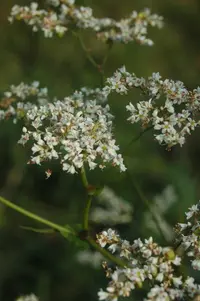
In late summer it produces flat clusters of small white flowers that attract many pollinators, including bees and butterflies. The plant is relatively easy to grow where soil stays consistently moist and light is full sun to light shade.
Gardeners who want to care for common boneset should focus on providing steady moisture and avoiding very dry, compacted sites. It suits naturalistic plantings, rain gardens, and wildlife-friendly borders.

Care Difficulty
Easy Care

Light Preference
Full Sun

Water Requirements
Keep Soil Moist

Temperature Preference
Cold Hardy

Hardiness Zone
3–9

Soil Texture
Loamy, Silty, Organic-rich

Soil pH
Acidic (5.5–6.5), Slightly acidic (6.5–7.0)

Soil Drainage
Waterlogged tolerant

Fertilization
Minimal (feed rarely)
Scan your plant to receive care tips personalized for your specific plant
Available on iOS and Android
This moisture-loving native prefers consistent sun exposure to flower well and stay compact.
This species prefers evenly moist soil and does not tolerate long dry spells.
This hardy perennial tolerates a wide temperature range once established in the landscape.
This species is tolerant of a wide humidity range if soil moisture is consistent.
This wetland perennial prefers consistently moist, organic-rich soil with slow drainage but no stagnant water.
This species can be grown in containers, but pots must support its tall, moisture-loving growth habit.
Eupatorium perfoliatum is a native wildflower that grows well in average to moderately rich soil and needs only light feeding in gardens.
Pruning Eupatorium perfoliatum helps maintain upright growth, control size, and refresh the stand each year.
This species is mostly grown in the ground; focus on dividing and transplanting clumps rather than frequent repotting.
Eupatorium perfoliatum is commonly propagated by seed and by division of established clumps.
This cold-hardy perennial usually needs minimal winter care in typical temperate climates.

Plant Health Check
Not sure what's wrong with your plant? Check your plant's health inside the app.
Its opposite leaves are joined around the stem so that the stem appears to pierce the leaf, a structure called perfoliate, which helps distinguish it from many other wetland asters.
This species typically grows in wet meadows, marsh edges, and stream banks across eastern North America, playing a role in stabilizing soil and contributing to wetland plant diversity.
Its dense clusters of small white flowers bloom in late summer to early fall and provide nectar and pollen for a wide range of insects, including native bees, wasps, and butterflies, when many other native plants have finished flowering.

The common name boneset comes from historical use by Indigenous peoples and early European-American settlers, who prepared the plant for treating so-called breakbone fever (severe dengue-like fevers), a role that led to its inclusion in early North American pharmacopeias, although such use is no longer recommended without professional guidance.
This species is highly attractive to many native bees, butterflies, and moths. Its flat-topped late-summer flower clusters provide abundant nectar and pollen, making it valuable in wildlife gardens and naturalistic plantings focused on supporting pollinators.
Keep your plants happy and healthy with plant identification, disease detection, and easy care guidance.