


Divide Mature Clumps
Every 3–4 years, lift and gently divide congested clumps in early spring, replanting firm, healthy sections to maintain vigor and create new plants when growing Ground Spleenwort.

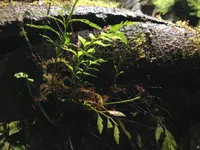
Ground spleenwort (Asplenium appendiculatum) is a small, evergreen fern native to Australia, often found on rocky slopes, cliffs, and shaded forest habitats. It forms neat, low clumps of finely divided fronds that give a delicate, lacy texture despite its generally tough nature.
This fern prefers cool, shaded positions with consistent moisture and good drainage, often thriving in crevices or rocky pockets. Its compact size and moderate growth rate make it suitable for containers, shaded rock gardens, and terrariums, though it dislikes drying out or harsh sun. Understanding how to care for Ground Spleenwort mainly involves providing stable moisture, protection from heat, and a humus-rich, free-draining substrate.

Care Difficulty
Moderate Care

Light Preference
Partial Shade

Water Requirements
Keep Soil Moist

Temperature Preference
Warm Climate

Hardiness Zone
9–11

Soil Texture
Loamy, Peaty, Organic-rich

Soil pH
Acidic (5.5–6.5)

Soil Drainage
Moist but well-drained

Fertilization
Minimal (feed rarely)
Scan your plant to receive care tips personalized for your specific plant
Available on iOS and Android
This fern prefers soft, indirect light that mimics a shaded woodland floor.
This fern prefers consistently moist but not waterlogged soil around its roots.
This species grows best in mild, frost-free conditions with stable temperatures.
This fern prefers consistently moist air and reacts quickly to dry indoor conditions.
Asplenium appendiculatum grows best in loose, humus-rich soil that mimics a forest floor.
This species is suitable for container growing when moisture and drainage are carefully balanced.
Asplenium appendiculatum is a light feeder that benefits from modest nutrition during active growth.
Asplenium appendiculatum needs only light, hygienic pruning to maintain a tidy clump and healthy fronds.
This fern prefers stable conditions, so repotting or transplanting Asplenium appendiculatum should be done only when clearly needed.
Asplenium appendiculatum is usually propagated by careful division rather than from spores in home settings.
In mild climates this fern is fairly cold tolerant and usually needs only minimal winter care.

Plant Health Check
Not sure what's wrong with your plant? Check your plant's health inside the app.
This fern naturally grows on moist, shaded rock faces and ledges in southeastern Australia, often rooting in thin soil pockets and crevices rather than deep forest soil.
Its fronds are divided into many small, rounded to wedge-shaped segments on a central stalk, an adaptation that helps reduce damage from wind and water flow on exposed rocky habitats.
In the wild it occurs from cool temperate to mild coastal climates, tolerating regular cool spells and light frosts better than many other small spleenworts.
This fern spreads slowly by short rhizomes and spore release, usually forming small, tidy clumps. In typical garden conditions it is not considered aggressive or invasive and is unlikely to overwhelm neighboring plants or garden beds.
Keep your plants happy and healthy with plant identification, disease detection, and easy care guidance.

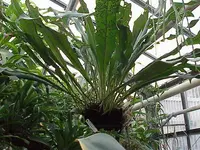
graceful fern
Niphidium crassifolium
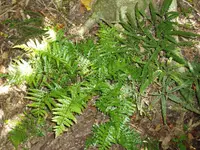
Asplenium lamprophyllum
Asplenium lamprophyllum

golden leatherfern
Acrostichum aureum
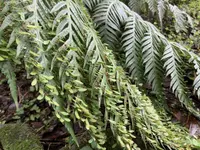
Woodwardia prolifera
Woodwardia prolifera
Antrophyum boryanum
Antrophyum boryanum
rooting chainfern
Woodwardia radicans
 POPULAR
Tasmanian tree fern
Dicksonia antarctica
Hooker's Spleenwort
Asplenium hookerianum