

Secure rocky pockets
When planting in crevices or rock gardens, wedge a coarse, well-drained mix firmly into small pockets and tuck rhizomes slightly downward so fronds arch naturally and are less exposed to drying winds.

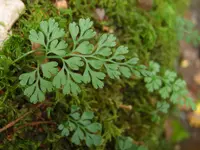
Spleenwort (Asplenium dareoides) is a small fern with fine, divided fronds that form neat, low clumps. It has a delicate, lacy look but a fairly sturdy nature. In the wild it is usually found on rocky slopes or well-drained forest soils in cool to mild climates. This background makes it suited to container culture and small shaded garden spaces. Its compact size and slow, steady growth habit make it relatively manageable for indoor and outdoor fern collections. Those learning how to care for Spleenwort should focus on steady moisture, gentle light, and loose, humus-rich soil to keep it long-lived and attractive.

Care Difficulty
Moderate Care

Light Preference
Partial Shade

Water Requirements
Keep Soil Moist

Temperature Preference
Cool Climate

Hardiness Zone
8–10

Soil Texture
Loamy, Silty, Organic-rich

Soil pH
Acidic (5.5–6.5)

Soil Drainage
Moist but well-drained

Fertilization
Minimal (feed rarely)
Scan your plant to receive care tips personalized for your specific plant
Available on iOS and Android
This fern prefers soft, indirect light that mimics a shaded woodland floor.
This fern thrives in consistently moist but not waterlogged soil.
This fern prefers mild, stable temperatures without extremes of heat or cold.
This fern prefers consistently moist air and reacts quickly to dry conditions indoors.
This species needs a loose, humus-rich mix that stays evenly moist yet drains freely.
This fern adapts well to container growing when moisture control is prioritized.
This fern benefits from light, consistent feeding during active growth but is sensitive to excess salts.
Asplenium dareoides needs only light, hygienic pruning to keep the clump healthy and tidy.
This fern prefers stable conditions and benefits from infrequent, careful repotting or transplanting.
Asplenium dareoides is usually propagated by careful division, as spore raising is slow and technical.
This fern prefers cool, frost-free conditions and benefits from moderate winter protection in colder climates.

Plant Health Check
Not sure what's wrong with your plant? Check your plant's health inside the app.
This fern naturally grows in rocky crevices and thin soils along Andean slopes in Chile and Argentina, where it anchors into cracks rather than deep soil. Its compact growth and tough fronds reflect adaptation to exposed, often wind-prone sites.
The species epithet dareoides refers to the extinct fern genus Daueria, highlighting a resemblance in frond shape noted by early pteridologists. This name points to its interest for scientists studying fern evolution and fossil lineages.
Like other ferns, it reproduces by microscopic spores rather than seeds, but in this species the spore-bearing sori form neat rows along the underside of the leaflet segments. This ordered arrangement helps botanists distinguish it from related Asplenium species in the field.
This fern performs well both indoors and outdoors if given consistent moisture and shelter from harsh sun and wind. Outdoors, it suits shaded rock gardens; indoors, it needs stable humidity and protection from drafts for reliable growth.
Keep your plants happy and healthy with plant identification, disease detection, and easy care guidance.

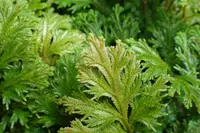
variegated spikemoss
Selaginella martensii
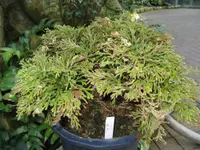
Selaginella tamariscina
Selaginella tamariscina
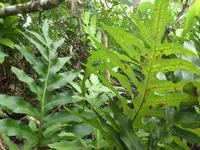
monarch fern
Phymatosorus scolopendria
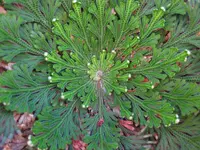
Rose of Jericho
Selaginella lepidophylla
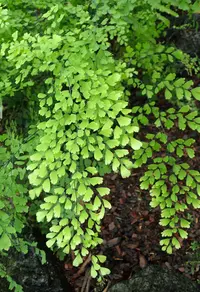
Chilean Maidenhair Fern
Adiantum chilense
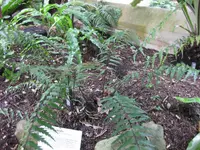
sickle speenwort
Asplenium polyodon
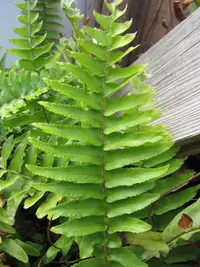
Brown's sword fern
Nephrolepis brownii
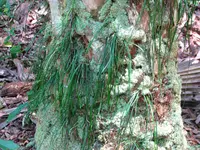
shoestring fern
Vittaria lineata