Rhizome Positioning
Set the rhizomes just at or slightly above the soil surface rather than burying them deeply, which reduces rot risk and encourages new fronds to emerge along the rhizome line.

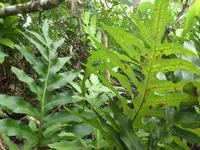
Monarch fern (Phymatosorus scolopendria) is a tropical evergreen fern valued for its glossy, leathery fronds and spreading, rhizome-based growth. It often forms dense, arching clumps that give a lush, tropical look.
This species occurs naturally in warm coastal regions of the Pacific and parts of Asia, where it grows on the ground, rocks, or as an epiphyte on trees. Its tough fronds, creeping rhizomes, and tolerance of a range of light levels make it relatively forgiving once established.
To care for monarch fern, provide stable warmth, moderate indirect light, and evenly moist but free-draining soil or potting mix.

Care Difficulty
Easy Care

Light Preference
Partial Shade

Water Requirements
Moderate Water

Temperature Preference
Tropical / Frost Sensitive

Hardiness Zone
9–11

Soil Texture
Sandy, Loamy, Organic-rich

Soil pH
Acidic (5.5–6.5), Slightly acidic (6.5–7.0)

Soil Drainage
Moist but well-drained

Fertilization
Minimal (feed rarely)
Scan your plant to receive care tips personalized for your specific plant
Available on iOS and Android
Phymatosorus scolopendria thrives in bright, filtered light that mimics dappled forest shade.
This fern prefers evenly moist, well-drained soil that never stays soggy for long periods.
This species grows best in warm, frost-free conditions similar to a mild tropical or subtropical climate.
This fern prefers moderately moist air and reacts if humidity stays too low.
Phymatosorus scolopendria grows best in loose, organic-rich, well-aerated soil that drains quickly.
This species adapts well to container growing when the pot supports its spreading root system.
This fern responds well to light, consistent feeding during its active growing season.
Phymatosorus scolopendria benefits from light, periodic pruning to maintain a tidy, healthy clump.
This fern prefers stable conditions and only occasional repotting or transplanting when clearly root-bound.
New plants are most commonly produced by division of established clumps rather than by spores in home settings.
In mild climates this fern needs minimal winter care, but extra protection is useful in colder regions.

Plant Health Check
Not sure what's wrong with your plant? Check your plant's health inside the app.
When the fronds are crushed, they release a sweet, vanilla-like scent caused by aromatic compounds in the leaf tissue. In several Pacific islands, the fragrant foliage is traditionally used to scent clothing, bedding, and ceremonial spaces.
This fern naturally colonizes harsh coastal habitats, including lava rock and coral substrates, where many other vascular plants struggle to establish. Its creeping rhizomes anchor into rock crevices and help stabilize thin, sandy or rocky soils in coastal ecosystems.
In Hawai‘i and other parts of Polynesia, the plant is widely used in lei making and decorative foliage due to its glossy, long-lasting fronds. It is also commonly planted near homes and public areas as a hardy ornamental that tolerates wind and salt spray.

This species is widely naturalized beyond its native range and has become invasive in some tropical islands, where its vigorous rhizomes and dense fronds can outcompete native understory plants and alter the structure of coastal and lowland forest communities.
This species spreads by creeping rhizomes and can slowly form broad clumps, especially in mild, humid climates. It is usually manageable in home gardens but may need edging or division to keep it within bounds.
Keep your plants happy and healthy with plant identification, disease detection, and easy care guidance.