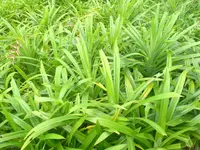
Brown's sword fern Care (Nephrolepis brownii)

Also known as: Asian sword fern
Brown's sword fern

About Brown's sword fern

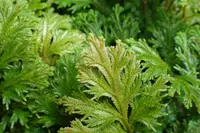
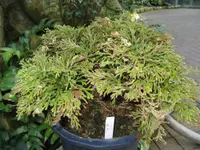
Brown's sword fern, Nephrolepis brownii, is a terrestrial fern known for its arching fronds and dense, tufted growth. It often forms graceful, fountain-like clumps. In nature it occurs in warm, humid regions of Asia and the Pacific, typically in forest understories or along shaded slopes. This background makes it adapted to filtered light and consistently moist, airy substrates. The plant is generally moderate in difficulty, as it dislikes drying out completely and is sensitive to very low humidity and strong direct sun. Those factors guide how to care for Brown's sword fern in homes or shaded outdoor spaces.

Main Plant Requirements

Care Difficulty

Moderate Care

Light Preference

Partial Shade

Water Requirements

Keep Soil Moist

Temperature Preference

Tropical / Frost Sensitive

Hardiness Zone

10–12

Soil Texture

Loamy, Peaty, Organic-rich

Soil pH

Acidic (5.5–6.5), Slightly acidic (6.5–7.0)

Soil Drainage

Moist but well-drained

Fertilization

Light (every 4–6 weeks)

Get Personalized Care Plan

Scan your plant to receive care tips personalized for your specific plant

Available on iOS and Android

How to Care for the Brown's sword fern

This fern prefers bright, filtered light that mimics dappled woodland shade.

  • Provide 4–6 hours of bright, indirect light daily, such as near an east-facing window or under light tree canopy outdoors.
  • Tolerates partial shade, but in very low light the fronds of Brown's sword fern become sparse, pale, and elongated over time.
  • Avoid harsh midday and afternoon sun; strong rays can scorch fronds, so use sheer curtains indoors or plant in north or east exposure outdoors.

This species prefers evenly moist conditions without long dry periods or waterlogged soil.

  • Water when the top 2–3 cm of soil feels slightly dry, using enough water to moisten the full root zone, then let excess drain away.
  • In warm, active growth periods, you may need to water more often, while in cooler seasons allow the surface to dry a bit more between waterings.
  • Watch for pale, crisp frond tips as a sign of underwatering, and yellowing, limp fronds or sour-smelling soil as signs of overwatering in Nephrolepis brownii.

This fern thrives in consistently warm, frost-free conditions.

  • Aim for 65–80°F (18–27°C) for best growth, with stable temperatures and moderate humidity around the plant.
  • Protect from cold; growth slows below 55°F (13°C), and exposure near or below 40°F (4°C) can cause frond damage or plant decline.
  • In hot spells above 86°F (30°C), provide shade, increase airflow, and avoid heat-reflective spots such as south-facing walls or metal surfaces.

This fern grows best in moist air and reacts quickly to dry indoor conditions.

  • Aim for 50–70% humidity to keep fronds lush and reduce browning tips.
  • It tolerates brief dips to 40%, but prolonged dry air causes crisp, pale fronds and more shed leaflets.
  • Increase moisture by grouping plants, using a pebble tray under the pot, or running a small humidifier near Brown's sword fern.

This species prefers a loose, airy, organic-rich substrate that drains freely yet stays lightly moist.

  • Use a peat- or coco coir-based mix with added compost, fine bark, and perlite for structure and aeration.
  • Aim for slightly acidic conditions around pH 5.5–6.5 to support nutrient uptake for Nephrolepis brownii.
  • Ensure rapid drainage; water should flow through in seconds and not leave the potting mix soggy or compacted.
  • Avoid heavy garden soil, clay-heavy mixes, or pots without drainage, which encourage root rot and suffocation.

This fern is well suited to container growing, both indoors and on sheltered patios.

  • Choose a wide, shallow pot to match its fibrous, surface-leaning roots and spreading fronds for better stability.
  • Select plastic or glazed ceramic if slower drying is needed, or unglazed terracotta if the mix stays wet too long.
  • Elevate the pot slightly on feet or a stand so drainage holes stay clear and excess water can escape freely.

Nephrolepis brownii responds well to light, consistent feeding during its active growing season.

  • Use a balanced liquid fertilizer around 10-10-10 or 20-20-20 diluted to 1/4–1/2 strength every 4–6 weeks in spring and summer.
  • Alternatively, apply a thin layer of fine compost on the soil surface as a gentle slow-release nutrient source.
  • Suspend feeding in fall and winter, or reduce to very light feeding every 8–10 weeks if growth continues indoors.
  • Flush the pot with plain water every 1–2 months to prevent soluble salt buildup that can brown frond tips.

Pruning helps Nephrolepis brownii maintain a tidy, dense rosette and encourages fresh frond growth.

  • Trim dead, yellowing, or diseased fronds at the base year-round using clean, sharp scissors or pruning shears.
  • In late winter or early spring, remove weak, sparse, or crowded fronds to improve air flow and light penetration.
  • Cut back excessively long or misshapen fronds to refine overall shape without removing more than 1/3 of total foliage.
  • Disinfect tools with alcohol before and after pruning to reduce disease spread between plants.

This fern benefits from periodic repotting when roots fill the container and growth slows.

  • Check for roots circling the pot, pushing through drainage holes, or dense root mass with little soil as signs it needs a larger container.
  • Repot every 2–3 years in spring, choosing a pot 2–5 cm wider with good drainage and a peat- or coco-based fern mix.
  • Gently loosen outer roots and remove dead or mushy sections, avoiding aggressive root tearing to limit transplant shock.
  • Water thoroughly after repotting, keep in bright, indirect light, and maintain higher humidity for 1–2 weeks to support recovery.

Nephrolepis brownii is most reliably propagated by division rather than by spores for home growers.

  • Carry out division in spring when growth resumes and the root ball is well established but not extremely rootbound.
  • Remove the plant from its pot and split the clump into sections, each with several healthy fronds and a firm root system.
  • Plant divisions into small pots with moist, well-drained fern mix, firm the soil gently, and water to settle roots.
  • Maintain high humidity, stable warmth around 68–75°F, and bright, indirect light until new fronds emerge and growth strengthens.

Brown's sword fern is frost sensitive and benefits from sheltered conditions in cool climates.

  • In regions below 40°F, grow in containers so plants can be moved indoors before the first frost.
  • Overwinter indoors in bright, indirect light with temperatures kept above 55–60°F to avoid cold damage to fronds.
  • If planted outdoors in mild climates, apply a 5–8 cm mulch layer around the root zone, keeping it slightly away from the crown.

Care Tips

Frond basket support

Use a wide, shallow hanging basket or low bowl-shaped pot so the long fronds can arch without kinking, and rotate the container 90° every 1–2 weeks to keep the crown balanced and reduce breakage on one side.

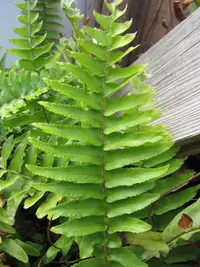
Crown aeration check

Every few weeks gently lift and fan out the inner fronds with your fingers to improve air movement around the crown, which helps prevent fungal spots and makes it easier to spot scale or mealybugs early.

Rinse to reset

Every 4–6 weeks move the plant to a sink or shower and rinse the foliage and soil surface with a gentle, lukewarm spray for 30–60 seconds to wash off dust, mites, and excess fertilizer salts without disturbing the root ball.

Controlled division

When the plant becomes congested, divide it only during active growth, cutting the root mass into 2–3 pieces with a clean, sharp knife and keeping at least 3–5 healthy crowns per division to reduce transplant shock and maintain dense growth.

Seasonal light shift

In late autumn, shift the plant slightly closer to a bright window or use a small LED grow light for 8–10 hours daily to compensate for short days, which supports steady frond production when growing Brown's sword fern in darker homes.

Common Pests and Diseases

Fern scale

This pest feeds on fern fronds and rachises, causing yellowing, patchy discoloration, and a general decline in vigor. Symptoms include small, hard, brown or gray bumps tightly attached along stems and the undersides of pinnae.

Solution

Physically remove scales with a cotton swab dipped in 70% isopropyl alcohol and prune heavily infested fronds. Improve air movement, avoid excess nitrogen fertilizer, and repeat treatments with insecticidal soap or a light horticultural oil, ensuring thorough coverage of all frond surfaces while protecting tender new growth.

Rhizoctonia leaf blight

This disease causes irregular brown lesions along pinnae and can lead to blighted frond tips, especially in dense, humid fern benches or pots. Symptoms include rapidly spreading patches of tan to dark brown tissue that may merge and kill entire fronds.

Solution

Remove and discard all affected fronds, reduce overhead watering, and increase spacing and airflow around plants. Allow the foliage to dry between waterings, water at the base when possible, and, in severe cases, use a labeled fungicide containing azoxystrobin or similar active ingredient according to local regulations and product directions.

Fungal crown rot

This disease starts at the crown where fronds emerge, leading to wilting, collapse, and a soft or discolored crown even when the soil appears moist. Symptoms include foul odor at the base and fronds that pull away easily from the crown.

Solution

Discard severely affected plants, as recovery is rare once the crown is extensively rotted. For early cases, trim out all soft tissue, repot into fresh, fast-draining medium, keep the crown slightly above the soil line, and adjust watering to keep the mix evenly moist but never saturated while maintaining good container drainage.

Mealybugs

These insects hide in the dense fern foliage and crown, sucking sap and causing stunted growth, yellowing pinnae, and sticky honeydew that can lead to sooty mold. This pest often appears as white, cottony clusters in leaf axils and along midribs.

Solution

Isolate infested plants, rinse fronds thoroughly with a gentle but firm stream of lukewarm water, and dab visible clusters with a cotton swab dipped in 70% isopropyl alcohol. Follow up with repeated applications of insecticidal soap or a light horticultural oil, focusing on the crown and hidden crevices, until no new insects appear.

Nemocladus leaf spot complex

Symptoms include small water-soaked spots on pinnae that enlarge into tan, brown, or purplish lesions with sometimes darker margins, often triggered under warm, wet conditions in shaded locations. This disease can cause premature frond drop and a patchy, unsightly appearance if left unmanaged.

Solution

Remove and discard affected fronds, avoid wetting the foliage, and water early in the day so any splash on leaves dries quickly. Improve air circulation, reduce overcrowding, and, if the problem persists in production or collection settings, apply a labeled broad-spectrum fern-safe fungicide as part of an integrated Nephrolepis brownii plant care program.

Interesting Facts

Old World native range

This fern is naturally distributed from tropical Africa through South and Southeast Asia to northern Australia and many Pacific islands, where it grows in warm, humid lowland forests and disturbed habitats.

Aggressive colonizing habit

Outside its native range, this species can naturalize quickly along roadsides, in plantation understories, and in urban green spaces, sometimes forming dense stands that outcompete local ground flora.

Tough fronds and rhizomes

Its long, arching fronds and creeping rhizomes tolerate wind, periodic cutting, and moderate trampling better than many delicate ferns, which helps explain its success in both wild and managed landscapes.

FAQs about Brown's sword fern

Frond tips usually brown from low humidity, missed waterings, or accumulated salts from fertilizer. Trim damaged edges, flush the potting mix with water, and maintain steadier moisture and moderate humidity to prevent further browning.

Grow Healthy Plants with Botan Care

Keep your plants happy and healthy with plant identification, disease detection, and easy care guidance.

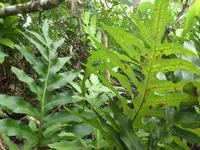
Botan plant care app — identify plants on mobile

Explore More Plants