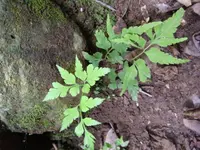
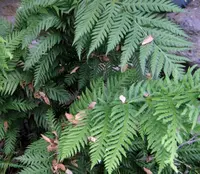
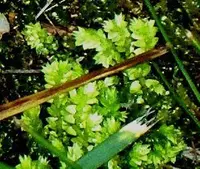
shoestring fern Care (Vittaria lineata)

Also known as: Shoelace Fern
shoestring fern

About shoestring fern

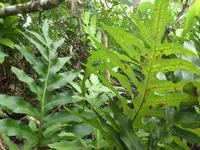
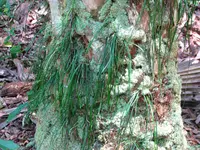
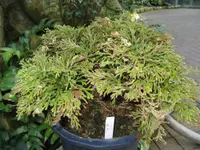
Shoestring fern, Vittaria lineata, is an epiphytic fern that often grows on tree trunks, rocks, or moist walls in warm, humid forests. It forms long, narrow, strap-like fronds that hang in loose, graceful clumps.

In nature it occurs across tropical and subtropical regions of the Americas, usually in shaded, sheltered spots with high ambient moisture. Its thin fronds and shallow roots make it sensitive to drying out and to abrupt environmental changes.

Because of this, shoestring fern is moderately challenging indoors and suits growers who can provide steady humidity and gentle airflow. Understanding how to care for shoestring fern starts with giving it soft, filtered light, constant light moisture, and a very free-draining, airy substrate.

Main Plant Requirements

Care Difficulty

Hard Care

Light Preference

Shade

Water Requirements

Keep Soil Moist

Temperature Preference

Tropical / Frost Sensitive

Hardiness Zone

10–11

Soil Texture

Loamy, Peaty, Organic-rich

Soil pH

Strongly acidic (4.5–5.5), Acidic (5.5–6.5)

Soil Drainage

Moist but well-drained

Fertilization

Minimal (feed rarely)

Get Personalized Care Plan

Scan your plant to receive care tips personalized for your specific plant

Available on iOS and Android

How to Care for the shoestring fern

This epiphytic fern prefers soft, filtered light that mimics forest understory conditions.

  • Provide bright, indirect light or dappled shade, with 2–4 hours of gentle morning sun and no harsh midday or afternoon sun.
  • Outdoors, place shoestring fern under high tree canopies or on shaded structures where it receives consistent filtered light year-round.
  • Watch fronds for stress: pale, crispy tips indicate too much sun, while stretched, sparse fronds suggest insufficient light.

Vittaria lineata prefers evenly moist conditions without waterlogging.

  • In soil or on mounts, allow the surface or moss layer to feel just barely dry before watering again, avoiding a fully dry root zone.
  • Increase watering frequency in warm, active growth periods and reduce slightly in cooler months while never letting the plant desiccate.
  • Yellowing, limp fronds and a sour smell suggest overwatering and poor drainage, while crisp, curling fronds indicate underwatering and low humidity.

This fern thrives in consistently warm, frost-free conditions similar to a humid subtropical forest.

  • Aim for 65–80°F (18–27°C) for steady growth, avoiding sudden swings of more than 10°F (6°C) in a day.
  • Protect the plant from cold; growth slows below 60°F (16°C), and tissue damage often occurs under 45°F (7°C).
  • Tolerates short spikes up to about 90°F (32°C) if humidity is high and roots never dry completely, but prolonged heat with low humidity leads to frond dieback.

This fern needs consistently high humidity to keep its narrow fronds healthy and hydrated.

  • Aim for 60–80% air humidity; place shoestring fern in a bathroom or near a humidifier rather than a dry, heated room.
  • Dry air causes browning tips, shriveling fronds, and stalled growth, especially along the thinnest leaf sections.
  • Increase humidity with a room humidifier, grouping plants, and placing the pot on a pebble tray, avoiding direct mist on fronds.

This species prefers a loose, airy, organic-based medium that mimics moist rock crevices or tree bark.

  • Use a fine-textured epiphyte mix such as 50% sphagnum moss, 25% fine orchid bark, and 25% perlite for Vittaria lineata.
  • Ensure very rapid drainage so roots stay moist but never waterlogged, allowing water to run freely through the mix within seconds.
  • Keep pH slightly acidic to neutral (pH 5.5–7.0), avoiding strongly alkaline components such as large amounts of lime or hard tap water residue.
  • Improve aeration by adding extra perlite or fine bark if the mix compacts, and avoid dense garden soil or heavy potting composts.

This fern is suitable for container growing, especially in shallow pots, hanging containers, or mounted arrangements with some substrate.

  • Choose a shallow, wide container so the spreading root system can anchor without forcing deep, compacted substrate layers.
  • Use a potting basket or slotted plastic pot to increase air movement around the roots while still holding the mossy mix in place.
  • Secure the container or hanger firmly since the long, hanging fronds can shift the weight distribution and cause tipping if loosely mounted.

This epiphytic fern has modest nutrient needs, but light feeding supports healthy, narrow fronds when grown in containers.

  • Use a balanced liquid fertilizer (around 10-10-10) diluted to 1/4–1/2 strength for shoestring fern indoor care.
  • Feed every 4–6 weeks during spring and summer when growth is active.
  • Skip or greatly reduce feeding in fall and winter when growth slows.
  • Rinse the potting mix with plain water occasionally to prevent salt buildup from fertilizer.

Pruning needs for Vittaria lineata are minimal and focus on cleanliness rather than shaping.

  • Best time for light pruning is late winter or early spring before new fronds extend.
  • Remove only dead, yellowing, or damaged fronds by cutting them close to the base with small sharp scissors.
  • Thin out severely crowded, tangled fronds to improve air flow and reduce fungal risk.
  • Avoid heavy cutting, as this fern relies on many fine fronds to photosynthesize efficiently.

This fern dislikes frequent disturbance, so repotting or transplanting should be infrequent and gentle.

  • Consider moving it only when roots circle the container surface, the plant dries out very fast, or growth slows noticeably.
  • Plan any repotting for spring, about every 3–4 years, when new roots and fronds can re-establish quickly.
  • Use a shallow container with a very airy, bark- or sphagnum-based mix to mimic its natural epiphytic habitat.
  • Handle roots carefully, keep them slightly moist, and shade the plant for 1–2 weeks after moving to reduce stress.

Propagation of Vittaria lineata is possible but tends to be slow and better suited to patient growers.

  • Division of small clumps or rhizome sections in spring is the most practical method for home growers.
  • Lift the plant gently, separate a portion with several healthy fronds and roots, and replant in fresh, airy medium.
  • Keep divisions in high humidity, bright indirect light, and consistently moist (not waterlogged) conditions until established.
  • Spore propagation is possible but requires sterile conditions, constantly moist medium, and can take many months.

This tropical fern is frost sensitive and needs protection in regions with cold winters.

  • In USDA zones below 10, grow in containers so the plant can be moved indoors before temperatures drop below 50°F.
  • Indoors, provide bright, indirect light, high humidity (50–70%), and avoid cold drafts near windows or doors.
  • Outdoors in mild climates, maintain a thick organic mulch around the root zone to keep it slightly insulated and evenly moist.
  • Reduce watering slightly in winter, allowing the surface to dry just a little while never letting the roots fully dry out.

Care Tips

Mounting technique

Mount the plant on hardwood, cork, or tree fern plaque using nylon fishing line or soft plant ties, keeping the rhizomes exposed so new fronds can emerge freely and attach themselves over time.

Watering orientation

When mounted vertically, tilt or lay the mount nearly flat during watering so the roots are fully soaked, then return it upright after excess water has drained to prevent rot at the attachment points.

Airflow management

Provide gentle, constant air movement from a small fan set on low several feet away to keep fronds dry between misting sessions and reduce fungal issues in this fine-leaved epiphyte.

Support for long fronds

Use horizontal slats, hanging wires, or a coarse mesh backdrop behind the plant so the long, strap-like fronds can drape and hook onto something instead of kinking or breaking under their own weight.

Quarantine and inspection

Quarantine new ferns for 2–3 weeks and inspect the narrow fronds with a hand lens for scale or mites, since early detection makes caring for shoestring fern in a collection much easier and safer for other plants.

Common Pests and Diseases

Scale insects

This pest feeds on fronds and midribs, causing yellowing, weak growth, and sticky honeydew on the narrow leaves and mounting surface. Infestations often hide along the wiry rhizomes and attachment points on bark or wood slabs.

Solution

Remove heavily infested fronds and gently scrub remaining scale with a soft brush or cotton swab dipped in diluted alcohol or insecticidal soap, taking care not to damage the thin fronds or rhizomes. Improve air movement around the plant and repeat spot treatments every 7–10 days until no new scale appears.

Mealybugs

These insects settle in crevices around the wiry rhizomes and frond bases, creating white cottony clusters and causing fronds to yellow and decline. Symptoms include sticky residue and distorted new frond growth in tight mounting areas or crowded terrariums.

Solution

Isolate the plant, then dab visible mealybugs with a cotton swab dipped in isopropyl alcohol and rinse the foliage gently with lukewarm water. Reduce overcrowding, increase airflow, and repeat careful inspections and targeted treatments weekly until the infestation is gone.

Fern aphids

This pest clusters on tender new fronds and sori, sucking sap and causing pale, curled, or stunted growth. Honeydew may lead to sooty mold on the narrow fronds in humid, sheltered conditions typical of shoestring fern indoor care.

Solution

Rinse aphids off with a gentle but thorough stream of lukewarm water, focusing on the undersides of fronds and growing tips. If needed, follow with a light application of insecticidal soap, and maintain good humidity with adequate air circulation to discourage reinfestation.

Bacterial leaf blight

This disease produces small, water-soaked spots along the thin fronds that enlarge into black or dark brown streaks, often starting where water sits on the leaves. Symptoms include rapid frond collapse in persistently wet, poorly ventilated conditions such as closed terrariums or tight mounts.

Solution

Promptly remove and discard all affected fronds, then reduce overhead misting and allow the plant to dry slightly between waterings while keeping humidity high through indirect means. Improve air circulation, avoid water standing on fronds, and sterilize tools and mounting surfaces to limit spread.

Fungal leaf spot

This disease causes scattered brown or tan spots with darker margins on fronds, sometimes coalescing into larger dead patches along the narrow leaf blades. Symptoms include slow thinning of the fern when grown in cool, very humid air with poor airflow around dense mats of fronds.

Solution

Trim and discard spotted fronds, ensure good spacing of plants, and increase air movement without lowering humidity excessively. Water at the base or around the mount rather than over the fronds, and if spots continue to spread, apply a labeled low-toxicity fungicide suitable for ferns according to instructions.

Interesting Facts

Straplike leaf anatomy

This fern produces very long, extremely narrow fronds that often look like dark green shoelaces, a form that maximizes surface area for photosynthesis while limiting water loss on exposed tree trunks and rocks.

Epiphyte of humid forests

In its native range, this species commonly grows as an epiphyte on tree bark or occasionally on mossy rocks, relying on humid air, intercepted rain, and organic debris instead of rooting in soil.

Spore stripes beneath fronds

Instead of round or clustered spore patches, this species bears its sporangia in long continuous lines along the undersides of the fronds, a characteristic feature used by botanists to recognize it in the field.

Botan icon

Did you know?

This fern has an unusually broad natural distribution for such a delicate-looking epiphyte, occurring from parts of the southeastern United States through the Caribbean and Central America into northern South America, showing a strong ability to track warm, humid forest habitats across large geographic distances.

FAQs about shoestring fern

Yellow fronds usually come from root stress, fertilizer buildup, or natural aging. Check for compacted or soggy substrate, accumulated salts on the pot rim, or very old fronds at the base. Remove aged fronds and correct root conditions.

Grow Healthy Plants with Botan Care

Keep your plants happy and healthy with plant identification, disease detection, and easy care guidance.

Botan plant care app — identify plants on mobile

Explore More Plants