


Use basket culture
Grow plants in a slatted or mesh hanging basket lined with long-fiber sphagnum so the fronds can naturally arch and trail while the roots stay evenly moist but well aerated.

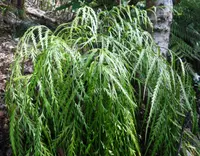
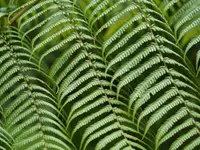
Drooping spleenwort, Asplenium flaccidum, is an evergreen fern known for its lax, arching fronds that hang gracefully from rocks, tree trunks, or baskets. The fronds are finely divided, giving a soft, cascading look that suits naturalistic or woodland-style plantings.
This species is native to New Zealand and parts of Australia, where it often grows as an epiphyte on trees or in cool, moist forest habitats. Its preference for steady moisture, good airflow, and protection from harsh sun means it can be moderately demanding indoors.
Those who care for drooping spleenwort should provide soft, filtered light, evenly moist but not waterlogged substrate, and a loose, humus-rich mix that drains well yet holds gentle moisture.

Care Difficulty
Moderate Care

Light Preference
Partial Shade

Water Requirements
Keep Soil Moist

Temperature Preference
Cool Climate

Hardiness Zone
8–10

Soil Texture
Loamy, Peaty, Organic-rich

Soil pH
Strongly acidic (4.5–5.5), Acidic (5.5–6.5)

Soil Drainage
Moist but well-drained

Fertilization
Minimal (feed rarely)
Scan your plant to receive care tips personalized for your specific plant
Available on iOS and Android
This fern prefers soft, forest-like light that avoids intense direct sun.
This fern prefers consistently moist but not waterlogged soil around its roots.
This species favors mild, frost-free conditions similar to a cool, sheltered woodland.
This fern prefers consistently moist air and reacts quickly to dry indoor conditions.
Asplenium flaccidum grows best in loose, humus-rich, moisture-retentive but free-draining substrate.
This fern is well-suited to container cultivation, including hanging baskets and elevated planters.
This fern is sensitive to excess nutrients, so drooping spleenwort benefits from light, infrequent feeding only during active growth.
Pruning Asplenium flaccidum is minimal and focuses on hygiene rather than shaping.
This fern dislikes frequent disturbance, so repotting or transplanting should be infrequent and gentle.
Asplenium flaccidum is usually propagated by careful division rather than from spores in home settings.
This fern prefers mild, frost-free winters and benefits from some protection in colder climates.

Plant Health Check
Not sure what's wrong with your plant? Check your plant's health inside the app.
This species has unusually long, pendulous fronds that can exceed 1 m in length and naturally drape down from rocks or tree trunks, giving it a distinctive dripping appearance in moist forests.
It commonly grows both as an epiphyte on tree branches and trunks and as a lithophyte on mossy rocks, anchoring itself in humus and moss rather than true soil in its native New Zealand forests.
The fern is native to cool, high-rainfall cloud forests of New Zealand, where it thrives in shaded gullies and on damp forest slopes exposed to frequent mist and high humidity.

In older New Zealand forests this species often forms hanging green curtains beneath tree canopies and on rock faces, creating important sheltering microhabitats for moisture-loving invertebrates and small forest organisms.
This fern generally performs better outdoors in cool, humid, shaded sites, similar to its native forest habitat. Indoors it can be grown in terrariums or bathrooms, but stable moisture and high humidity are essential for success.
Keep your plants happy and healthy with plant identification, disease detection, and easy care guidance.

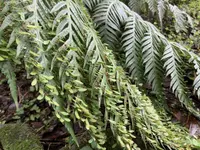
Woodwardia prolifera
Woodwardia prolifera
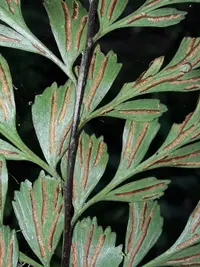
wedgeleaf spleenwort
Asplenium cuneatum
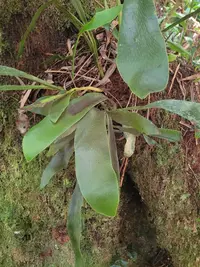
Antrophyum boryanum
Antrophyum boryanum
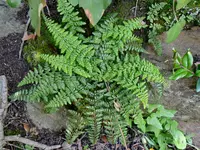
Asplenium foreziense
Asplenium foreziense
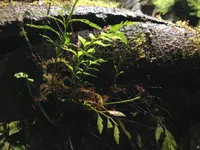
Ground Spleenwort
Asplenium appendiculatum
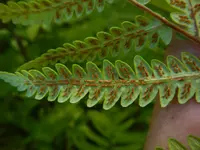
Virginia chainfern
Woodwardia virginica
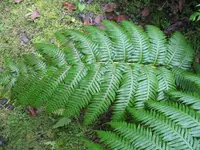
rooting chainfern
Woodwardia radicans
 POPULAR
Tasmanian tree fern
Dicksonia antarctica