Asplenium foreziense Care

Asplenium foreziense

About Asplenium foreziense

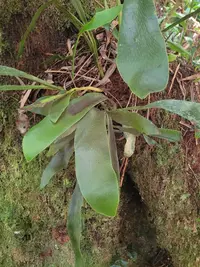
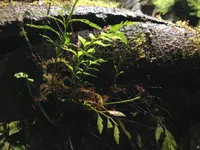
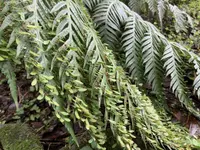
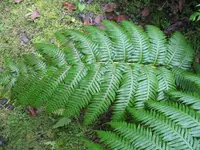
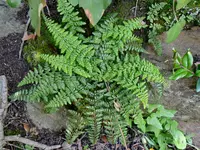
Asplenium foreziense is a small, clumping fern known for its finely divided, soft fronds that create a delicate, airy look. It is typically lithophytic or saxicolous, meaning it often grows on rocks in its natural habitat.

This species is native to parts of Europe, where it occupies shaded, humid crevices with good air circulation. It prefers cool, stable conditions and does not tolerate drought or harsh sun, which can make it a bit demanding under home conditions.

Understanding how to care for Asplenium foreziense starts with providing consistent moisture, filtered light, and a loose, well-drained, humus-rich substrate that mimics its rocky woodland sites.

Main Plant Requirements

Care Difficulty

Moderate Care

Light Preference

Partial Shade

Water Requirements

Keep Soil Moist

Temperature Preference

Warm Climate

Hardiness Zone

Unknown

Soil Texture

Loamy, Peaty, Organic-rich

Soil pH

Acidic (5.5–6.5), Slightly acidic (6.5–7.0)

Soil Drainage

Moist but well-drained

Fertilization

Minimal (feed rarely)

Get Personalized Care Plan

Scan your plant to receive care tips personalized for your specific plant

Available on iOS and Android

How to Care for the Asplenium foreziense

This fern prefers soft, indirect light that mimics a shaded woodland edge.

  • Provide 2–4 hours of gentle morning sun or bright, filtered light under high tree canopy or shade cloth.
  • Aim for partial to full shade, avoiding direct midday and afternoon sun, which can scorch fronds and cause pale, crispy tips.
  • In summer, increase shade and use dappled light; in winter, allow slightly more exposure so Asplenium foreziense still receives enough light for steady growth.

This species prefers evenly moist, never soggy soil around its shallow roots.

  • Water when the top 1–2 cm of soil feels barely dry, then moisten thoroughly so water reaches the full root zone.
  • Use loose, well-drained, humus-rich soil to prevent waterlogging; yellowing, limp fronds suggest overwatering and root stress.
  • In cooler seasons reduce frequency as drying slows, but if fronds droop and soil is dry deeper than 3–4 cm, increase watering slightly.

This fern grows best in mild, stable temperatures with protection from frost and harsh heat.

  • Maintain 60–75°F (16–24°C) for active growth, which supports steady frond production and limits stress.
  • Protect from cold below 40°F (4°C); repeated exposure near freezing can damage fronds and crowns, especially in exposed sites.
  • In hot periods above 80°F (27°C), give extra shade, shelter from hot wind, and slightly higher humidity to reduce leaf scorch and desiccation.

This fern prefers consistently moist air and reacts quickly to dry indoor conditions.

  • Aim for 60–80% humidity; it tolerates brief dips to 50% but suffers in prolonged dry air near heaters or AC vents.
  • Crisping frond tips, pale new growth, and stalled unfurling indicate humidity stress rather than underwatering.
  • Increase humidity with a pebble tray under the pot, grouping plants, or a room humidifier instead of frequent misting.

Asplenium foreziense performs best in a loose, moist, organic-rich substrate that drains freely yet never dries to dust.

  • Use a mix of roughly 50% peat or coco coir, 25% fine bark, and 25% perlite or pumice for a fibrous, airy structure.
  • Ensure fast drainage; water should exit the pot within seconds, leaving the mix evenly moist but not waterlogged or sour-smelling.
  • Aim for slightly acidic to neutral pH, around 5.5–7.0, which supports nutrient uptake and discourages lime-induced leaf yellowing.
  • Avoid heavy garden soil, high-clay mixes, and compacted media; break them up with bark and perlite to increase pore space and oxygen.

This species is well suited to container growing when the pot supports stable, evenly moist root conditions.

  • Choose a relatively shallow but wide pot to match its fibrous, surface-leaning roots and keep moisture distribution even.
  • Select a slightly heavier material such as ceramic or clay to stabilize the fronds and reduce accidental tipping.
  • Keep the pot raised on feet or a grid so drainage holes stay clear and excess water cannot wick back into the root zone.

This fern grows well in modest, nutrient‑stable conditions, so fertilization should be light and infrequent.

  • Use a diluted balanced liquid fertilizer (around 10‑10‑10) at 1/4–1/2 strength during active growth in spring and summer.
  • Apply every 4–6 weeks only if growth appears pale or weak, avoiding feeding stressed or newly repotted plants.
  • Skip fertilizer in fall and winter when growth slows, as excess salts can damage sensitive roots.
  • If organic options are preferred, use a very thin layer of fine compost on the soil surface rather than strong granular products.

Pruning Asplenium foreziense focuses on hygiene and maintaining an open, healthy crown rather than shaping.

  • Best timing is late winter to early spring, before strong new frond growth begins.
  • Remove fully brown, yellow, or damaged fronds at the base using clean, sharp scissors or pruners.
  • Thin out crowded, crossing fronds to improve air flow and reduce fungal problems in humid conditions.
  • Avoid cutting into the central crown, as damage there can slow growth or cause dieback.

This fern prefers stable root conditions and benefits from careful, infrequent repotting or transplanting.

  • Repot only when roots circle the pot, emerge from drainage holes, or growth becomes noticeably slow.
  • Plan repotting for early spring, every 2–3 years, stepping up only 1 pot size to avoid waterlogging.
  • Slide the root ball out gently, loosen only the outer roots, and keep the crown at the same depth.
  • Water thoroughly after potting, keep in shaded, draft‑free conditions for 1–2 weeks, and avoid fertilizing until new growth appears.

Propagation of Asplenium foreziense is possible but more advanced, as this fern does not divide as easily as many clumping species.

  • Spore propagation is the standard method; collect mature brown spores from the underside of fronds in late summer.
  • Sow spores on sterile, fine, moist medium and keep covered at 70–75°F with constant high humidity and low light.
  • Expect slow development; first a green film (prothalli) appears, then tiny fernlets that can later be pricked out carefully.
  • Division is only feasible on older plants with clear multiple crowns, splitting gently to avoid damaging the fleshy centers.

This fern is sensitive to hard frost and benefits from thoughtful winter care, especially in cooler climates or containers.

  • In regions with freezing winters, grow Asplenium foreziense in containers that can be moved indoors before temperatures drop below 40°F.
  • Indoors, keep temperatures around 55–70°F with bright, indirect light and stable humidity above 40–50%.
  • If planted outdoors in mild climates, apply a 5–8 cm mulch layer around, but not on, the crown to insulate roots.
  • Avoid cold drafts, sudden temperature swings, and waterlogged soil, which increase winter root and crown rot risk.

Care Tips

Cool root zone

Use a heavier, unglazed clay pot and a light-colored cachepot to keep the root zone slightly cooler than room air, which supports better frond development when growing Asplenium foreziense.

Frond protection zone

Place the plant where it will not be brushed by people, doors, or curtains, since repeated mechanical damage to the soft fronds weakens the crown and slows new growth.

Gentle cleaning method

Remove dust by laying the pot on its side and rinsing fronds with a soft, lukewarm shower rather than wiping, which can bruise the thin leaf tissue and damage emerging fiddleheads.

Crown-rot prevention

When top-dressing with fresh mix or decorative bark, keep all material slightly away from the central crown so moisture does not collect directly around the growing point.

Seasonal light rotation

Rotate the pot 90° every 2–3 weeks and shift it slightly farther from bright windows in late spring and summer to prevent uneven frond leaning and light scorch on the most exposed side.

Common Pests and Diseases

Fern scale

This pest attaches tightly along frond midribs and the stipe, appearing as small, brown to gray bumps that cause yellowing and weakening of the fronds. Symptoms include slow growth and a general loss of vigor.

Solution

Physically scrape or wipe scale off the fronds and stipes with a cotton swab dipped in isopropyl alcohol, then rinse the plant thoroughly with lukewarm water. For heavier infestations, repeat alcohol swabs weekly and use a targeted horticultural oil spray labeled safe for ferns, applied in the evening to avoid leaf burn and repeated according to label directions until new growth emerges clean.

Fern aphids

These insects gather on tender new fronds and underside of pinnae, sucking sap and causing distortion, puckering, and sticky honeydew on the foliage. This pest may lead to sooty mold developing on the honeydew in humid, low-airflow conditions.

Solution

Shower the plant with a gentle but firm stream of lukewarm water, focusing on the undersides of fronds, and repeat every few days until numbers drop. If aphids persist, apply an insecticidal soap solution labeled safe for ferns, ensuring full coverage of young fronds and rinsing after a few hours if the fern is sensitive, while also improving airflow to help foliage dry between treatments.

Rhizoctonia leaf blight

This disease causes irregular brown lesions starting at frond tips or edges, often with a water-soaked margin that spreads rapidly in warm, stagnant, high-humidity conditions. Symptoms include collapse of entire fronds when infection reaches the base.

Solution

Remove and discard affected fronds promptly, cutting back to healthy tissue and sterilizing tools between cuts, then reduce overhead misting and improve air movement around the plant. Allow the surface of the growing medium to dry slightly between waterings and, in severe or recurrent cases, drench with a fungicide specifically labeled for Rhizoctonia on ferns, following label rates and intervals.

Pythium crown and root rot

This disease affects the crown and fine roots, especially in consistently wet, poorly drained media, leading to blackened, mushy tissue at the base and progressive frond yellowing and collapse. Symptoms include a sour odor from the pot and roots that slough their outer layer when gently pulled.

Solution

Unpot the plant, trim away all soft, dark roots and affected crown tissue with sterilized tools, and repot into a fresh, free-draining but moisture-retentive mix in a pot with good drainage. Water only when the top 1–2 cm of the mix feels just barely dry, avoid standing water in saucers, and consider a one-time application of a systemic fungicide labeled for Pythium on ornamentals if high-value clumps are affected, as part of broader Asplenium foreziense care instructions.

Bacterial leaf spot

This disease produces small, water-soaked translucent spots that turn dark brown to black and may have a yellow halo, often spreading along the veins of thin fern pinnae. Symptoms include spotting that coalesces into larger dead patches, especially when fronds remain wet for long periods.

Solution

Remove and discard spotted fronds as soon as they are seen and avoid overhead watering or frequent misting that keeps foliage wet. Increase spacing and airflow around the plant, sanitize tools and pots, and if new spots continue to appear, use a copper-based bactericide labeled for ornamental ferns, applied at the lowest effective rate and not more often than recommended to avoid phytotoxicity.

Interesting Facts

Narrow endemic range

This fern is naturally restricted to a small area of limestone cliffs in the Forez region of central France, making it a narrow endemic with a very localized distribution.

Limestone cliff specialist

It grows in shaded crevices and ledges of calcareous rock, where its roots anchor into thin soil pockets that experience strong moisture fluctuations.

Subtle frond dimorphism

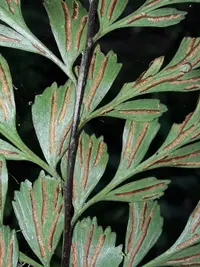
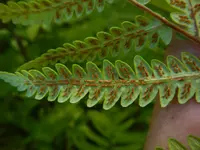
Its fertile fronds are often slightly narrower and longer than the sterile ones, reflecting a modest dimorphism linked to spore production along the undersides of the pinnae.

FAQs about Asplenium foreziense

This species is generally regarded as non-toxic to cats and dogs and is not known to cause serious poisoning. Mild stomach upset is still possible if large amounts are chewed, so discourage regular nibbling.

Grow Healthy Plants with Botan Care

Keep your plants happy and healthy with plant identification, disease detection, and easy care guidance.

Botan plant care app — identify plants on mobile

Explore More Plants