Lyall's Spleenwort Care (Asplenium lyallii)

Lyall's Spleenwort

About Lyall's Spleenwort

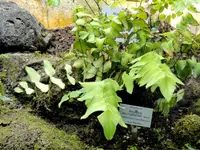
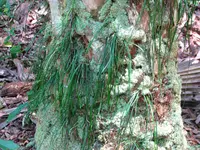
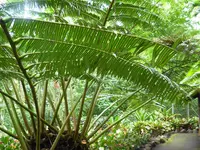
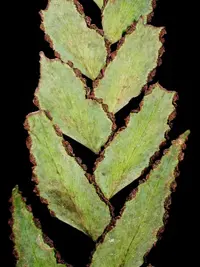
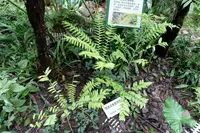
Lyall's spleenwort, Asplenium lyallii, is a small evergreen fern native to rocky habitats in New Zealand. It often grows on cliffs, crevices, and exposed rock faces.

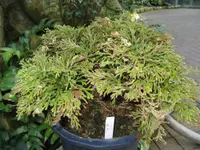
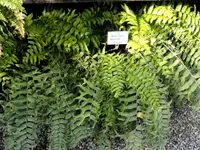
The plant forms compact clumps of narrow, divided fronds that arch slightly and create a fine, delicate texture. Its slow, steady growth and tidy habit make it suitable for rock gardens, specialty collections, or shaded outdoor containers in mild climates.

This species prefers cool, moist, shaded conditions and well-drained, humus-rich substrates that mimic its natural rock pockets. Understanding these natural conditions helps explain how to care for Lyall's Spleenwort in cultivation.

Main Plant Requirements

Care Difficulty

Moderate Care

Light Preference

Partial Shade

Water Requirements

Keep Soil Moist

Temperature Preference

Cool Climate

Hardiness Zone

8–10

Soil Texture

Loamy, Rocky, Organic-rich

Soil pH

Acidic (5.5–6.5)

Soil Drainage

Moist but well-drained

Fertilization

Minimal (feed rarely)

Get Personalized Care Plan

Scan your plant to receive care tips personalized for your specific plant

Available on iOS and Android

How to Care for the Lyall's Spleenwort

This fern prefers cool, sheltered light similar to a shaded rock face or forest ledge.

  • Provide bright, indirect light or light dappled shade, with 1–3 hours of soft morning sun and no harsh midday or afternoon sun.
  • Grow Lyall's Spleenwort in spots that receive filtered light under shrubs, trees, or beside rocks, avoiding full, open sun that scorches fronds.
  • In summer, protect from strong sun and reflective heat; in winter, choose a site that still gets gentle light so fronds do not weaken or yellow.

This species likes consistently moist but never waterlogged conditions.

  • Aim for soil that stays evenly damp; allow only the surface 1–2 cm to start drying before watering again, especially during active growth.
  • Focus on observable cues for Asplenium lyallii: fronds that droop and feel thin suggest dryness, while blackened bases or a sour smell point to overwatering.
  • Use a well-drained, humus-rich mix over gritty or rocky subsoil so excess water drains away, and reduce watering slightly in cooler months when growth slows.

This fern prefers cool to mild temperatures and dislikes both frost and extreme heat.

  • Ideal growth occurs around 50–70°F (10–21°C), with steady, moderate conditions helping fronds remain firm and green.
  • Protect from hard frost; brief dips to about 32°F (0°C) may be tolerated if soil is not waterlogged, but repeated freezing can kill crowns.
  • In hot spells above 80°F (27°C), increase shade and humidity, and ensure roots are insulated with mulch to limit heat stress and frond scorch.

This fern prefers consistently moist air and reacts quickly to very dry conditions.

  • Aim for 50–70% humidity to keep fronds hydrated and reduce browning tips.
  • Expect some tolerance to short dry spells, but prolonged air below 40% often leads to crisping edges and slow growth.
  • Increase humidity with a nearby humidifier, close grouping of plants, or a pebble tray placed under but not touching the pot.

This species prefers loose, humus-rich soil that drains freely yet retains consistent moisture.

  • Use a mix of 40% fine compost, 40% fine bark, and 20% perlite to mimic its naturally organic, fibrous substrate.
  • Ensure water drains through within seconds; the mix should feel springy, not compacted or sticky after watering.
  • Keep pH slightly acidic to neutral, around 5.5–7.0, avoiding strongly alkaline mixes that limit nutrient availability.
  • Avoid heavy clay, pure peat, or any mix that dries into hard clods, and gently fluff compacted media to restore aeration for Asplenium lyallii.

This fern adapts well to container growing when root moisture and stability are carefully managed.

  • Select a wide, shallow pot that matches the fibrous root system, preventing deep, waterlogged zones below the root zone.
  • Choose a breathable material such as unglazed terracotta if the mix stays wet for long, or glazed ceramic if it dries too rapidly.
  • Secure the pot in a stable position, as the spreading fronds can catch wind or movement and tip light containers.

This fern benefits from modest feeding in containers, while in-ground Lyall's Spleenwort usually manages with nutrient-rich, humusy soil.

  • Use a balanced, dilute liquid fertilizer (for example 10-10-10 at 1/4–1/2 strength) for potted plants.
  • Feed every 4–6 weeks during active growth in spring and summer if growth appears pale or weak.
  • Avoid synthetic slow-release pellets pressed against the crown, which can scorch tender tissues.
  • Stop feeding in fall and winter, when growth slows and roots are less active.

Asplenium lyallii needs minimal pruning, mainly to keep fronds healthy and prevent disease buildup.

  • Carry out light cleanup in late winter or early spring before new fronds unfurl.
  • Remove dead, yellow, diseased, or badly damaged fronds at the base with clean, sharp scissors or snips.
  • Thin only severely crowded or crossing fronds to improve air flow and reduce fungal problems.
  • Avoid cutting into the central crown, since damage there can permanently deform new growth.

Container-grown plants benefit from occasional transplanting to refresh the substrate and prevent root congestion.

  • Check for roots circling the pot, pushing through drainage holes, or slowing growth; these indicate the need to move Asplenium lyallii to a larger container.
  • Plan repotting or outdoor transplanting in early spring, just as new growth begins, to support faster recovery.
  • Expect to repot container plants every 2–3 years into only 2–3 cm wider pots with a moist, free-draining, organic mix.
  • Handle the root ball gently, loosen circling roots slightly, keep the crown at the same depth, water well, then keep shaded and evenly moist for 1–2 weeks.

Propagation of this fern is possible but slow, and is usually attempted by experienced growers rather than beginners.

  • Use division of well-established clumps in early spring, when several healthy crowns are present.
  • Lift the plant carefully, then separate small sections with at least a few fronds and a firm piece of rhizome and root.
  • Replant divisions into moist, humus-rich, sharply drained substrate and keep in bright shade with high humidity.
  • Spore propagation is possible under sterile, consistently warm (60–70°F) and humid conditions, but takes many months to form plantlets.

This species is moderately cold tolerant but benefits from simple winter precautions in colder regions.

  • In climates with freezing winters, apply a 5–8 cm layer of leaf mold or compost around the root zone, keeping mulch off the crown.
  • In very cold or exposed sites, add a loose layer of bracken or evergreen boughs over the planting area for extra insulation.
  • Move container plants into a cool, bright, frost-free spot, keeping the potting mix slightly moist but never waterlogged.

Care Tips

Rock crevice planting

Tuck the root ball into a narrow rock crevice or between stable stones with a gritty, humus-rich mix to mimic its natural habitat and keep the crown cool and evenly moist.

Crown protection

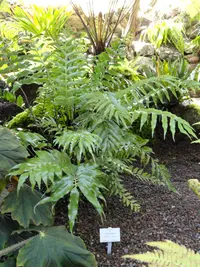
Set the plant so the central crown sits just at or slightly above the substrate surface and avoid packing mix over it to reduce rot risk in this moisture-loving fern.

Sheltered air flow

Position the plant where air moves gently, such as near but not directly in front of an open window or vent, to dry water from fronds without exposing it to strong drafts.

Careful division timing

If clumps become congested, divide only in early spring and separate into large sections with several fronds each to reduce transplant shock and maintain steady growth when growing Lyall's Spleenwort.

Lithophytic mounting

For advanced culture, mount the plant onto a porous rock or slab with a thin layer of moss and tie it gently in place until roots anchor, then mist regularly to prevent the mounting medium from drying out completely.

Common Pests and Diseases

Fern scale

This pest attaches to fronds and rachises, sucking sap and causing yellowing, thinning fronds, and overall decline. Symptoms include small, dome-shaped brown or gray bumps that are hard to remove with a fingertip.

Solution

Prune and discard heavily infested fronds, then gently wipe remaining fronds with a cotton pad dipped in diluted isopropyl alcohol or insecticidal soap, avoiding runoff into the crown. Improve air movement and avoid overfertilizing, as soft, lush growth is more attractive to scale; repeat treatments every 7–10 days until no new scale appears.

Fern aphids

These insects often cluster along tender young fronds and undersides, causing distortion, curling, and sticky honeydew that can support sooty mold. This pest is more common on sheltered or container-grown plants with soft new growth.

Solution

Rinse fronds thoroughly with a strong but gentle stream of water, focusing on the undersides and growing tips. For persistent colonies, apply a ready-to-use insecticidal soap or horticultural oil, ensuring full coverage, and repeat at 5–7 day intervals while monitoring new growth closely as part of Asplenium lyallii plant care.

Rhizoctonia crown rot

This disease affects the crown at soil or rock surface level, leading to browning, collapse of the central growing point, and fronds that yellow and wilt from the base. Symptoms include a dry to slightly sunken lesion at the crown rather than mushy roots.

Solution

Remove and discard all affected fronds and crown tissue, then improve drainage and reduce watering so the crown no longer stays wet for long periods. In collections or nursery settings, isolate affected plants, keep fronds dry when watering, and consider a labeled fungicide drench only if the plant is still structurally sound.

Botrytis blight

This disease causes brown, water-soaked spots on fronds that expand and develop a gray, fuzzy mold under cool, humid, stagnant conditions. Symptoms include rapid spotting on older fronds and around damaged areas or spent sori.

Solution

Promptly remove and discard all spotted or moldy fronds and any dead plant material around the base. Increase air circulation, space plants so fronds do not overlap heavily, avoid overhead watering, and, in severe or recurrent cases, use a suitable fungicide labeled for ferns during cool, damp periods.

Interesting Facts

Endemic cliff specialist

This fern is naturally restricted to New Zealand, where it typically grows in exposed sites on coastal and inland cliffs, rock ledges, and bluff faces that many other ferns cannot tolerate.

Remarkable wind tolerance

Its tough, leathery fronds and compact, tufted growth help it withstand strong winds and salt-laden air in coastal habitats, an unusual trait for a fern that is often noted in Asplenium lyallii plant care discussions.

Preference for limestone

In the wild it is frequently associated with calcareous rock such as limestone, suggesting an adaptation to slightly alkaline, mineral-rich substrates that contrasts with many forest ferns that favor more acidic conditions.

Botan icon

Did you know?

Asplenium lyallii is considered naturally uncommon and often occurs as scattered, small populations confined to specific rock outcrops, which makes it of conservation interest in New Zealand and a focus of habitat-protection efforts rather than large-scale cultivation.

FAQs about Lyall's Spleenwort

This fern spreads slowly by short creeping rhizomes and spore release. In garden settings it usually forms small, well-behaved clumps in rock crevices or walls. It does not behave as an aggressive or invasive spreader in typical conditions.

Grow Healthy Plants with Botan Care

Keep your plants happy and healthy with plant identification, disease detection, and easy care guidance.

Botan plant care app — identify plants on mobile

Explore More Plants