

Frond division method
When the clump becomes dense, gently lift the plant from its pot and tease apart small, rooted fan-like sections, then replant each division in its own pot to renew vigor and create backup plants.

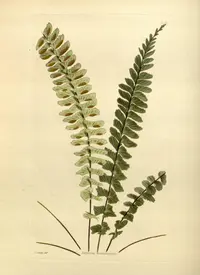
Singlesorus spleenwort, Asplenium monanthes, is a small epiphytic or terrestrial fern valued for its fine, arching fronds. The fronds carry many tiny leaf segments along wiry, dark stems, giving the plant a delicate, airy look.
In nature, it grows in cool, moist, shaded habitats, often on rocks, cliffs, or tree trunks in cloud forests of the Americas and some Atlantic islands. Its preference for constant moisture, soft water, and high humidity makes it more demanding than many common houseplants.
Those conditions also mean it dislikes drying out or strong sun, so some experience with ferns is helpful to care for singlesorus spleenwort successfully indoors.

Care Difficulty
Moderate Care

Light Preference
Partial Shade

Water Requirements
Keep Soil Moist

Temperature Preference
Tropical / Frost Sensitive

Hardiness Zone
9–11

Soil Texture
Loamy, Peaty, Organic-rich

Soil pH
Acidic (5.5–6.5)

Soil Drainage
Moist but well-drained

Fertilization
Light (every 4–6 weeks)
Scan your plant to receive care tips personalized for your specific plant
Available on iOS and Android
This fern prefers soft, indirect light that mimics a shaded woodland habitat.
This species prefers consistently moist but not stagnant soil around its fine roots.
This fern thrives in mild, stable temperatures without sudden extremes.
This fern thrives with stable, moderately high humidity indoors.
Asplenium monanthes prefers a loose, moisture-retentive but well-drained substrate.
This species adapts well to container growing for indoor or shaded outdoor settings.
This fern responds well to modest feeding during active growth but is sensitive to excess salts.
Pruning needs for Asplenium monanthes are minimal and focus on hygiene rather than shaping.
This fern prefers slightly snug containers and benefits from gentle repotting when rootbound.
Multiplying this fern is possible but slower and more technical than with many common houseplants.
This fern dislikes frost and needs mild, stable conditions through winter.

Plant Health Check
Not sure what's wrong with your plant? Check your plant's health inside the app.
This fern produces narrow, arching fronds with small, bead-like pinnae (leaflets) spaced along a wiry midrib, giving it a distinctive beaded chain appearance compared with many broader-leaved spleenworts.
It occurs in a disjunct pattern across Macaronesia, parts of Europe, Africa, the Americas, and some Pacific islands, typically restricted to cool, moist, shaded rock faces, tree trunks, and ravines.
In many cloud forest habitats, this species grows as an epiphyte on moss-covered branches and trunks, often forming delicate hanging tufts that take advantage of constant mist and high humidity.

Asplenium monanthes is considered a classic example of a fern with long-distance spore dispersal, with genetic and distribution evidence suggesting that its microscopic spores have repeatedly crossed oceans on air currents, helping explain its scattered presence on multiple continents and islands.
This species usually performs better outdoors in cool, shaded, humid spots, such as rock crevices or moist woodland gardens. Indoors it can grow, but requires stable humidity, gentle air movement, and careful watering to avoid root and frond stress.
Keep your plants happy and healthy with plant identification, disease detection, and easy care guidance.

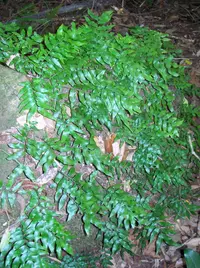
Climbing Fern
Arthropteris tenella
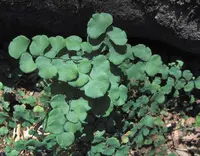
California maidenhair
Adiantum jordanii
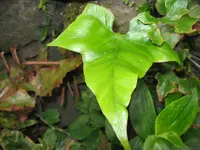
Asplenium hemionitis
Asplenium hemionitis
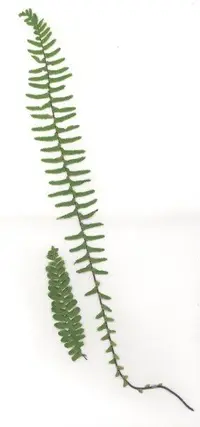
ebony spleenwort
Asplenium platyneuron
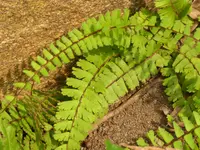
Torn Maidenhair Fern
Adiantum incisum
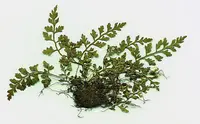
mountain spleenwort
Asplenium montanum
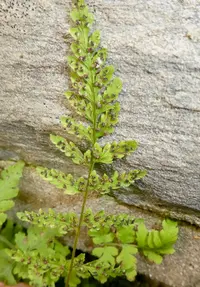
Tennessee bladderfern
Cystopteris tennesseensis
Lyall's Spleenwort
Asplenium lyallii