mountain spleenwort Care (Asplenium montanum)

mountain spleenwort

About mountain spleenwort

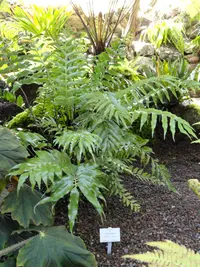
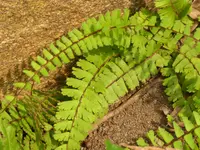
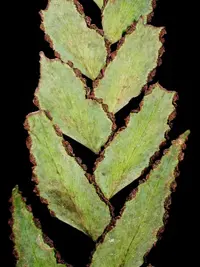
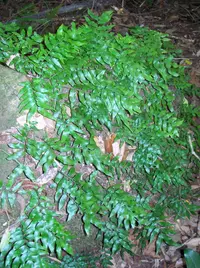
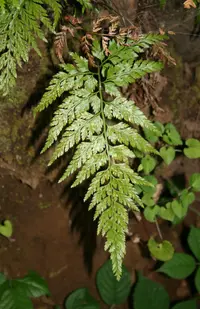
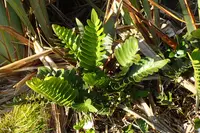
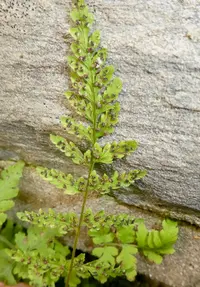
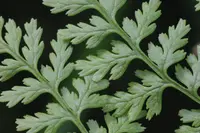
Mountain spleenwort, Asplenium montanum, is a small evergreen fern that forms neat clumps in rocky crevices and shaded ledges. It stays compact, with narrow, divided fronds that give it a fine, delicate texture.

This fern is native to mountainous regions of eastern North America, where it grows on shaded, acidic rock outcrops with constant moisture. It can be challenging to grow because it dislikes disturbance, needs steady humidity, and is sensitive to drying out or waterlogging.

Those who want to care for mountain spleenwort should aim to mimic its natural habitat with cool, shaded conditions, moist but free-draining, gritty soil, and good air movement.

Main Plant Requirements

Care Difficulty

Moderate Care

Light Preference

Partial Shade

Water Requirements

Keep Soil Moist

Temperature Preference

Cool Climate

Hardiness Zone

4–8

Soil Texture

Rocky, Loamy, Organic-rich

Soil pH

Acidic (5.5–6.5)

Soil Drainage

Moist but well-drained

Fertilization

Minimal (feed rarely)

Get Personalized Care Plan

Scan your plant to receive care tips personalized for your specific plant

Available on iOS and Android

How to Care for the mountain spleenwort

This fern prefers cool, shaded rock crevices that mimic its native mountain habitats.

  • Provide bright, indirect light or dappled shade, such as light filtered through shrubs or trees, aiming for 2–4 hours of gentle morning sun and no harsh afternoon sun.
  • Site mountain spleenwort on a north or east side of rocks or walls, where it receives reflected light but is shielded from direct midday exposure.
  • Watch fronds for stress: pale, crispy tips indicate excess sun, while weak, stretched fronds suggest too little light; adjust exposure seasonally as summer sun intensifies.

This species prefers evenly moist, cool substrate without prolonged saturation.

  • Water when the top 1–2 cm of the growing crevice or soil feels barely dry, using small amounts so moisture reaches roots without flooding pockets.
  • Ensure sharp drainage with gritty, rocky substrate; trapped water around roots encourages rot, blackened bases, and a sour smell, especially after heavy rain.
  • In hot, dry weather, check moisture more often for Asplenium montanum, while in cool seasons reduce watering, watching for limp, curling fronds as a sign of underwatering.

This fern is adapted to cool, rocky mountain microclimates with moderate seasonal variation.

  • Aim for active growth in 55–75°F (13–24°C); plants often slow above 80°F (27°C), especially if humidity is low and rock surfaces heat up.
  • It tolerates brief drops to about 25°F (−4°C) if roots are insulated in rock crevices, but repeated hard freezes without snow cover can damage fronds.
  • In hot summers, provide shade and consistent moisture to cool the root zone; in winter, protect from drying winds and rapid freeze–thaw cycles where possible.

This fern prefers consistently moist air and reacts quickly to very dry conditions.

  • Aim for 50–70% humidity; prolonged levels below 40% cause leaf tips to brown and fronds to crisp.
  • Mountain spleenwort tolerates brief dry spells but declines near heating vents or strong drafts.
  • Increase humidity with a nearby pebble tray or grouped plants rather than misting, which dries quickly.

Asplenium montanum thrives in loose, rocky, organic-rich substrates that drain quickly yet retain some moisture.

  • Use a mix of roughly 40% fine bark, 30% compost, and 30% perlite or coarse sand to mimic crevice habitats.
  • Ensure drainage is fast; water should pass through within seconds instead of pooling on the surface.
  • Aim for slightly acidic to neutral pH, around 5.5–7.0, which supports nutrient availability without stressing roots.
  • Avoid dense, clay-heavy, or peat-only mixes that stay waterlogged and exclude air from the rhizomes.

This species can grow in containers when the pot is set up to mimic shallow, rocky crevices.

  • Choose a wide, shallower pot rather than a deep one, as roots spread laterally along the surface layer.
  • Use a heavier clay or ceramic container outdoors to keep the plant stable in wind and prevent tipping.
  • Raise the pot on feet or spacers so drainage holes stay clear and excess water escapes quickly after rain or watering.

This fern grows naturally in nutrient-poor crevices, so mountain spleenwort needs only very light feeding in cultivation.

  • Use a diluted balanced liquid fertilizer (around 10-10-10) at 1/4–1/2 strength during active growth in spring–summer.
  • Apply no more than every 4–6 weeks to plants in containers or sterile, soilless mixes.
  • Skip feeding in fall–winter when growth slows, to avoid salt buildup and weak, soft fronds.
  • Organic options like very thin compost tea can be used instead of synthetic fertilizer for gentle support.

Pruning Asplenium montanum is minimal and focuses on hygiene rather than shaping.

  • Best time for cleanup is late winter or early spring before new fronds expand fully.
  • Remove dead, yellowing, or damaged fronds by cutting them at the base with clean, sharp scissors or snips.
  • Thin out any crowded or overlapping fronds to improve air flow and reduce fungal issues.
  • Avoid heavy cutting, since strong pruning does not improve form and can stress the small root system.

This species is usually grown in rock gardens or crevices, so transplanting should be infrequent and carefully planned.

  • Transplant only when clumps outgrow their pocket, growth stalls, or roots are densely packed in a small soil pocket or container.
  • Choose early spring for moving Asplenium montanum, when temperatures are mild and new growth has just started.
  • Lift the plant with as much root and surrounding substrate as possible to limit disturbance and moisture loss.
  • Replant into a narrow, well-drained crevice mix; water gently, shade for several days, and keep evenly moist while it re-establishes.

Propagation of Asplenium montanum is possible but slow and usually done by specialists rather than casual growers.

  • Division is best attempted in early spring, separating only well-established clumps with multiple healthy crowns.
  • Use a narrow knife to split the root mass carefully, keeping each division with intact roots and several fronds.
  • Replant divisions into gritty, well-drained, moisture-retentive substrate and maintain high humidity with gentle air movement.
  • Spore propagation requires sterile conditions, consistently moist medium, and patience, as germination and early growth are very slow.

As a cold-hardy fern, Asplenium montanum generally needs little special winter care in its suitable outdoor range.

  • In colder climates, add a thin mulch layer of leaf litter around the root zone, keeping it off the crown.
  • Leave dead fronds until late winter in exposed sites, as they can provide slight insulation.
  • Container-grown plants in marginal zones benefit from moving to a sheltered, frost-free but cool location.

Care Tips

Rocky crevice planting

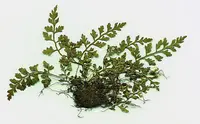
Tuck the root system into narrow rock crevices or between stacked stones with a thin layer of gritty mix around it, which mimics its natural cliff habitat and keeps roots cool and stable.

Secure shallow roots

If planting on a rock wall or in a rock pocket, pin the root ball gently with small, U-shaped landscape pins or stone fragments until new roots anchor and fronds hold firm.

Shade-tolerant companions

Combine it with other small, slow-growing rock ferns or mosses rather than aggressive groundcovers, which prevents competition for the limited moisture and root space it prefers.

Winter moisture control

In cold regions, shield the planting crevice above with a flat stone or loose evergreen boughs to reduce winter wetting from rain and snow while still allowing air circulation.

Gentle refresh, not divide

Instead of dividing the clump, which stresses the plant, periodically remove only dead fronds and lightly top up the crevice with fresh, gritty humus to support long-term growing mountain spleenwort without disturbing its core.

Common Pests and Diseases

Fern aphids

These insects cluster on the soft rachis and young frond undersides, sucking sap and causing distortion, puckering, and slow growth in tight rock crevices or shaded walls.

Solution

Rinse colonies off with a firm stream of water and remove heavily infested fronds; in sheltered garden or trough plantings, use insecticidal soap or a light horticultural oil, making sure to coat the undersides of fronds and repeat every 7–10 days until no new aphids appear.

Scale insects

This pest appears as small, flat, brown or gray bumps on stipes and lower frond surfaces, where it feeds on sap and produces sticky honeydew that can lead to sooty mold on delicate pinnae.

Solution

Gently scrape or wipe off individual scales with a cotton swab dipped in isopropyl alcohol, prune badly affected fronds, and improve air movement; for persistent infestations in sheltered plantings, apply a light horticultural oil spray, taking care not to oversaturate the thin-textured fronds.

Rhizoctonia crown rot

This disease affects ferns growing in thin, periodically wet rock pockets, where symptoms include browning and collapse of young fronds from the center of the clump and a dark, rotted crown at the substrate surface.

Solution

Remove and dispose of affected fronds and any soft, dark crown tissue, then improve drainage by reducing organic debris and avoiding standing water around the plant; in garden or trough culture, replant healthy divisions into a sharper, more mineral substrate and avoid overhead watering that keeps the crown wet for long periods.

Leaf spot fungi

This disease causes scattered dark brown to black spots or blotches along the pinnae, often starting in humid, shaded rock faces where moisture lingers on fronds for many hours.

Solution

Trim off heavily spotted fronds, avoid wetting foliage during irrigation, and increase airflow around the plant; in recurrent cases, a labeled fern-safe copper or chlorothalonil fungicide can be applied lightly, focusing on early symptoms and avoiding repeated heavy treatments to sensitive fronds.

Slug and snail damage

These pests feed on tender young fronds emerging from rock crevices, leaving irregular holes, shredded tips, and slime trails on or near the plant, especially during cool, wet periods.

Solution

Hand-pick slugs and snails in the evening, use physical barriers such as copper tape or sharp grit around troughs or rock pockets, and apply iron phosphate bait in surrounding areas while keeping it off the fern crown and fronds.

Interesting Facts

Specialized cliff habitat

This fern naturally grows in thin soil pockets on acidic sandstone or quartzite cliffs in the Appalachian Mountains, often in very narrow ledges and rock crevices that stay cool and moist.

Rock-splitting root system

Its short rhizomes and fine roots anchor tightly into tiny cracks in rock, gradually exploiting small fissures rather than typical forest soil, which helps it survive where few other vascular plants can persist.

Localized Appalachian range

The species has a patchy, disjunct distribution limited mostly to higher-elevation Appalachian and adjacent eastern US ranges, and many populations are considered of conservation concern due to their small size and specialized habitat.

Botan icon

Did you know?

Asplenium montanum participates in a well-studied hybrid complex with other spleenwort species, and genetic research has shown that it is one of the parent species in several naturally occurring hybrid ferns found on Appalachian cliffs.

FAQs about mountain spleenwort

Fronds usually brown from low humidity, underwatering, or excess direct sun. Old fronds also age and dry naturally. Trim dead tissue, maintain even moisture, and keep it shaded from harsh sun to restore healthier new growth.

Grow Healthy Plants with Botan Care

Keep your plants happy and healthy with plant identification, disease detection, and easy care guidance.

Botan plant care app — identify plants on mobile

Explore More Plants