Manage clumping habit
Divide crowded crowns every 3–4 years in early spring, lifting the root ball, gently teasing apart natural clumps by hand, and replanting them at the same depth to keep growth dense and healthy.

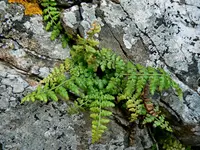
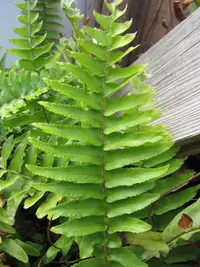
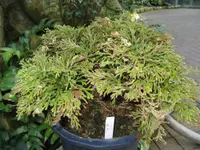
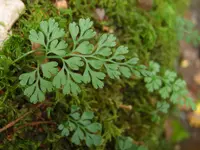
Asplenium obovatum is a small evergreen fern from rocky, coastal and woodland habitats in parts of Europe and the Mediterranean region. It usually grows in tight clumps with arching fronds. The fronds are narrow, leathery, and often slightly glossy, giving the plant a neat, structured look. It tends to stay compact, which makes it suitable for containers and small spaces. This fern prefers consistently moist conditions, free-draining but humus-rich soil, and protection from harsh sun and drying winds. With stable moisture and moderate humidity, it is relatively straightforward to care for Asplenium obovatum.

Care Difficulty
Moderate Care

Light Preference
Partial Shade

Water Requirements
Keep Soil Moist

Temperature Preference
Warm Climate

Hardiness Zone
8–11

Soil Texture
Loamy, Peaty, Organic-rich

Soil pH
Acidic (5.5–6.5), Slightly acidic (6.5–7.0)

Soil Drainage
Moist but well-drained

Fertilization
Light (every 4–6 weeks)
Scan your plant to receive care tips personalized for your specific plant
Available on iOS and Android
This fern prefers soft, indirect light similar to a shaded woodland edge.
Watering should maintain consistently lightly moist but not waterlogged soil around the roots.
This species prefers cool to mild conditions without sharp temperature swings.
This fern prefers consistently moist air and reacts quickly to dry conditions.
This fern needs a loose, moist, and air-filled substrate that drains freely but never dries out completely.
This species is very suitable for container growing when moisture and stability are managed carefully.
This fern grows well with modest feeding, so focus on light, consistent nutrition rather than heavy fertilization when planning Asplenium obovatum care instructions.
Pruning needs are minimal, mainly to keep Asplenium obovatum tidy and reduce disease risk.
Transplanting or repotting Asplenium obovatum focuses on relieving root congestion while keeping the root ball stable.
Propagation of Asplenium obovatum is possible but not usually fast, so patience and stable conditions are important.
Winter care for Asplenium obovatum depends on climate, as the fern dislikes hard, prolonged frost.

Plant Health Check
Not sure what's wrong with your plant? Check your plant's health inside the app.
This fern naturally grows on shaded limestone cliffs, rock crevices, and old stone walls in Mediterranean regions, often rooting into tiny pockets of mineral-rich debris.
In its native range, it often remains evergreen through mild winters, with fronds persisting year-round unless exposed to unusually hard frost.
The species name obovatum refers to the leaf segments being widest toward the tip, giving the fronds a rounded, spoon-like appearance compared with many other spleenworts.

Asplenium obovatum is one of the few spleenworts that has adapted well to man-made stone structures, and in parts of southern Europe it is a characteristic fern of old walls, bridges, and ruins, where it exploits lime-rich mortar in a way that makes it useful for studying how ferns colonize urban habitats.
This fern spreads slowly by short rhizomes and spore production, but it is not considered aggressive. In gardens it usually forms tidy clumps. It may self-sow nearby in suitable, moist, shaded rock crevices or walls.
Keep your plants happy and healthy with plant identification, disease detection, and easy care guidance.